

A casserole dish excels at baking and serving, while a Dutch oven handles stovetop cooking, braising, and more.
When dinner calls for a baked pasta one night and a slow-cooked stew the next, choosing the right dish can save time and effort. In the Casserole Vs Dutch Oven comparison, a ceramic casserole dish suits oven-baked meals, while an enameled cast-iron Dutch oven offers more ways to cook. I compared their materials, sizes, and everyday uses to help you pick the better fit for your kitchen.
Is a Casserole Dish Good?
Yes, a casserole dish is a good choice if you often bake meals and want to serve them in the same dish. This MALACASA model holds 4.4 quarts and measures 9 by 13 inches, so it can suit dishes like baked pasta, roasted vegetables, and casseroles. When I plan an oven meal for a few people, a wide baking dish feels easier to fill and serve than a deep pot. The broad shape also makes it simple to spread food in an even layer.
I would reach for this dish when I want to prep dinner, bake it, and bring it straight to the table. That makes it handy for potlucks and family meals, too. Its ceramic build has a different feel from a metal pot, though it needs careful handling to avoid chips. A casserole dish also does not replace a stovetop pan; use it in the oven only unless the maker says otherwise. For the Casserole Vs Dutch Oven choice, this is the more focused pick for baking, serving, and simple cleanup.

What Makes It Stand Out / Key Features
- 4.4-quart capacity for family-size oven meals.
- 9-by-13-inch shape offers a wide area for baking.
- Ceramic construction gives it a classic serving-dish look.
- White finish works with many table settings.
- Can go from oven to table, as long as you follow the maker’s care instructions.
What I Like
- The wide shape makes it easy to spread food in an even layer.
- It can bake and serve a meal in one dish.
- The ceramic style looks neat on the table.
- The 4.4-quart size can suit a group meal without using several small dishes.
- It is a simple choice for baked pasta, gratins, and similar oven dishes.
- Its shape makes serving from the dish straightforward.
What Could Be Better
- It is not a stovetop pot, so it cannot brown food on the burner.
- Ceramic can chip or crack if dropped or exposed to sudden temperature changes.
- A wide dish may take up more cabinet space than a deeper pot.
My Recommendation
Choose this dish if you bake often and want an attractive pan for oven-to-table meals. Check the care details and current price before you buy.
| Best For | Why |
|---|---|
| Baked pasta | The wide shape gives food room to spread. |
| Serving at the table | The ceramic finish suits a shared meal. |
| Simple oven dinners | It bakes and serves in one dish. |
Is a Dutch Oven Good?
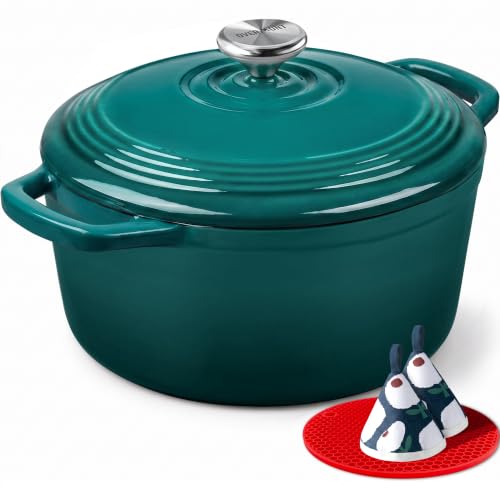
Yes, a Dutch oven is a strong choice if you want one pot for several cooking steps. This Overmont model holds 5.5 quarts and uses enameled cast iron. Compared with a shallow baking dish, a deep pot gives you room to stir soups, stews, and braises. I like that sort of flexibility when a recipe starts on the stove and finishes with a slow cook. Before using any Dutch oven, check its care guide for the right heat source and oven limits.
For a Casserole Vs Dutch Oven decision, the Dutch oven is the more versatile option, but it is not always the easiest to lift. Cast iron tends to be heavy, especially when the pot is full, so I would plan where to set it before serving. The enamel coating also calls for care; use tools and cleaning methods that the maker recommends. If I were cooking a stew for several people, I would pick a pot this size over a flat casserole dish. If I only needed to bake and serve lasagna, the Dutch oven would be more pot than I need.
What Makes It Stand Out / Key Features
- 5.5-quart capacity for soups, stews, and braises.
- Enameled cast-iron construction.
- Comes with a lid to cover the pot during cooking.
- Deeper shape holds liquid and makes stirring easier.
- Can move from stovetop to oven only when the maker’s instructions allow it.
What I Like
- It can handle more types of meals than a baking dish.
- The deep sides help keep soup and stew in the pot while stirring.
- The lid helps cover food as it cooks or rests.
- Its capacity suits larger batches and leftovers.
- It can be useful for recipes with more than one cooking step.
- The enamel surface gives the pot a finished look for serving.
What Could Be Better
- Cast iron is heavy, so lifting it when full can be hard.
- It may cost more than a basic baking dish.
- You need to follow the care guide to protect the enamel and avoid damage.
My Recommendation
Pick this Dutch oven if you cook soups, stews, and braises, or want one pot for several steps. Compare its current price and care needs before buying.
| Best For | Why |
|---|---|
| Soups and stews | The deep, lidded pot holds liquid and larger batches. |
| Slow cooking | Cast iron suits slow, steady cooking when used as directed. |
| One-pot meals | It can support several steps in a recipe. |
Casserole Vs Dutch Oven: Side-by-Side Test
To make the Casserole Vs Dutch Oven choice easier, I compared what each vessel can do, how it handles, and which meals suit it best. The ratings below are practical estimates, not lab test results.
Cooking Uses: Which One Does More?
Both can make hearty meals, but they suit different cooking steps.
| Task | Casserole Dish | Dutch Oven |
|---|---|---|
| Baking a casserole | Well suited | Can bake, but its deeper shape differs |
| Making soup | Not suited for stovetop use | Well suited |
| Browning on a burner | Not suited unless maker allows it | Often a Dutch oven task; check manual |
| Serving a baked meal | Easy to serve from | Possible, but heavy |
| Rating | 7/10 | 9/10 |
Summary: The Dutch oven has the edge for range of cooking uses; the casserole dish shines at baking.
Shape and Capacity: Which Fits Your Meals?
The shape matters as much as the number of quarts.
| Feature | Casserole Dish | Dutch Oven |
|---|---|---|
| Listed capacity | 4.4 quarts | 5.5 quarts |
| Shape | Wide and shallow | Deep pot with lid |
| Best fit | Layered or spread-out oven meals | Liquid meals and stirred dishes |
| Ratings | 8/10 for baking | 9/10 for soups and stews |
Summary: The Dutch oven has more listed capacity, while the casserole dish offers more room across the base.
Stovetop and Oven Use: Which Is More Flexible?
Check each product’s instructions before using it on a heat source.
| Use | Casserole Dish | Dutch Oven |
|---|---|---|
| Oven baking | Its main role | Useful for some oven recipes |
| Stovetop cooking | Usually not suitable | Often suitable; check the manual |
| Move from burner to oven | Not a typical use | May work if the maker permits |
| Ratings | 6/10 for flexibility | 9/10 for flexibility |
Summary: The Dutch oven leads in cooking flexibility, but always follow its heat-use instructions.
Handling and Serving: Which Is Easier?
Think about lifting, carrying, and serving before you choose.
| Factor | Casserole Dish | Dutch Oven |
|---|---|---|
| Serving shape | Wide and easy to reach into | Deep, with a smaller opening |
| Weight concern | Usually easier to move when empty | Cast iron can feel heavy |
| Table use | Works well for shared baked meals | Can serve food, but needs careful lifting |
| Ratings | 9/10 for serving | 7/10 for serving |
Summary: The casserole dish has the edge for easy serving; the Dutch oven trades light handling for more cooking uses.
Care and Durability: Which Needs More Attention?
Both need sensible care, but their materials call for different habits.
| Care point | Casserole Dish | Dutch Oven |
|---|---|---|
| Material | Ceramic | Enameled cast iron |
| Main care concern | Avoid chips and sudden temperature changes | Protect enamel from damage |
| Cleaning | Follow maker’s care directions | Follow maker’s care directions |
| Ratings | 8/10 for simple care | 7/10 for simple care |
Summary: Neither is care-free, but the casserole dish is simpler if you mainly bake and serve.
Value for Money: Which Is Worth Buying?
Value depends on how often you will use each item.
| Value factor | Casserole Dish | Dutch Oven |
|---|---|---|
| Best value when | You bake often | You cook a wide range of meals |
| Use range | Focused on oven dishes and serving | Broader, if the manual allows varied use |
| Potential drawback | May not replace other cookware | Can cost more and weigh more |
| Ratings | 8/10 for baking value | 9/10 for versatility value |
Summary: The Dutch oven may offer better value if you use its range of functions; the casserole dish can be the better buy for frequent bakers.
Final Verdict: Which Should You Buy?
Choose the MALACASA casserole dish if you mostly bake and want a wide dish that can go to the table. Choose the Overmont Dutch oven if you make soups, stews, or meals that need more than one cooking step.
In the Casserole Vs Dutch Oven debate, neither is best for every kitchen. The casserole dish is more focused and easy to serve from. The Dutch oven is more flexible but heavier. Let your most common meals guide your choice, and check each maker’s care and heat-use instructions.
FAQs Of Casserole Vs Dutch Oven
What is the main difference between a casserole dish and a Dutch oven?
A casserole dish is usually wide and made for oven baking. A Dutch oven is a deep, lidded pot that can handle more kinds of cooking, depending on its instructions.
Can I use a casserole dish on the stovetop?
Do not use it on a burner unless the maker says it is safe. Many ceramic baking dishes are made for oven use, not direct heat.
Can a Dutch oven replace a casserole dish?
It can bake some dishes, but its deeper shape may not suit recipes that need a wide, shallow layer. A casserole dish is often easier for those meals.
Which is better for stew: a casserole dish or a Dutch oven?
A Dutch oven is usually the better pick for stew because its deep sides hold liquid and make stirring easier.
Which one is easier to lift and serve?
A casserole dish is often easier to serve from because it is wide and shallow. A cast-iron Dutch oven can be heavy, especially when full.