
Both work well, but ceramic is lighter and easier to handle, while cast iron retains heat better.
When dinner means soup on the stove or a roast in the oven, the right pot can make cooking easier. In this Ceramic Dutch Oven Vs Cast Iron comparison, I look at an 8-quart ceramic nonstick pot and a 6.4-quart enameled cast iron pot. Each has clear strengths, but weight, care, and cooking style may decide it for you. Here’s how I’d choose between them.
Is Ceramic Dutch Oven Good?
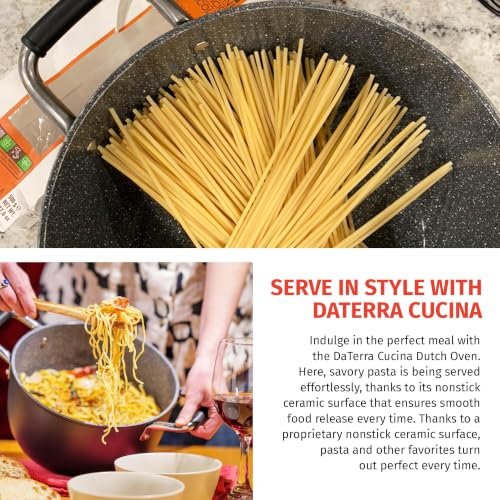
Yes, a ceramic nonstick Dutch oven can be a good pick if you want a roomy pot that is easier to lift than cast iron. The DaTerra Cucina model listed here holds 8 quarts, so it suits big batches of soup, stew, or pasta sauce. Its nonstick surface can also make food release and cleanup simpler. Check the maker’s care guide before use, though. “Ceramic” can describe the coating, not a pot made entirely from ceramic, and the exact stove and oven limits matter.
In a practical kitchen, I’d reach for this style when I needed to cook a large batch and move the pot without a heavy lift. After a slow simmer, a nonstick surface may also help with cleanup, especially if I avoid metal tools and let the pot cool before washing. It is not the same heat bank as cast iron, so I would use steady heat and avoid sudden temperature changes. For the Ceramic Dutch Oven Vs Cast Iron choice, this pot’s main draw is everyday ease and capacity.

What Makes It Stand Out / Key Features
- Listed 8-quart capacity for large meals and batch cooking.
- Ceramic nonstick cooking surface.
- Comes with a lid for covered cooking.
- Designed for stovetop and oven use; check the maker’s limits for your setup.
- Does not need seasoning like bare cast iron.
What I Like
- The larger capacity suits family meals and leftovers.
- It should be easier to lift than a similar-size cast iron pot.
- The nonstick surface can help food release with less scraping.
- Cleanup can be quick when food has not burned on.
- No seasoning routine is needed.
- It can be a handy choice for cooks who want one pot for simmering and oven use.
What Could Be Better
- The exact oven-safe temperature and stove compatibility need to be checked with the maker.
- A nonstick surface can wear if you use metal tools or rough cleaning pads.
- It may not hold heat as long as cast iron after you take it off the stove.
My Recommendation
Choose it if you want an 8-quart pot that is easy to handle and simple to clean. Check the care and heat limits before buying, and compare current prices for value.
| Best For | Why |
|---|---|
| Large households | Its listed 8-quart size gives you room for bigger batches. |
| Easy cleanup | The nonstick surface can make food release simpler. |
| People avoiding heavy cookware | It should be easier to lift than a cast iron Dutch oven. |
Is Cast Iron Good?
Yes, an enameled cast iron Dutch oven is a strong choice for cooks who want steady heat for braises, stews, and oven meals. The Nuovva pot listed here holds 6.4 quarts and is rated for oven use up to 500°F in its product description. Its enamel finish means you do not need to season it like bare cast iron. Still, it is heavy, and enamel needs care. I would use wooden or silicone tools and avoid hard knocks that could chip the finish.
For a weeknight meal, I’d use this kind of pot to brown food first, then let a stew cook slowly with the lid on. Cast iron holds heat well, which helps the pot stay hot when you add cool ingredients or move it to the table. That same weight can be a drawback when the pot is full, so I’d plan where to set it before lifting. In a Ceramic Dutch Oven Vs Cast Iron comparison, this option is appealing if heat retention and oven cooking matter more to you than low weight.

What Makes It Stand Out / Key Features
- Listed 6.4-quart capacity for soups, braises, and roasts.
- Enameled cast iron body.
- Product description states oven-safe use up to 500°F.
- Comes with a lid for covered cooking.
- Enamel removes the need to season the pot like bare cast iron.
What I Like
- Cast iron holds heat well during slow cooking.
- The enamel finish is ready to use without a seasoning step.
- The 6.4-quart size works for many family meals.
- It can move from stovetop cooking to the oven, within the maker’s limits.
- The pot can go from kitchen to table for serving.
- It suits recipes that need steady heat over time.
What Could Be Better
- Cast iron is heavy, especially when filled with food.
- Enamel can chip if the pot gets hit or handled roughly.
- It may need more care during washing than a light nonstick pot.
My Recommendation
Pick it if you often braise, roast, or simmer and do not mind a heavy pot. The stated 500°F oven rating adds useful range; check current price and care details before ordering.
| Best For | Why |
|---|---|
| Braising and slow cooking | Cast iron holds heat well for steady cooking. |
| Oven recipes | The listing gives an oven-safe limit of up to 500°F. |
| Cooks who want enamel | It avoids the seasoning routine used for bare cast iron. |
Ceramic Dutch Oven Vs Cast Iron: Side-by-Side Test
For this Ceramic Dutch Oven Vs Cast Iron comparison, I’m weighing the details that matter in daily cooking: handling, heat, cleaning, and the kind of meals each pot suits. Product care instructions can vary, so check them before use.
Capacity and Batch Size: Which Holds More?
The listed sizes point to a clear difference in how much food each pot can hold.
| Feature | DaTerra Ceramic | Nuovva Cast Iron |
|---|---|---|
| Listed capacity | 8 quarts | 6.4 quarts |
| Good fit | Large batches and leftovers | Family meals and braises |
| Space needed | More room in the cupboard | Less capacity, but still a substantial pot |
| Capacity edge | More listed volume | Smaller listed volume |
Rating: DaTerra Ceramic – 9/10 | Nuovva Cast Iron – 8/10
The ceramic pot has the edge for big batches because its listed capacity is larger.
Heat Retention: Which Keeps Food Hot?
Cast iron is known for holding heat, while lighter pots tend to cool faster once removed from the heat source.
| Feature | DaTerra Ceramic | Nuovva Cast Iron |
|---|---|---|
| Heat holding | Likely less than cast iron | Strong heat retention |
| Slow simmer | Works with steady heat | Well suited to slow cooking |
| Serving at the table | May lose heat sooner | Stays warm longer |
| Best match | Everyday cooking | Braises and long cooks |
Rating: DaTerra Ceramic – 7/10 | Nuovva Cast Iron – 9/10
Cast iron wins for heat retention, which can help with slow cooks and warm serving.
Weight and Handling: Which Is Easier to Lift?
A pot feels much heavier when it is full, so weight matters during both cooking and cleanup.
| Feature | DaTerra Ceramic | Nuovva Cast Iron |
|---|---|---|
| Expected feel | Lighter than cast iron | Heavy |
| Moving when full | Likely easier | Needs a firm, safe grip |
| Serving from the pot | Easier to move to the table | Best moved with care |
| Best match | Frequent lifting | Cooking where it can stay put |
Rating: DaTerra Ceramic – 9/10 | Nuovva Cast Iron – 6/10
The ceramic pot has the edge if you want to lift and move your pot with less effort.
Cleaning and Care: Which Needs Less Work?
Both pots need sensible care, but their surfaces call for different habits.
| Feature | DaTerra Ceramic | Nuovva Cast Iron |
|---|---|---|
| Seasoning | Not needed | Not needed for the enamel finish |
| Food release | Nonstick surface can help | Enamel is smooth but may need soaking |
| Tools | Avoid metal tools to protect the coating | Use tools that will not chip the enamel |
| Cleaning approach | Gentle washing | Gentle washing; avoid hard impacts |
Rating: DaTerra Ceramic – 8/10 | Nuovva Cast Iron – 7/10
The ceramic pot may be quicker to clean, while both need gentle handling to protect their surfaces.
Oven Use: Which Gives More Confidence?
Always follow the maker’s stated limits for the pot and its lid, handles, and other parts.
| Feature | DaTerra Ceramic | Nuovva Cast Iron |
|---|---|---|
| Oven use | Listed as oven safe; confirm the limit | Listed as safe up to 500°F |
| Oven-braised meals | Possible within stated limits | Good fit within stated limit |
| Temperature changes | Avoid sudden changes | Avoid sudden changes to protect enamel |
| Info available here | Exact limit not specified | 500°F listed |
Rating: DaTerra Ceramic – 7/10 | Nuovva Cast Iron – 9/10
Nuovva has the edge for clear oven guidance because its listing states a 500°F limit.
Cooking Jobs: Which Is More Versatile?
Both can handle many one-pot meals, but cast iron is especially suited to long, steady cooking.
| Cooking job | DaTerra Ceramic | Nuovva Cast Iron |
|---|---|---|
| Soup and stew | Good fit | Good fit |
| Braising | Possible; check care limits | Strong fit |
| Large batch cooking | Extra capacity helps | Suitable for a smaller batch |
| Oven roasting | Confirm oven limit first | Listed for oven use to 500°F |
Rating: DaTerra Ceramic – 8/10 | Nuovva Cast Iron – 9/10
Cast iron has a slight edge for oven braises and roasts, while ceramic offers more room for large batches.
Value for Money: Which Is the Better Buy?
Price can change, so compare the current cost with the features you will use most.
| Value point | DaTerra Ceramic | Nuovva Cast Iron |
|---|---|---|
| Capacity | 8 quarts | 6.4 quarts |
| Ease of handling | Likely lighter | Heavy |
| Heat retention | Moderate | Strong |
| Best value if you need | Capacity and easy care | Heat retention and oven cooking |
Rating: DaTerra Ceramic – 8/10 | Nuovva Cast Iron – 8/10
There is no single value winner: choose ceramic for space and easy handling, or cast iron for heat and oven use.
Final Verdict: Which Should You Buy?
For a lighter pot with more listed capacity and a nonstick surface, choose the DaTerra Cucina ceramic Dutch oven. It may suit big batches and cooks who want easier handling. Check its exact oven and stove limits before buying.
For strong heat retention and oven cooking, choose the Nuovva enameled cast iron Dutch oven. It is heavier and holds less, but its listing states a 500°F oven limit. In the Ceramic Dutch Oven Vs Cast Iron choice, your best pick depends on whether ease or heat matters more.
FAQs Of Ceramic Dutch Oven Vs Cast Iron
Is a ceramic Dutch oven better than cast iron?
Neither is best for everyone. Ceramic can be lighter and easier to clean. Cast iron holds heat better and suits slow cooking.
Does an enameled cast iron pot need seasoning?
No. The enamel finish does not need the seasoning used for bare cast iron. Follow the maker’s care guide to protect it.
Which pot is better for soup and stew?
Both can cook soup and stew. Choose the ceramic pot for its larger listed capacity, or cast iron if you want strong heat retention.
Can I use both pots in the oven?
The product details list both as oven safe, but the stated limits differ. Nuovva’s listing says up to 500°F. Check the ceramic pot’s exact limit and the lid instructions before use.
Which is easier to lift and clean?
The ceramic pot is likely easier to lift. Its nonstick surface may also make cleanup simple. Cast iron is heavier, and its enamel needs gentle care to avoid chips.