
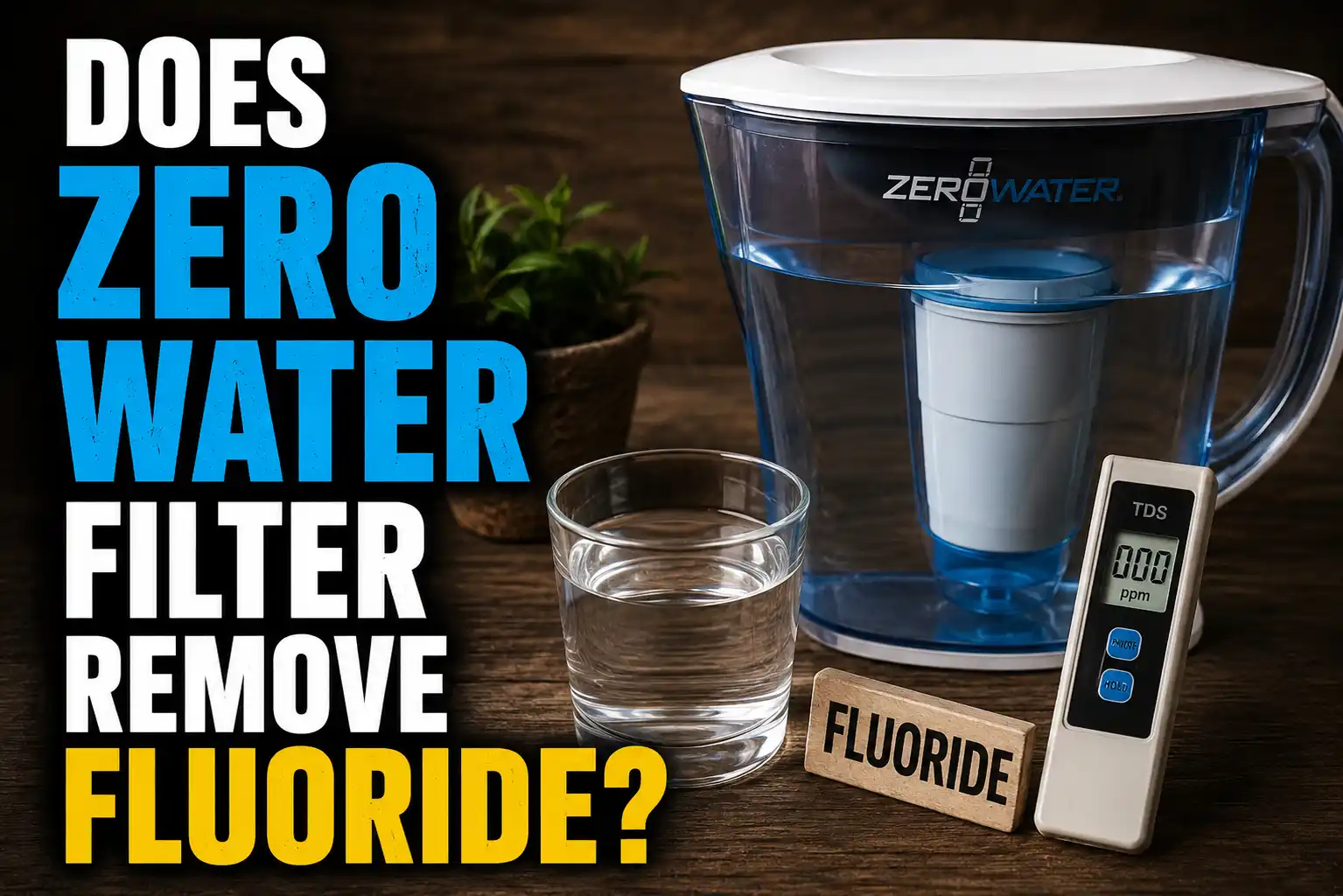
I still remember the day I stood in my kitchen, holding a glass of tap water, and just staring at it. My dentist had mentioned fluoride at my last visit. Then a friend told me her town adds even more of it to the water supply. I got curious. I wanted to know what was really in my glass.
That small moment sent me down a rabbit hole. I read articles, watched videos, and finally bought a Zero Water pitcher to test things myself. I remember unboxing it on my kitchen counter and reading the little instruction card twice. I felt oddly excited to test my own tap water, almost like a small science project.
This article shares what I found, what surprised me, and what I still think about fluoride and this popular filter. I am not a scientist, just someone who wanted clear answers before buying another pitcher.
Table of Contents
What Is A Zero Water Filter And How Does It Work
Zero Water is a pitcher style filter. It uses five layers of filtration instead of the single carbon layer you find in many basic filters. Each layer targets something different in your tap water.
<<Get Amazon For This Product>>
I like to think of it like a security checkpoint with five guards instead of one. Water has to pass every single guard before it reaches your glass. Here is a simple breakdown of what each stage does, so you can see where fluoride actually gets caught.
| Stage | What It Removes |
| Coarse filter screen | Dust, rust, and cloudy particles |
| Foam distributor | Extra suspended solids |
| Activated carbon layer | Chlorine, pesticides, and organic matter |
| Ion exchange resin | Metals, minerals, and inorganic compounds |
| Fine screen and membrane | Tiny leftover particles |
That fourth stage, the ion exchange resin, is the one that matters most for fluoride. Fluoride is an inorganic compound, so this is the layer doing most of the work.
Why Fluoride Ends Up In Your Tap Water
Before testing my filter, I wanted to understand where fluoride even comes from. Fluoride is a natural mineral. It occurs in soil, rocks, and groundwater. Many cities also add small amounts on purpose, since it can help protect teeth from decay.
That sounds harmless on the surface. Still, some people prefer more control over what lands in their glass, whether that comes from natural sources or added treatment. Long term exposure to high fluoride levels has been linked to issues like dental spots or, in rare cases, bone problems. That is exactly why I wanted a filter that could actually reduce it, not just make my water taste better.
Does Zero Water Filter Remove Fluoride? The Real Answer
Yes, it does. But the full answer has a few layers to it, just like the filter itself.
What The Company Claims
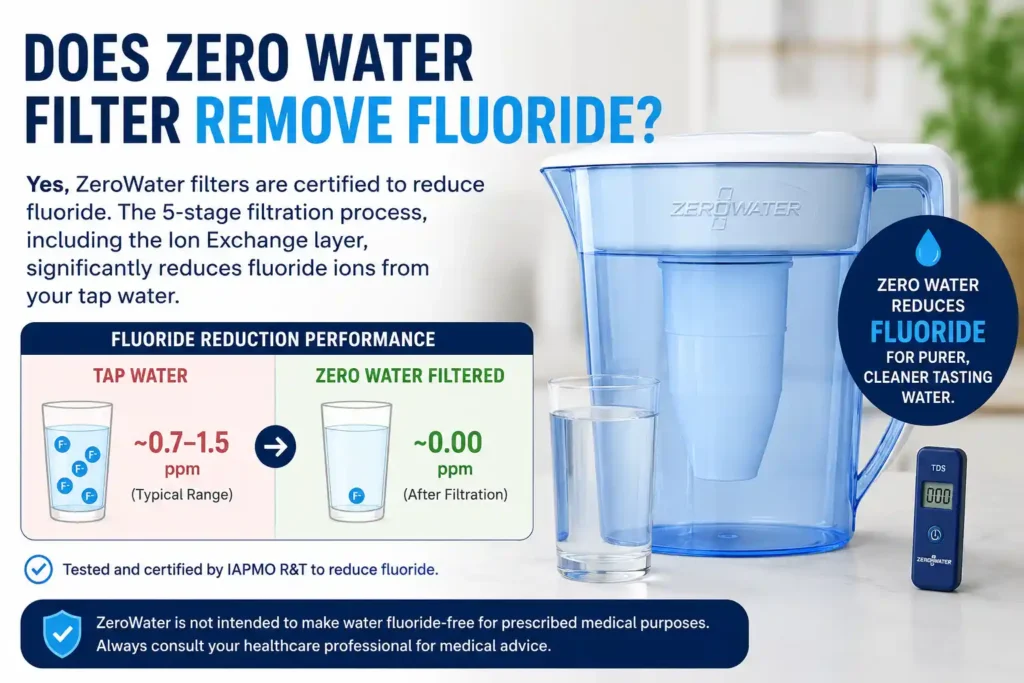
Zero Water states that their five stage filter reduces fluoride through ion exchange technology. Company testing, done through an EPA certified lab, reported a fluoride reduction of about ninety nine percent in fresh filters. That is a strong number, and it lines up with how ion exchange resin works on other inorganic minerals.
What Independent Testing Shows
I did not stop at the company website, because brands can be biased about their own products. Independent reviewers who buy filters and test them at home have reported similar results. Most found fluoride dropped from around six tenths of a part per million down to nearly zero right after a filter change. A few tests landed closer to ninety percent reduction instead of ninety nine, which still counts as a big drop.
So the short version is this. A fresh Zero Water filter removes most of the fluoride in typical tap water. The exact number can shift a little depending on your water source, your filter age, and how much water has passed through it already.
I also noticed something interesting while reading reviews. Older, legacy Zero Water filters were not always certified for fluoride reduction, even though testing showed real results. The newer filter line has since picked up formal certification for fluoride under recognized water treatment standards. That gap between real world performance and official paperwork explains a lot of the mixed opinions you might see online.
Why My TDS Meter Did Not Tell The Whole Story
Every Zero Water pitcher comes with a small TDS meter. TDS stands for total dissolved solids. I loved watching that number drop to almost zero after filtering.
Here is the part I did not know at first. That meter measures overall dissolved solids, not fluoride by itself. A low TDS reading is a good sign, but it is not proof that fluoride specifically hit zero. If you truly want to confirm fluoride levels, you need a dedicated fluoride test strip or a lab test, not just the included meter.
My Personal Test At Home
One Saturday morning, I filled my Zero Water pitcher straight from the kitchen tap. I let it filter for about ten minutes, which felt slow compared to my old basic filter. My old pitcher used to leave water tasting flat and a bit metallic. This one came out tasting cleaner, almost like the bottled water I used to buy.
I checked the TDS meter before and after. My tap water reads around one hundred eighty parts per million. After filtering, it dropped down near zero. That result matched what other reviewers reported, and it gave me real confidence that the ion exchange resin was doing its job on fluoride along with everything else.
My kids noticed the taste change before I even said anything. My youngest asked why the water suddenly tasted like nothing, which made me laugh. That plain, neutral taste turned out to be a good sign, since it usually means fewer minerals and dissolved particles are left behind.
Zero Water Versus Other Filters For Fluoride Removal
Not every water filter handles fluoride the same way. Some barely touch it at all.
| Filter Type | Typical Fluoride Reduction |
| Basic carbon pitcher (like standard Brita) | Very low, often near zero |
| Zero Water five stage pitcher | Around ninety to ninety nine percent |
| Reverse osmosis system | Close to one hundred percent |
Basic carbon filters are built mainly for taste and odor, not for inorganic minerals like fluoride. Reverse osmosis systems remove fluoride almost completely, but they are pricier and need under sink installation. Zero Water sits in a nice middle spot. It costs less than reverse osmosis and does far more than a basic pitcher.
What I Liked About The Zero Water Filter
The taste difference was the first thing I noticed. My coffee tasted better within the first week. I also appreciated the TDS meter, even with its limits, because it gave me a quick visual reminder of when to change the filter.
The five stage design also reduces lead and other heavy metals, along with PFOA and PFOS, sometimes called forever chemicals. That felt like a nice bonus on top of the fluoride reduction I was originally chasing.
What I Wish Was Better
Nothing is perfect, and I want to stay honest here. The filters do not last very long, especially if your tap water has a high mineral content to begin with. Mine needed replacing faster than the box suggested.
The filter also does not tell minerals apart. It strips out good minerals like calcium and magnesium right along with fluoride and lead. Some nutritionists suggest getting minerals from food instead of water, so this may not bother you. But it is worth knowing before you buy.
Filtering speed is also slower than a basic pitcher. I had to plan ahead a little instead of pouring a glass the second I felt thirsty.
The pitcher itself takes up more fridge space than my old one too. It is a small annoyance, but worth mentioning if your fridge shelves are already tight like mine.
Tips If You Want To Remove Fluoride With Zero Water
Change your filter as soon as the TDS reading climbs, rather than waiting for a strict schedule. Fluoride reduction drops as the resin wears out, even if the water still looks and tastes fine.
Test your source water first if you can. Knowing your starting fluoride level helps you judge how well the filter is actually working for your home. Store extra filters in a cool, dry spot so they stay fresh until you need them, and jot the install date on the box so you never lose track.
Final Verdict: Is Zero Water Worth It For Fluoride Removal
Based on my own experience and the data I found, Zero Water does remove a large share of fluoride from tap water, especially with a fresh filter. It will not match a reverse osmosis system, but it beats basic carbon pitchers by a wide margin. For the price and convenience, I think it earns its spot on my counter.
A few months in, I still refill it every morning without thinking twice. That habit alone tells me it fits into daily life better than the systems that need drilling or plumbing changes. If fluoride is your main concern and you want a simple pitcher you can start using today, Zero Water is a fair and honest choice to try.
FAQ
Does the Zero Water filter remove all fluoride from tap water?
Not entirely. Fresh filters can remove around ninety to ninety nine percent, but the number drops slowly as the filter ages.
How do I know when my Zero Water filter needs changing for fluoride removal?
Watch the included TDS meter. Once the reading climbs above zero, it is time for a new filter to keep fluoride reduction strong.
Is Zero Water better than Brita for removing fluoride?
Yes, generally. Standard Brita filters focus on taste and odor and barely touch fluoride, while Zero Water uses ion exchange resin built for inorganic compounds like fluoride.
Does Zero Water remove healthy minerals along with fluoride?
Yes. The five stage filter does not separate good minerals from unwanted ones, so calcium and magnesium get reduced too, along with fluoride and lead.
Is reverse osmosis better than Zero Water for fluoride removal?
Reverse osmosis usually removes slightly more fluoride and gets closer to zero. Zero Water costs less and skips the installation hassle, making it a solid middle ground for most homes.