
Last July I moved into a small rental house. The tap water tasted odd. It had a metal note, like a coin left in a glass. I checked the fridge filter. It was dark and slow. I stood there in my kitchen at seven in the morning, still half asleep, staring at a filter that looked like it had not seen daylight in years.
That day I learned a lot about how to clean a water filter the right way. I did not read the manual first. I just dug in with what I had at home. This guide is my honest story. I will show you what worked. I will also show you what did not. No fancy claims here, just real steps from my own sink.
Table of Contents
Why My Water Filter Needed a Deep Clean
My kitchen sink filter had not been touched in months. The old owner left no notes on the house. I only knew something was wrong because the water flow got weak. It used to fill a glass fast. Now it took twice as long, and I stood there tapping my foot like I was waiting for a bus.
That slow drip was my first real clue. I pulled the filter out one Sunday morning, coffee in one hand and a flashlight in the other. My hands got a bit messy right away. The inside had a grey film coating the mesh. It smelled a bit like a damp basement after rain.
I will be honest. It was not fun to touch. I almost gave up and just ordered a new one online. But curiosity won, and I decided to try a clean first. That choice taught me why regular care matters so much, and it saved me a same day trip to the store.
What You Need Before You Start Cleaning
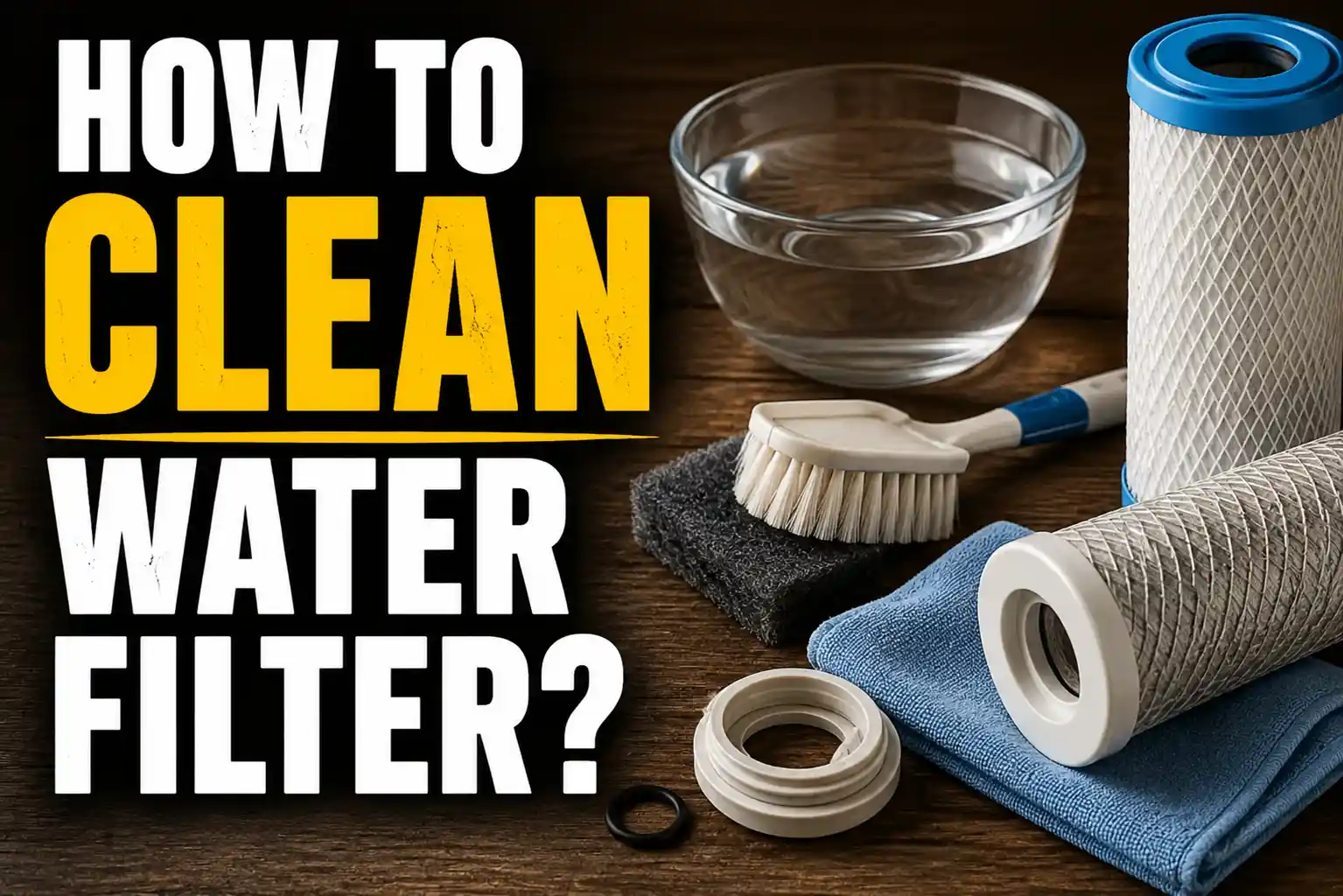
You do not need fancy tools for this job. I used items already sitting in my own kitchen. Here is what ended up on my counter that day.
| Item | Why I Used It |
| White vinegar | Breaks down mineral buildup and grime |
| Soft bristle brush | Cleans the mesh without scratching it |
| Warm water | Loosens dirt so it rinses away easy |
| Clean towel | Dries the filter before it goes back in |
| Small bowl | Holds the vinegar soak |
I laid a towel on my counter first, mostly out of habit. My cat loves to knock things over when I am busy. That one small step saved me from a much bigger mess later.
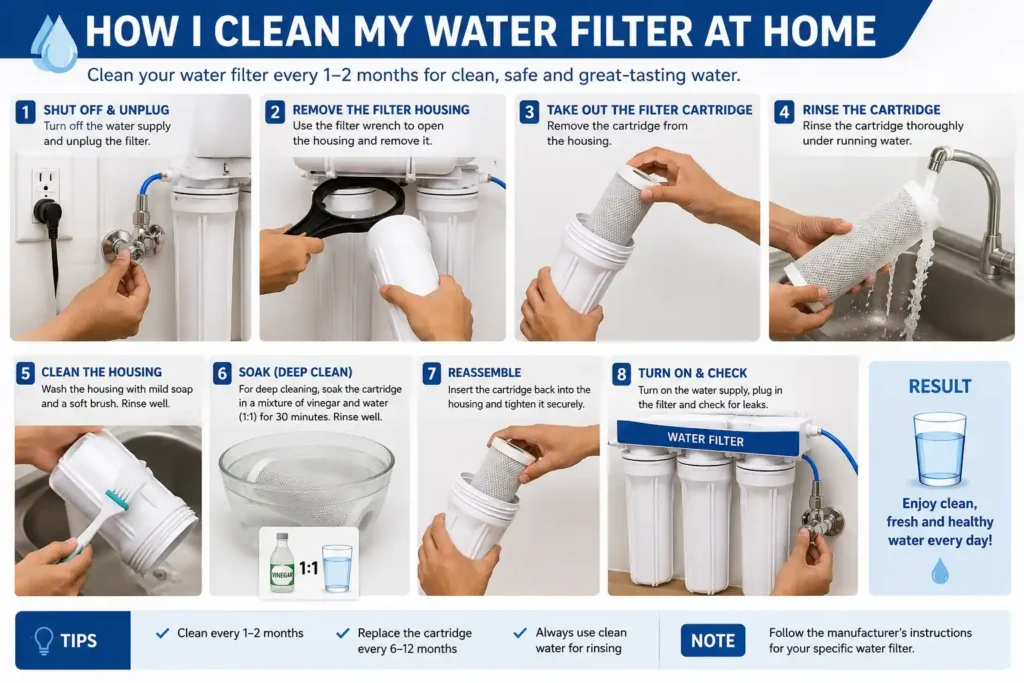
How I Clean My Water Filter at Home
This is the exact routine I still use every few months. It takes about twenty minutes from start to finish, including the time I spend chatting with my dog while I work.
<<Get Amazon For This Product>>
First I Turn Off the Water Supply
I always shut the valve before I touch a single part. Water still trickles out at first, even with the valve closed. I keep a towel ready for that small splash every time.
Then I Take Out the Filter Cartridge
I twist it gently and pull it free with steady hands. Some models click when they release. Mine just slides out with a small tug and a soft pop.
Next I Soak It in Vinegar
I mix warm water with plain white vinegar in my small bowl. One part vinegar to three parts water works well for me. I let the filter sit for about ten minutes while I tidy the counter. Little bubbles form on the surface as it soaks. That fizzing tells me it is working.
I Scrub It Gently With a Soft Brush
I use light circles, never hard force, moving slowly around every edge. A hard scrub can tear the thin mesh inside. I learned that lesson the hard way on my second try, and I still feel a little silly about it.
Finally I Rinse and Reassemble
I run the filter under warm water until it runs clear with no cloudy streaks. Then I dry it with my towel and click it back into place. I turn the valve back on slowly and watch closely for any small leaks.
Mistakes I Made the First Time
I will not pretend I got this right on day one. I used hot water at first, thinking hot meant cleaner. It actually warped a small plastic edge on my filter housing. Now I always use warm water, never hot, no matter how grimy the filter looks.
I also forgot to turn off the valve once, and my kitchen floor got a small flood in seconds. My dog was not thrilled about the sudden puddle near his bowl. Now that step is the very first thing I do, no matter how tired or rushed I feel.
One more thing I got wrong early on was skipping the soak. I tried to scrub a dry filter straight away. It barely helped, and my arm got tired for nothing. The vinegar soak turned out to be the part that actually does most of the work.
How Often You Should Clean a Water Filter
This part depends a lot on your filter type and your local water. My own habit grew from trial and error, plus a bit of reading on the box that came with my filter.
| Filter Type | How Often I Clean It |
| Fridge water filter | Every two to three months |
| Faucet mount filter | Once a month |
| Whole house filter | Every three to six months |
| Pitcher filter | Every two weeks |
If your home has hard water, plan to clean a bit more often than this table shows. Mineral buildup moves faster in hard water areas, and I noticed this myself after visiting my sister, whose home has much harder water than mine.
Signs Your Filter Needs Cleaning Now
I now watch for a few clear signs instead of waiting for a set date. Slow water flow is the biggest one for me, since it shows up first. A change in taste is another strong hint that something is off.
Sometimes the water even looks a bit cloudy for a second when it starts to run from the tap. That cloudy burst usually clears fast, but it still means a clean is due soon.
If you smell anything odd at all, do not wait around like I once did. I ignored a faint smell for almost a week because I was busy with work. That was not a smart move on my part, and I regretted it once I finally opened the filter up.
What Changed After I Started This Routine
Once cleaning became a habit, small things shifted around my kitchen. My water started tasting the same every single day, instead of shifting between fine and a bit off. My kettle stopped building up as much white scale on the bottom too.
I also stopped worrying every time I filled a glass for a guest. That peace of mind alone made the twenty minutes feel worth it. My water bill did not change much, but my trust in my own tap water grew a lot.
Does Cleaning Really Make a Difference? My Honest Take
Yes, it does, but it is not magic. My water tastes cleaner right after a good clean, almost every time. The flow speeds back up too, often within minutes of putting the filter back in place.
Still, a filter will not last forever no matter how well you care for it. Mine gets a full swap once a year, even with regular cleaning between changes. I will not tell you cleaning replaces a full filter change, since that would not be honest.
It simply stretches the life of what you already have in your kitchen. That small habit has saved me some money over the past year, and it has kept me from tossing a filter before its time.
A Quick Checklist I Keep by the Sink
I taped a small card near my sink. It keeps me on track. Here is what it says.
- Turn off the water first
- Remove the filter with care
- Soak it in warm vinegar water
- Scrub in soft, slow circles
- Rinse until the water runs clear
- Dry it fully before you refit it
- Check for leaks right after
This little list has saved me more than once. I used to skip steps when I felt rushed. Now I just glance at the card and follow it in order. It takes the guesswork out of a busy morning.
What I Would Tell a Friend Starting Out
Do not stress about doing this perfectly. Your first try might feel messy. Mine sure did. You will likely miss a step or use the wrong water temp at least once.
Keep your tools simple. Vinegar, a soft brush, and warm water go a long way. You do not need a special kit from a store.
Give yourself real time. Do not rush this task between other chores. I set aside twenty quiet minutes, and that pace makes the whole job feel calm instead of stressful.
Trust your senses too. If the water smells or tastes off, act on it. Your nose and your tongue are honestly great tools for this job, and they rarely lie to you.
FAQ
How do I clean a water filter without vinegar?
Plain warm water and a soft brush still work well in a pinch. Scrub gently, then rinse until the water runs clear. It will not be as strong as a vinegar soak, but it still helps.
Can I clean a water filter with soap?
Skip the soap if you can help it. Soap residue can stay in the mesh and affect your water taste later. Vinegar and warm water are safer picks for most home filters.
How do I know my filter is clean enough?
Check the water flow and the taste once it is back in place. If the flow feels normal and the water tastes fresh, you are likely done. Cloudy or slow water usually means another round is needed.
Is it safe to clean a fridge water filter myself?
Yes, most fridge filters are simple enough to remove by hand at home. Just check your manual first, since some models twist or lock differently. A gentle clean at home is usually safe and quite easy.
How long does a cleaned filter actually last?
A good clean can stretch a filter by a few extra weeks of solid use. It still will not replace a full filter swap forever, though. Most filters need a full change every few months no matter how often you clean them.