
Two summers ago, my tap water smelled odd. It had a strange chemical scent. It was almost like a swimming pool. That day I started asking questions. What is purified water, and why does it matter?
I want to share what I learned. This is not a sales pitch. It is just my own story. I checked every fact twice before I wrote it down.
Table of Contents
My First Encounter With Purified Water
I grew up drinking tap water. My family never talked about filters. Water was just water to us.
That changed when I moved to a new place. It was near a busy road. The pipes were old. The water often looked cloudy. One night I filled a glass. I saw a thin white film on top. That small moment sent me online for answers.
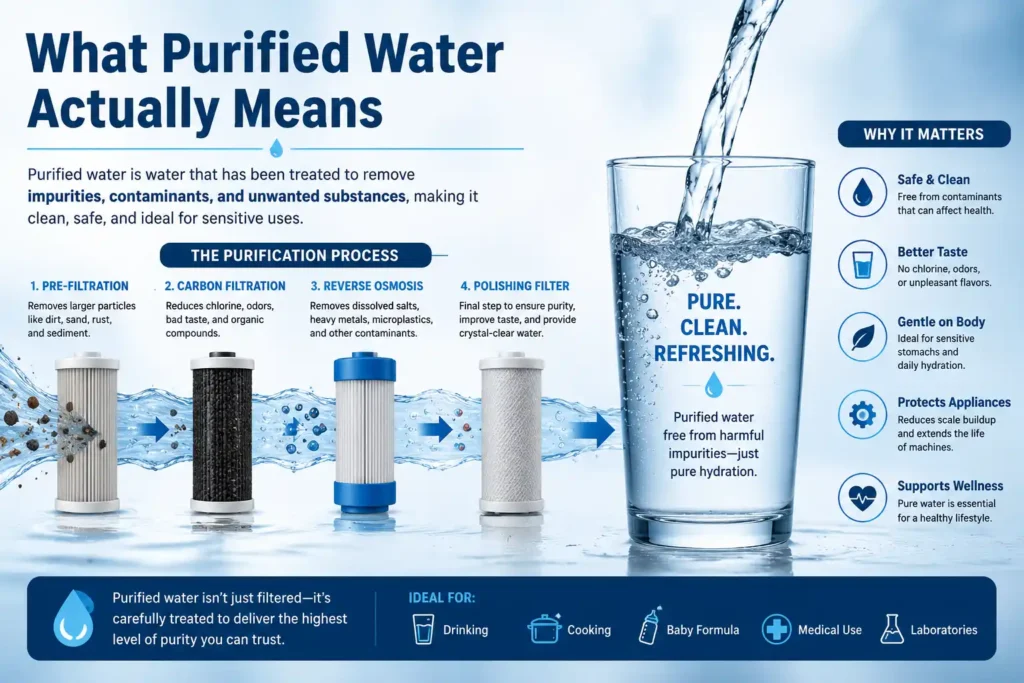
I learned that purified water goes through a real process. It removes things like bacteria and heavy metals. It also removes leftover chemicals. I was surprised by how many steps this takes.
What Purified Water Actually Means
Purified water is water that has been cleaned. This cleaning removes things like chlorine and lead. It also removes bacteria and other small bits. These are things that can hide in normal tap water.
Health groups set clear rules for safe water. Purified water often beats those basic rules by a wide margin. It goes through extra steps that most tap systems skip.
There is a simple number called TDS. It stands for total dissolved solids. Most purified water sits under 10 parts per million. Regular tap water can range from 50 to 400. When I tested my own tap water, it read 210. After my purifier, it dropped to just 4. Seeing those two numbers side by side made it click for me.
That one test made the topic feel real. It also explained the flat taste I noticed before. A high TDS number often means more salts and metals in the mix.
How It Differs From Tap Water
People often mix up a few water terms. Purified water, filtered water, and spring water are not the same. Distilled water is different too.
The table below shows what I found.
| Water Type | What It Removes | Common Source |
| Tap Water | Little to none | City pipes |
| Filtered Water | Some bits and chlorine taste | Tap water through a filter |
| Purified Water | Bacteria, metals, most chemicals | Treated tap or ground water |
| Distilled Water | Almost everything, even minerals | Boiled and cooled steam |
How Purified Water Is Made
There are a few common ways to purify water. I did not know most of these at first. I learned them by reading labels and asking questions at the store.
Common Purification Methods
Here is a simple table with the main methods I found.
| Method | How It Works | Best For |
| Reverse Osmosis | Pushes water through a fine screen | Homes with hard water |
| Distillation | Boils water, then collects the steam | Labs and medical use |
| Carbon Filter | Traps bits with active carbon | Better taste and smell |
| UV Light | Uses light to kill germs | Homes worried about germs |
Each method has its own strengths. Reverse osmosis, often called RO, is popular in homes. It fixes many problems at once. Distillation is very thorough. But it also removes minerals some people want to keep.
My Day to Day Experience Drinking It
I put a small RO unit under my sink. I noticed changes right away. My tea tasted cleaner. My ice cubes came out clear, not cloudy. My coffee maker stopped building up that chalky white film.
There was a funny moment too. My neighbor came over one day. She asked why my kettle looked brand new. I had owned it for two years. I just laughed and told her the truth. It was the water, doing its quiet work.
I began to notice small details too. The water had almost no smell. It did not leave that metal taste after a workout. Small things like that made a real difference.
I remember one Saturday morning well. I was cooking rice for my family. I used purified water out of habit. My mother has cooked rice for thirty years. She asked why it smelled so plain and clean. I told her about the new system. We spent the whole afternoon testing different water side by side, just for fun.
Even my houseplants seemed happier. That part is hard to prove for sure. But the crusty white buildup on the soil went away. My peace lily has looked better ever since. Small wins like this kept reminding me the change was working.
The Good and Not So Good
I want to be honest here. No process is perfect, and this one is no different.
What I Loved
The taste was the biggest win for me. I also liked knowing my water met a higher safety mark. This matters more since young kids visit my home often.
My kitchen tools thanked me too. Less mineral buildup meant less scrubbing. That alone saved me real time each week.
What I Did Not Love
RO wastes some water while it filters. That bothered me at first. I try to be careful with water use at home. This water also loses its natural minerals. Some experts say this can matter for daily mineral intake.
Cost is worth a mention too. A home system takes money up front. The filters need swapping on a regular basis.
The Cost Breakdown I Tracked
I like numbers, so I tracked my full year of costs. Real numbers help more than vague claims.
| Expense | Approximate Cost |
| Reverse osmosis unit, one time | 220 dollars |
| New filters, per year | 60 dollars |
| Extra water used while filtering | 15 dollars |
| Bottled water I no longer buy | Saved about 180 dollars |
My first year was close to a break even point. Every year since has felt like clear savings. The big cost was just that first system. Your own numbers may shift based on your city. Track it your own way for the clearest picture.
Is Purified Water Safe for Everyone
Most healthy adults do fine with purified water. Doctors often suggest it for babies. This helps when mixing baby formula at home. It lowers the risk of germs reaching a newborn.
People with certain kidney issues should ask a doctor first. Mineral intake from water can matter more for them. Athletes who sweat a lot may want extra minerals too. Purified water strips out most minerals along with the bad stuff.
Myths I Believed Before Learning More
Before I looked into this, I believed a few myths.
I thought purified water and mineral water were the same thing. That is not true. Mineral water keeps its natural minerals on purpose. Purified water strips most of them away.
I also thought boiling tap water did the same job. Boiling kills many germs, which is helpful. But it does not remove metals or many chemicals. My TDS reading barely moved after I boiled a sample. That surprised me the first time I tried it.
Lastly, I assumed any label that said natural meant it was purified. Labels can use loose words. Now I check for real proof, not just nice sounding words on a bottle.
How I Store It At Home
I keep a large glass jug in my fridge. It stays cold and ready all day. Glass does not hold on to smells. Plastic jugs can pick up a faint taste over time.
I also learned to clean the jug once a week. Even clean water can grow germs in a dirty container. A quick rinse with warm soapy water does the job. I let it air dry before I fill it again.
I avoid leaving water in direct sunlight. Heat and light can wake up any germs left behind. A dark cabinet or a fridge works best for me. This small habit took no extra effort once it became routine.
Purified Water On The Road
Travel is where this habit gets tricky. Hotel tap water is not always the same as home. Some cities treat their water well. Others do not, and you cannot always tell just by looking.
I now pack a small travel filter bottle in my bag. It looks like a normal water bottle. But it has a filter built right into the straw. I fill it from any tap and drink with less worry.
This trick has saved me more than once. On one trip, the hotel water tasted strongly of bleach. My filter bottle fixed that in seconds. Small tools like this make travel feel a lot less stressful.
Tips I Learned Along the Way
I picked up a few habits over time. They made this whole process much simpler.
I started testing my water with a small TDS meter. This gave me a clear number, not just a guess. I also set reminders to change my filters. A forgotten filter can quietly undo all the benefits.
Reading labels became a habit too. Not every bottle marked purified meets the same real standard. Checking the fine print saved me money more than once.
Final Thoughts
Purified water changed small parts of my daily life. My tea tastes better. My kettle stays clean. I worry less about what might hide in a plain glass of water.
It is not a magic fix. It comes with real costs, like money and some wasted water. Still, based on my own experience, I think it was worth the switch. I hope my story helps you decide if it is worth it for you too.
FAQ
Is purified water the same as bottled water?
Not always. Some bottled water is purified. Other bottles just use spring or tap water with light filtering, so check the label first.
Can I make purified water at home?
Yes. A home RO unit or a small distiller can do the job. You will not need store bought bottles each week.
Does purified water taste different from tap water?
Most people notice a milder taste. This happens because purifying removes chlorine and other things that affect flavor.
Is purified water good for babies?
Many doctors suggest purified water for baby formula. It lowers the risk of germs and metals reaching a baby.
Does purified water remove healthy minerals?
Yes. Most methods remove minerals along with the bad stuff. Some people add a mineral drop back into their water after.