
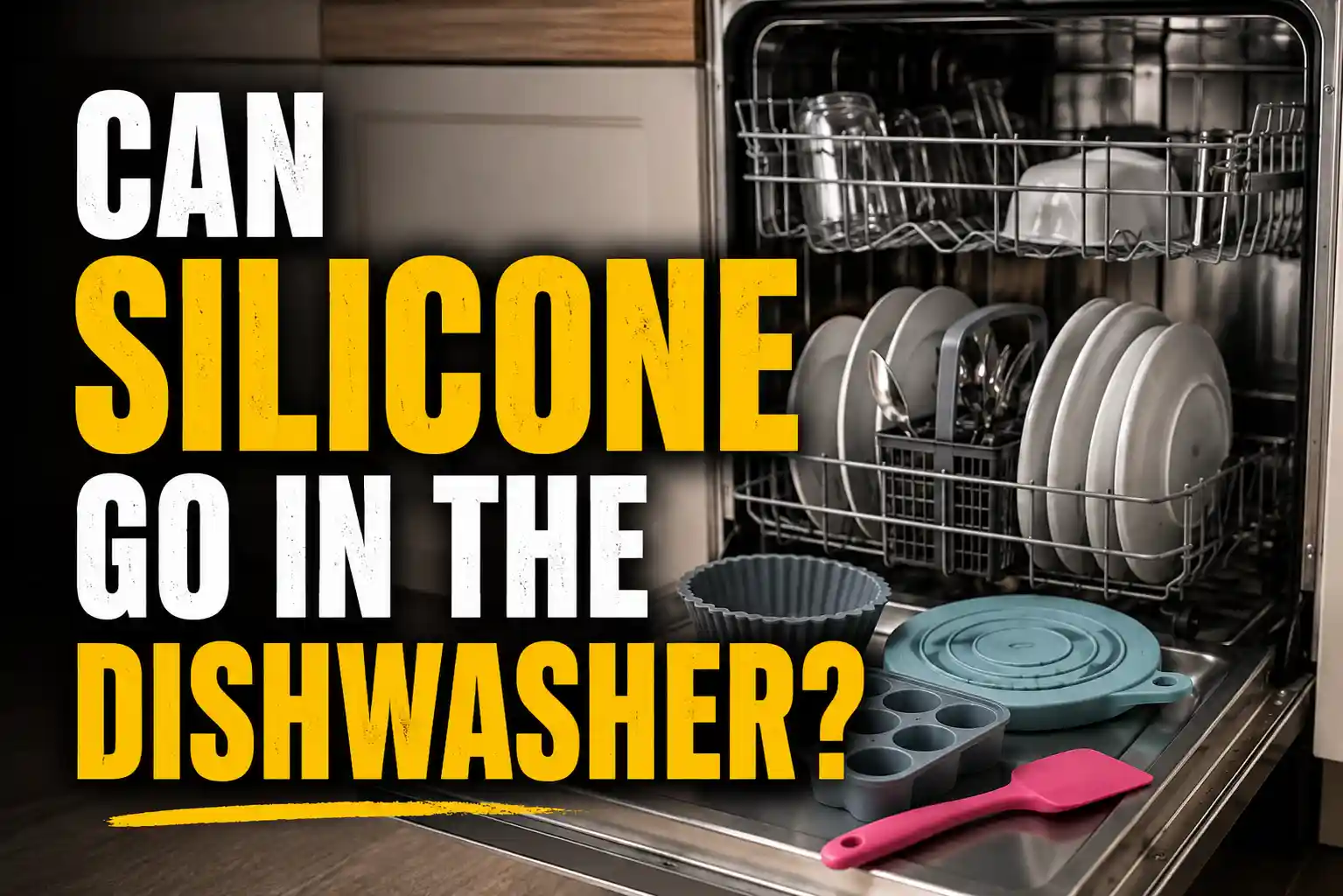
I had a moment last Tuesday that most home cooks will relate to. I had just finished baking banana bread in my silicone loaf pan. The kitchen smelled amazing. But the pan was a greasy mess. I stood at the sink, pan in hand, and thought: can silicone go in the dishwasher, or do I have to scrub this thing by hand?
I did what most people do. I Googled it fast, got conflicting answers, and ended up just tossing it in the dishwasher anyway. That was about six months ago. Since then, I have tested almost every silicone item in my kitchen, and I want to share everything I learned so you do not have to guess.
Table of Contents
What Silicone Actually Is (And Why It Matters for Cleaning)
Before we get into dishwasher tips, let me give you a quick and simple background. Silicone is a synthetic rubber made from silicon, oxygen, carbon, and hydrogen. It is not plastic. It handles heat really well, which is why so many kitchen tools are made from it.
Food grade silicone is the type used in kitchen products. It is non toxic and stable at high temperatures. Most food grade silicone can handle heat up to 428 degrees Fahrenheit (220 degrees Celsius). That number matters because your dishwasher, even on the hottest setting, does not come close to that.
This is exactly why so many kitchen silicone products are labeled dishwasher safe. The material just does not care about hot water and steam the way plastic does.
Can Silicone Go in the Dishwasher? The Short Answer
Yes. Pure food grade silicone can absolutely go in the dishwasher. It will not warp. It will not melt. It will not leach chemicals. I have run my silicone baking mats, spatulas, ice cube trays, and lids through dozens of cycles. They all came out looking exactly the same as when they went in.
But here is the thing I did not realize at first. Not everything that looks like silicone is pure silicone. Some products have a silicone coating over a plastic or metal core. Those need more careful handling. I will explain that below.
My Experience Testing Different Silicone Items in the Dishwasher
Here is a breakdown of what I personally tested over the past several months. I ran each item through multiple cycles, and I checked for warping, discoloration, odor, and texture changes.
| Silicone Item | Dishwasher Result | Rack Recommendation |
| Baking mat | Perfect, no change | Top rack |
| Loaf pan | Came out grease free | Top rack |
| Spatulas | Like new every time | Top rack |
| Ice cube tray | No warping, no odor | Top rack |
| Silicone lids | Great, sealed as before | Top rack |
| Pastry brush | Bristles stayed intact | Top rack |
Every single one passed without any issue. The top rack worked best because it keeps items away from the heating element at the bottom of the machine.
What Happens If You Put Silicone on the Bottom Rack
I got curious and put a silicone spatula on the bottom rack once. Nothing dramatic happened. It did not melt or warp. But the spatula picked up a faint rubbery smell after the drying cycle. I think the direct heat from the element was just a bit too intense for comfort.
After that, I stuck to the top rack. It is a simple habit and it keeps your silicone in better shape over time.
The One Problem I Did Not Expect: Grease and Odor
Here is something nobody told me when I first started using silicone bakeware. Silicone has a slightly porous surface. This means it can absorb oils and strong food smells over time. After making a garlic and herb frittata in my silicone muffin pan, the pan held onto that garlic smell for days.
The dishwasher helped. But it did not fully fix it. I ended up soaking the pan in a mix of baking soda and hot water for about 30 minutes before the next dishwasher cycle. That combination worked really well. Now I do that once a month as regular maintenance.
If your silicone smells off after coming out of the dishwasher, it is not ruined. It just needs a little extra help.
How to Tell If Your Silicone Is Dishwasher Safe
Not all silicone products come with clear labels. Here is what I do when I am not sure.
First, I check the bottom or back of the item for a dishwasher safe symbol. It looks like a small box with water droplets or dishes inside. If I see that, I am good to go.
Second, I do a quick squeeze test. Pure silicone feels flexible and a little slippery. If the item feels hard or rigid in any section, it might have a plastic core or mixed materials. Those need more caution.
Third, I check if the item has any metal parts, wooden handles, or painted surfaces. Those elements change the rules completely. A silicone spatula with a metal handle might be fine, but a painted or printed logo on the handle could fade or peel in the dishwasher.
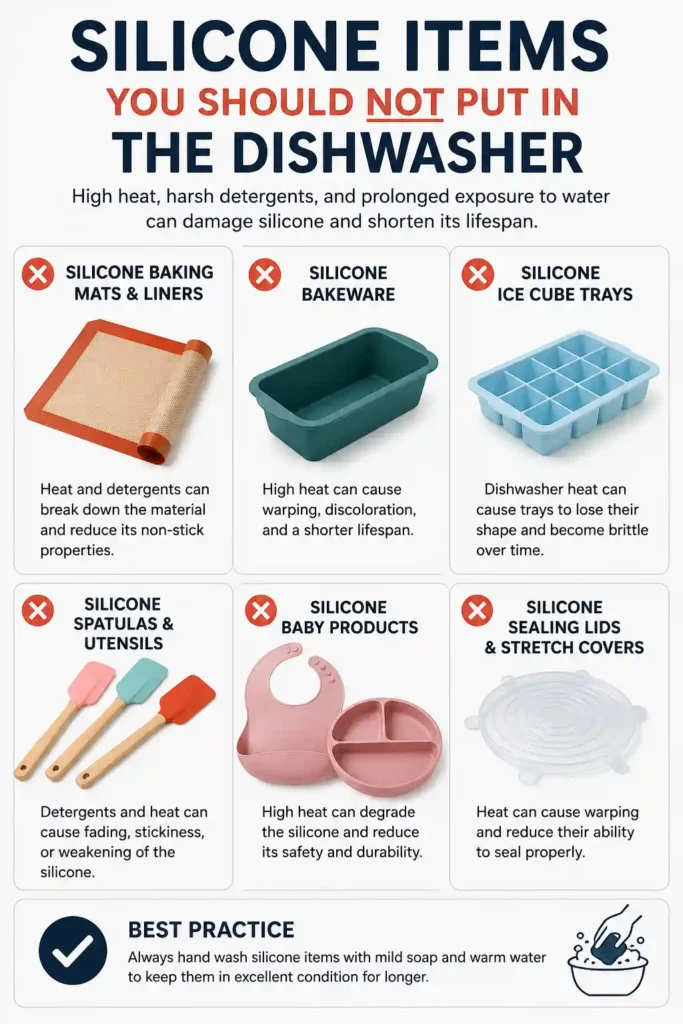
Silicone Items You Should Not Put in the Dishwasher
This is where I made a mistake early on. I put a silicone phone case and a silicone watch band in the dishwasher. They were not ruined, but the colors faded and the texture felt slightly different afterward.
<<Get Amazon For This Product>>
Here is a general guide I follow now.
| Item Type | Safe for Dishwashers? | Why |
| Food grade silicone bakeware | Yes | Made for heat and water |
| Silicone kitchen utensils | Yes | Same reason |
| Silicone lids and covers | Yes | No mixed materials |
| Silicone phone cases | No | Dyes and coatings can fade |
| Silicone watch bands | No | Colors may bleed or fade |
| Silicone coated items | Maybe | Check the label for each one |
The general rule is that if the item was designed for the kitchen, it is almost always fine. If it was designed for electronics or accessories, keep it out.
Tips I Use to Keep Silicone Looking Great
After months of testing, I landed on a small routine that keeps all my silicone in top shape.
I always use the top rack. I do a baking soda soak once a month to handle any lingering smells. I avoid using harsh abrasive cleaners, even in the dishwasher, because they can damage the surface over time. I also let silicone air dry when possible instead of using the heated drying cycle. The heated dry cycle works fine, but air drying is gentler over the long run.
One more thing. If you notice a white film on your silicone after a wash, that is usually from hard water minerals or dishwasher detergent buildup. A quick wipe with white vinegar takes it right off. I learned that one after noticing a haze on my baking mat and panicking for no reason.
Why I Stopped Hand Washing Most of My Silicone
Honestly, the dishwasher cleans silicone better than I can by hand. Hot water and strong detergent together remove oils that a sponge and dish soap sometimes miss. My silicone baking mat used to feel slightly greasy even after hand washing. After a dishwasher cycle, it comes out completely clean and almost crisp.
That said, hand washing is perfectly fine too. Use warm water and dish soap. Dry it well before storing. Silicone does not need special care beyond that.
Final Thoughts on Silicone and the Dishwasher
So can silicone go in the dishwasher? Yes, with a few simple rules to follow. Use the top rack. Make sure the item is pure food grade silicone or clearly labeled dishwasher safe. Do a baking soda soak now and then if smells linger. Skip the dishwasher for silicone accessories and non kitchen items.
I wish someone had laid this out clearly for me when I was standing at my sink holding a greasy loaf pan. Silicone is one of the most low maintenance materials in the kitchen. The dishwasher is your friend here, not your enemy. Just use it the right way and your silicone will last for years.
FAQ: Can Silicone Go in the Dishwasher?
Can silicone kitchen tools really handle dishwasher heat without breaking down?
Yes, food grade silicone tools can take the heat. Most are rated up to 428 degrees Fahrenheit, and dishwashers run far below that. Your spatulas, baking mats, and silicone lids will come out just as strong as they went in.
Why does my silicone bakeware smell bad after a dishwasher cycle?
Silicone has a slightly porous surface that traps oils and food odors over time. A 30 minute soak in hot water and baking soda before your next wash cycle pulls the smell right out. Do this once a month and your silicone tools will stay fresh and odor free.
Is it safe to put silicone spatulas and baking mats on the bottom rack?
Technically they will not melt, but the bottom rack sits right above the heating element. That direct heat can leave a faint rubbery smell on your tools over time. Stick to the top rack to keep your silicone utensils in the best shape for the long run.
How do I know if a silicone tool is truly dishwasher safe before tossing it in?
Flip it over and look for the dishwasher safe symbol, a small box with water droplets or dishes. Then give it a quick squeeze. Pure food grade silicone feels soft and flexible all the way through. If any part feels hard or rigid, it likely has a plastic or metal core that needs gentler care.
What causes a white film on silicone tools after dishwasher cleaning?
That haze is usually hard water mineral deposits or detergent buildup, not damage to the silicone itself. Wipe the surface with a little white vinegar and it comes right off. Your silicone bakeware and kitchen tools are still in perfect shape.