
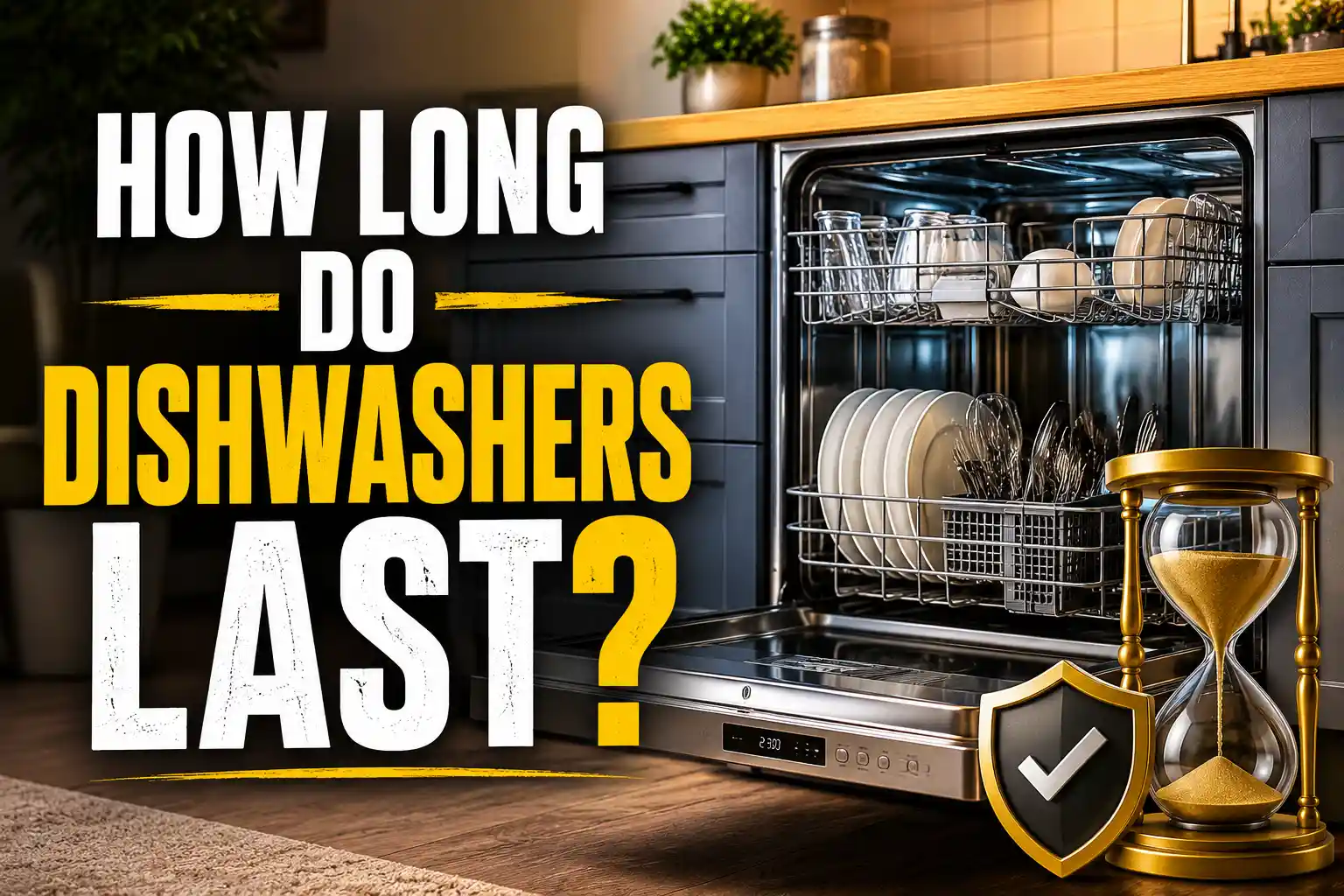
I never thought I’d spend a Saturday morning staring at a puddle of soapy water on my kitchen floor. But there I was. My dishwasher had given up — no warning, no drama. Just a slow leak that soaked through the cabinet. That day, I started asking the same question you’re probably asking right now: how long do dishwashers last, and did I miss the signs?
After replacing that unit and doing a deep dive into appliance life cycles, I now know more than I ever wanted to about dishwasher lifespans. Let me share what I learned — the honest, no-fluff version.
Table of Contents
How Long Do Dishwashers Last on Average?
Most dishwashers last between 9 and 16 years. The average lands around 10 to 13 years. But that number means very little without context. A $400 budget model and a $1,200 premium unit are two very different machines with very different timelines.
My first dishwasher lasted exactly 11 years. Not bad, honestly. It was a mid-range model from a decent brand. I run it almost every day. It washed two kids’ worth of cereal bowls, spaghetti plates, and sticky juice cups. By year 10, it was already struggling — dishes came out cloudy, the door seal looked rough, and the bottom rack kept slipping off its track.
I got another two years out of it with small fixes. Then came the flood.
What Affects How Long a Dishwasher Lasts?
This is where things get interesting. The brand name on the front matters less than you’d think. It’s more about how you use it, where you live, and how well you maintain it.
Water Quality in Your Area
Hard water is a silent killer for dishwashers. I live in an area with moderately hard water, and I could see the mineral buildup inside the tub after just a few years. That limescale coats the spray arms, clogs the filter, and wears down the heating element faster than normal. If your water is hard — above 7 grains per gallon — your machine is working harder every single cycle.
People in soft-water regions often get 13 or 14 years out of the same machine that lasts only 9 or 10 years in a hard-water area. That difference is real.
How Often You Run It?
Running your dishwasher daily is totally fine — that’s what it’s designed for. But running it three times a day with half-full loads adds unnecessary wear. I used to do this. I thought I was being clean and efficient. I wasn’t. I was cutting years off its life.
The motor, pump, and spray arms have a limited number of cycles in them. A household that runs 365 cycles a year will age the machine faster than one running 200 cycles a year. It’s basic math, but it’s easy to forget.
Brand Quality and Build
Not all dishwashers are built equally. Here’s a general breakdown based on real-world reliability data:
| Brand Tier | Expected Lifespan | Notes |
| Budget (under $500) | 6 to 9 years | Higher repair frequency |
| Mid-range ($500–$900) | 9 to 12 years | Most common household option |
| Premium ($900–$1,500+) | 12 to 16 years | Better parts, longer warranties |
| Luxury (Miele, Bosch 800) | Up to 20 years | Built for longevity |
I’ve owned two mid-range dishwashers. My current one is a Bosch 500 series, and five years in, it still runs like new. I do not regret spending more upfront.
Maintenance Habits
This one stings a little because I ignored it for years. Cleaning the filter every month makes a measurable difference. Wiping the door gasket keeps it from cracking. Running a descaling cycle every few months prevents mineral buildup. None of this takes more than 10 minutes, but skipping it for years shortens the machine’s life significantly.
I only started doing this after my first dishwasher died. Classic case of learning the hard way.
Signs Your Dishwasher Is Nearing the End
Once you know what to look for, the warning signs are pretty obvious. I missed most of them with my first unit, but I won’t make that mistake again.
| Warning Sign | What It Means |
| Dishes come out dirty or gritty | Spray arms or filter are failing |
| Dishes come out wet despite heated dry | Heating element is dying |
| Rust inside the tub or on racks | Metal is corroding — hard to reverse |
| Water pooling at the bottom | Drain pump is struggling |
| Loud grinding or rattling noises | Motor or pump bearings are worn |
| Door won’t latch or seal properly | Gasket or latch mechanism is failing |
| Musty smell that won’t go away | Mold in the filter or door seal area |
I had four of these issues in my old dishwasher’s final year. I kept patching them one by one. Looking back, I should have replaced it sooner. Each repair cost $80 to $150, and I spent over $300 in that last year alone.
Repair or Replace? Here’s How I Think About It
The rule most appliance pros use is simple: if the repair costs more than 50% of what a new unit costs, replace it. I think that’s a fair starting point, but age matters too.
If your dishwasher is under 7 years old and needs a $200 repair, fix it. If it’s 11 years old and needs the same $200 repair, that money might be wasted. You’re patching an old machine that likely has other parts ready to fail soon.
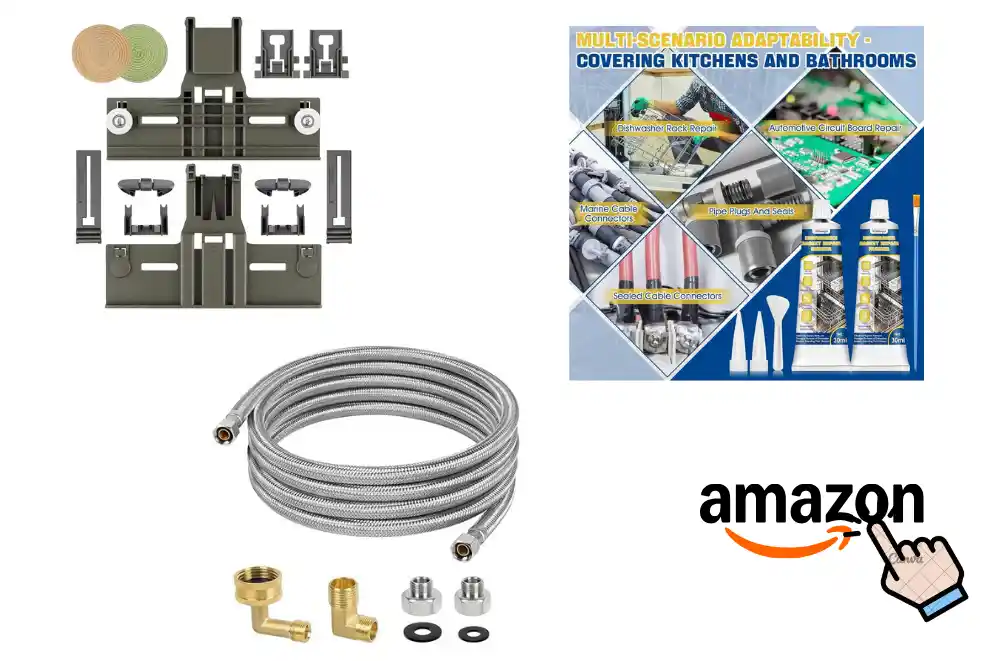
<<Get Amazon For This Product>>
My second dishwasher was 10 years old when the control panel died. Replacement part: $180. I paid for it, and six months later the pump started making a grinding sound. I ended up replacing the whole unit anyway. Lesson learned.
How to Make Your Dishwasher Last Longer
I’ve changed my habits a lot since my first dishwasher died. These things actually work:
Clean the filter once a month. Pull it out, rinse it under warm water, and use a soft brush on the mesh. It takes four minutes. My current machine has never had a drainage issue because of this one habit.
Run a cleaning cycle every 90 days. I use a citric acid tablet or a dedicated dishwasher cleaner. It removes grease and mineral deposits from the interior and the spray arms.
Check the door gasket every few months. Run your finger along the rubber seal around the door. If it feels dry, cracked, or stiff, wipe it with a damp cloth and apply a small amount of petroleum jelly. This costs nothing and prevents leaks.
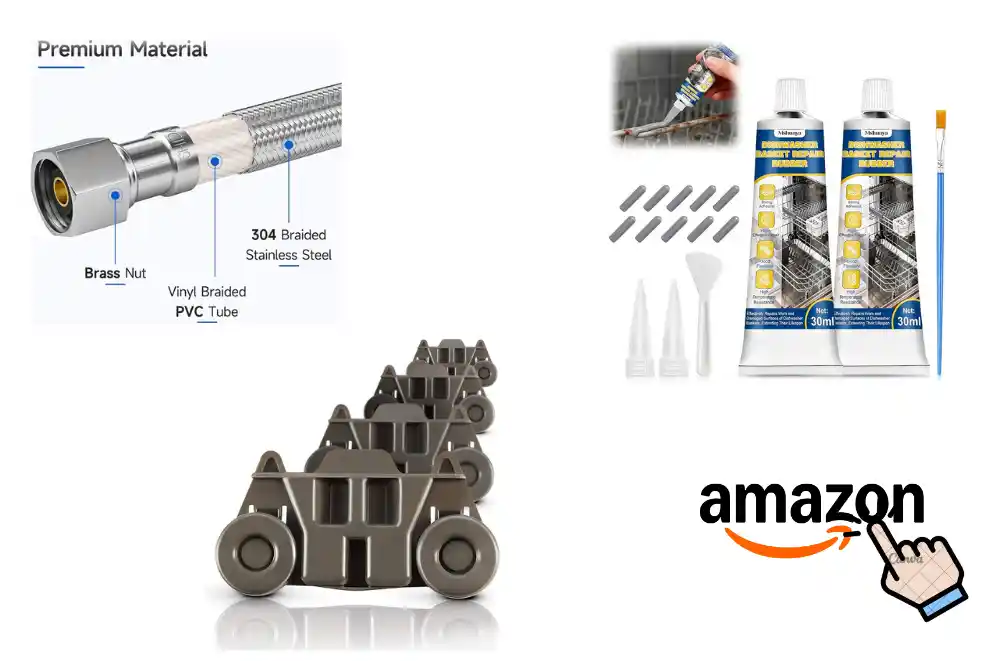
<<Get Amazon For This Product>>
Don’t overload the racks. I know it’s tempting to cram in one more pot. Don’t. Overcrowding blocks the spray arms and forces the pump to work harder. Give everything space to breathe.
Use the right detergent. Powder or tablet detergents work best in most machines. Liquid can leave residue. Skip the cheap store brands — they often don’t dissolve fully and clog the filter faster.
Scrape plates before loading, but don’t pre-rinse. Modern dishwashers have soil sensors that detect how dirty the water is. If you pre-rinse, the machine runs a lighter cycle because it thinks the load is already clean. That can leave food debris on dishes. Just scrape the big stuff off and let the machine do its job.
Is It Worth Buying a More Expensive Dishwasher?
Honestly? Yes. I was hesitant to spend more on my current machine. But the numbers make sense when you look at the full picture.
A $500 budget unit that lasts 8 years costs about $62 per year. A $1,000 mid-range unit that lasts 13 years costs about $77 per year. That’s barely $15 more per year for a quieter, more reliable machine that cleans better and uses less water and energy.
When I factor in the $300 I spent on repairs in my old dishwasher’s last year, the math gets even clearer. Buying better upfront is almost always the smarter financial move for an appliance you use daily.
Final Thoughts
So, how long do dishwashers last? The honest answer is: it depends on you more than the machine. A $700 dishwasher with good maintenance in a soft-water area can easily hit 14 or 15 years. The same machine ignored and abused might struggle to hit 8.
The puddle on my kitchen floor that Saturday morning was my fault as much as the machine’s age. I ignored the signs, skipped the maintenance, and expected it to keep going forever. Now I treat my dishwasher like any other tool I rely on — with a little care and attention.
If your machine is over 10 years old and starting to show signs of wear, start thinking about what comes next. You don’t have to rush, but having a plan before the flood hits is a lot better than making a panic purchase with soapy water pooling around your feet.
FAQ: How Long Do Dishwashers Last?
How long do dishwashers last with daily use?
Most dishwashers last 9 to 13 years with daily use. Daily cycles are fine — that’s what the pump, motor, and spray arms are built for. The key is not to run multiple half-loads in a day, as that adds extra wear without good reason.
What kills a dishwasher faster than anything else?
Hard water is the biggest culprit. Mineral buildup coats the spray arms, clogs the filter, and wears down the heating element cycle by cycle. If your water is above 7 grains per gallon, run a descaling cycle every 90 days to keep that buildup in check.
Is it worth repairing a dishwasher that’s over 10 years old?
Usually not, unless the fix is simple and cheap. If the repair costs more than half the price of a new unit, replace it. A 10-year-old machine likely has other parts close to failing — you may end up paying twice.
How do I know when my dishwasher pump is going bad?
Listen for a loud grinding or humming noise during the drain cycle. You might also notice water sitting at the bottom after the cycle ends. Those are classic signs the drain pump is wearing out and struggling to move water through the system.
Do Bosch dishwashers really last longer than budget brands?
Yes, in most cases. Bosch units — especially the 500 and 800 series — are built with higher-grade parts and tighter tolerances. Budget models under $500 tend to last 6 to 9 years, while a Bosch mid-range unit can push 12 to 16 years with basic maintenance.