

I never thought much about my dishwasher. I just loaded the plates, added soap, and hit start. But one evening after a big dinner, I stood in my kitchen and wondered why my glasses still looked greasy. That one question led me down a rabbit hole. Do dishwashers use hot water? The short answer is yes. But there is a lot more to it than that.
Let me share what I learned from real testing, a few failed loads of dishes, and some late night reading.
Table of Contents
My First Clue That Water Temperature Actually Matters
It was a Sunday. I had cooked a big meal for the family. The pots were greasy, the plates had dried food on them, and I just wanted everything clean. I ran the dishwasher on a quick cycle and went to watch TV.
When I opened it an hour later, the glasses had a foggy film. The pots still had grease spots. I was frustrated. I had used the same detergent for months. So I started asking questions.
My neighbor told me to check the water temperature. I had no idea that was even a thing to check. That conversation changed how I use my dishwasher forever.
Do Dishwashers Use Hot Water? Yes, and Here Is Why It Matters
Dishwashers do use hot water. In fact, hot water is the main reason a dishwasher can clean at all. Cold water simply does not cut through grease or dissolve detergent the way hot water does.
Most dishwashers connect to your home’s hot water line. That means the machine starts with warm water from your heater. Then the dishwasher heats it even more with a built-in heating element inside the tub.
Here is a simple breakdown of what happens during a cycle:
| Cycle Stage | What the Water Does | Typical Temperature |
| Pre rinse | Loosens food and debris | 85 to 110 degrees F |
| Main wash | Breaks down grease with detergent | 120 to 140 degrees F |
| Final rinse | Removes soap and sanitizes | 140 to 160 degrees F |
| Heated dry | Evaporates water off dishes | 120 to 140 degrees F |
Once I understood this, I realized my quick cycle was not heating the water enough. The dishes never got clean because the temperature was too low.
How Hot Does the Water Get in a Dishwasher?
This was the question I kept coming back to. I read a lot of forums and even ran a few tests with a kitchen thermometer and a cup of water left in the tub mid cycle.
A standard home dishwasher reaches around 120 to 140 degrees Fahrenheit during the main wash. That is hot enough to kill most bacteria and loosen stubborn grease. If you use the sanitize cycle, the water gets even hotter, usually around 150 to 160 degrees Fahrenheit.
I was not using the sanitize setting before. When I finally turned it on, the difference was clear. My plates came out spotless. The glasses were actually clear. It felt like I had a brand new machine.
The temperature matters for three big reasons. First, hot water activates dishwasher detergent. The enzymes in the soap only work above certain temperatures. Second, heat softens food residue so water can wash it away. Third, high temperature during the final rinse helps dishes dry faster since the water evaporates more quickly.
Does Your Water Heater Affect Your Dishwasher?
Yes, it absolutely does. I tested this myself after reading about it online. I ran my dishwasher right after someone had taken a long shower. The hot water heater had not fully recovered yet. The dishes that load came out worse than usual.
Most dishwasher brands recommend that your home water heater be set to at least 120 degrees Fahrenheit. If your heater is set lower, the dishwasher has to work harder and longer to reach the right wash temperature. That wastes energy and often leaves dishes dirtier.
I checked my water heater settings after this and found it was set to only 110 degrees. I bumped it up to 120 and noticed the difference in the very next load.
One tip that actually helped me: run your kitchen hot water tap for about 30 seconds before you start the dishwasher. This flushes the cold water sitting in the pipes and lets the machine fill with already hot water right from the start.
What About Energy Efficient Dishwashers?
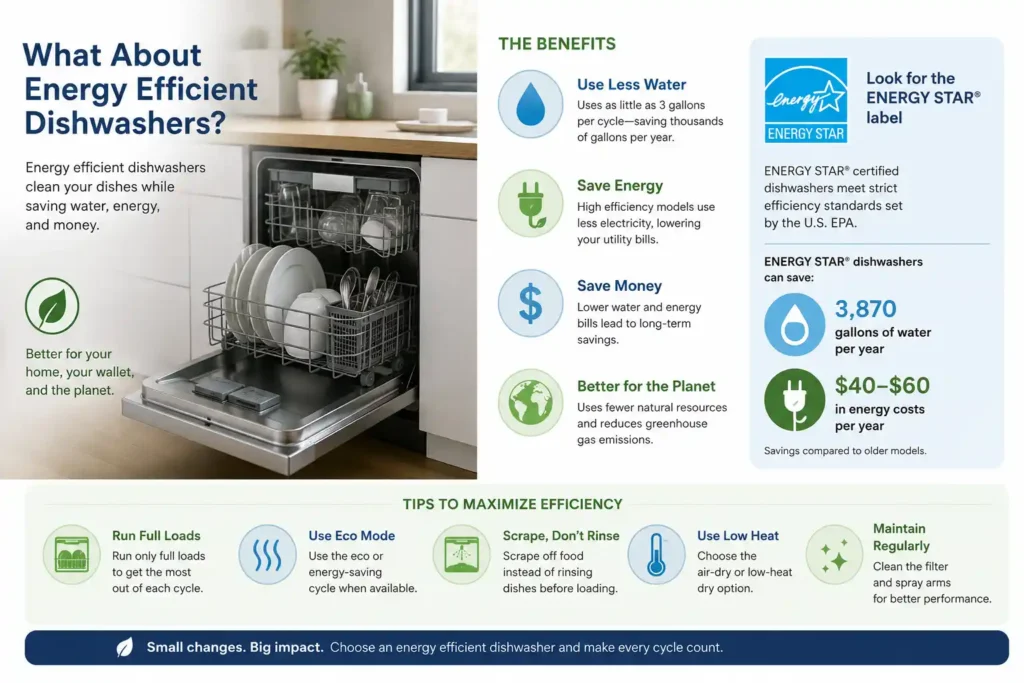
I was curious about newer models since my dishwasher is pretty old. Newer energy efficient dishwashers sometimes connect to the cold water line instead of hot. They use internal heating elements to bring the water up to the right temperature. This gives the machine more control over the exact temperature used in each cycle.
<<Get Amazon For This Product>>
Some people think cold water connection means the machine uses less energy. That is not always true. Heating cold water from scratch takes more electricity than boosting already warm water. The benefit of cold water connection is more precision, not necessarily lower energy use.
Here is a quick comparison to make this easy to understand:
| Connection Type | Starting Water | How It Heats | Energy Impact |
| Hot water line | Already warm | Boosts to target temp | Faster, less electricity |
| Cold water line | Cool or cold | Heats from scratch | More electricity, more control |
| Hybrid models | Either line | Sensors control heating | Most efficient overall |
If you are buying a new dishwasher, check the spec sheet for the connection type. Knowing this helps you plan your setup and set expectations for energy bills.
The Moment I Finally Got Perfectly Clean Dishes
After weeks of testing, I found a routine that works every single time. I run the hot tap first. I set the cycle to normal wash with the heated dry on. Once a week, I use the sanitize setting for things like cutting boards and baby bottles.
The change was real. No more foggy glasses. No more greasy pots. My dishwasher was doing exactly what it was always supposed to do. I just was not giving it the right conditions to succeed.
The funny part is that I had blamed the dishwasher for years. I even looked up replacement models a couple of times. The machine was never broken. I just did not understand how it worked.
Common Reasons Your Dishwasher Is Not Cleaning Well
After going through all this myself, I want to save you the same frustration. Here are the most common reasons dishes come out dirty, and they all connect back to water temperature.
Water heaters set too low are the most common issue. If your home water heater is set below 120 degrees Fahrenheit, your dishwasher will struggle on every cycle. It is a quick fix that makes a big difference.
Cold water in the pipes at the start of a cycle is another real problem. The first few gallons that fill the dishwasher may be cool water sitting in the line. Running the tap first solves this fast.
Using the wrong cycle is something a lot of people do. Quick or eco cycles often use lower temperatures or skip the heating phase. These are fine for lightly soiled dishes but not for greasy pots and pans.
Skipping the sanitize cycle when it matters is worth mentioning too. If you wash baby items, raw meat prep tools, or dishes for someone who is sick, always use the sanitize setting. It is there for a reason.
Overloading the machine blocks water from reaching all the dishes. Water flow matters as much as temperature. If dishes are packed too tight, hot water cannot reach every surface.
What I Wish I Had Known Earlier
I spent months being frustrated by my dishwasher before I asked the right question. Do dishwashers use hot water? That one question led me to understand how the whole system works.
Hot water is not just a feature. It is the foundation of how a dishwasher cleans. Without the right temperature, even the best detergent will not work properly. The machine needs heat to do its job well.
Now I think of my dishwasher as a heat based cleaning tool. I treat it that way and I get clean dishes every single time. No more rewashing by hand. No more greasy film on my glasses. Just clean dishes, every load.
If your dishwasher is letting you down, check the temperature first. It might be the only thing standing between you and a machine that actually works.
FAQ: Do Dishwashers Use Hot Water?
Do dishwashers use hot water from your home supply?
Yes, most dishwashers pull hot water straight from your home’s water line. The machine then boosts that temperature even higher using its built-in heating element. That is why your water heater setting matters more than most people think.
What temperature should a dishwasher reach to clean dishes properly?
A dishwasher needs to hit at least 120 to 140 degrees Fahrenheit during the main wash cycle. Anything below that and grease will not break down, and detergent will not activate fully. If your dishes come out foggy or greasy, low water temperature is usually the first thing to check.
Does a low water heater setting affect how clean your dishes get?
It does, and it is one of the most common reasons dishes stay dirty after a full cycle. If your home water heater is set below 120 degrees Fahrenheit, your dishwasher has to work harder and still may not reach the right temperature. Bumping the heater up to 120 degrees is a simple fix that often solves the problem right away.
When should you use the sanitize cycle on a dishwasher?
Use the sanitize cycle any time you wash cutting boards, baby bottles, or dishes used by someone who is sick. This cycle pushes water up to 150 to 160 degrees Fahrenheit, which is hot enough to kill bacteria that a normal wash cycle might miss. It takes a bit longer, but the extra heat makes a real difference for hygiene.
Does running the hot tap before starting the dishwasher actually help?
Yes, and it is one of the easiest tips to try today. Cold water sits in your pipes between uses, so the first water that fills your dishwasher may not be hot at all. Running the kitchen tap for about 30 seconds first flushes that cold water out, so your dishwasher starts with hot water right from the beginning.