
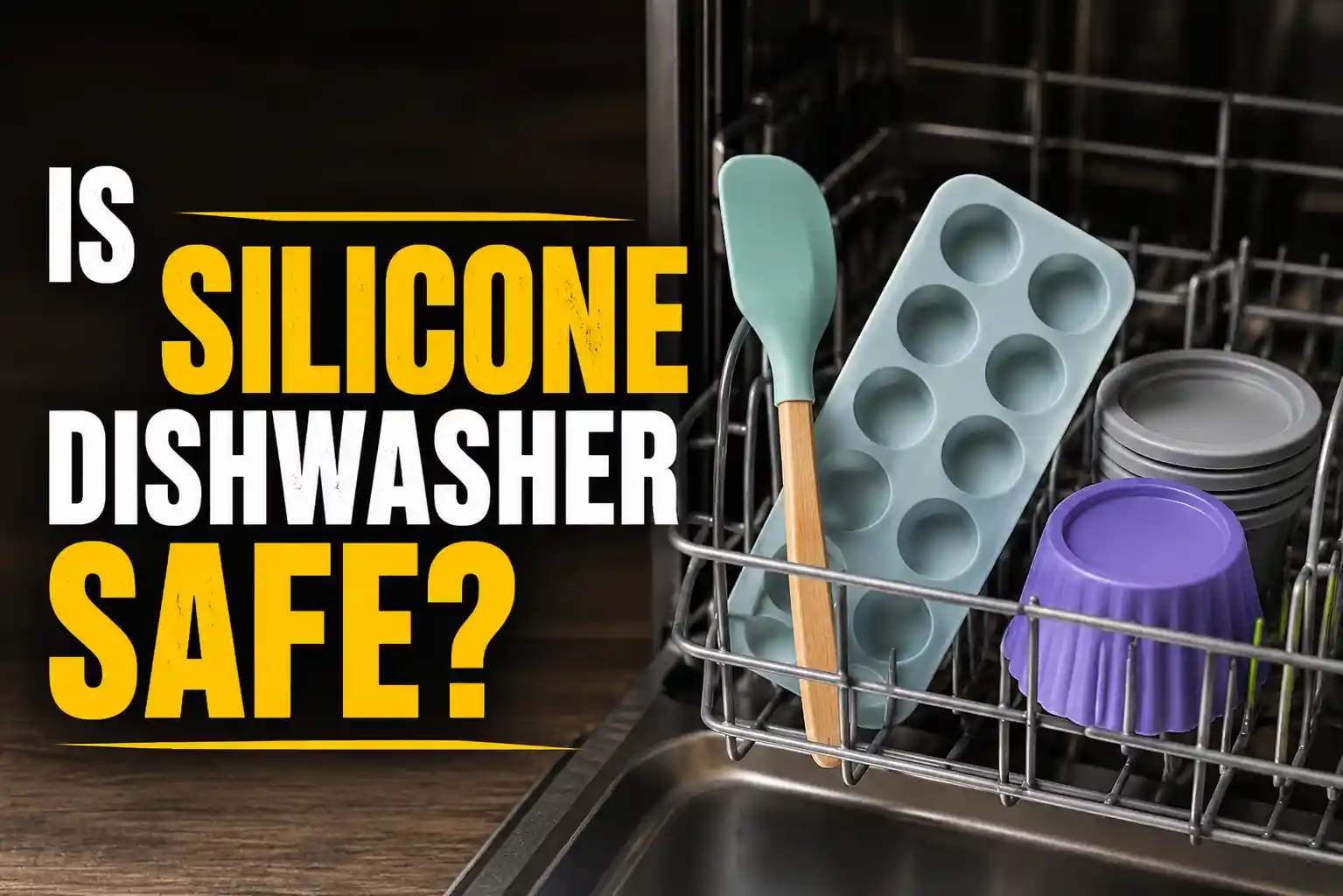
I still remember the day I pulled my favorite silicone spatula out of the dishwasher and just stared at it. It looked fine. No warping, no weird smell, no melted edges. But I had no idea if I had just gotten lucky or if silicone was actually built for this. So I started testing. I washed everything I owned made of silicone, over and over, for months. And now I can tell you exactly what holds up and what does not.
Table of Contents
What I Learned About Silicone and Dishwashers
The short answer is yes. Food grade silicone is dishwasher safe. But that answer comes with a lot of real context that nobody talks about. I had to figure it out piece by piece, usually after something went wrong or surprised me in the kitchen.
Silicone is made from silicon, oxygen, carbon, and hydrogen. It can handle heat up to around 428 to 450 degrees Fahrenheit. A dishwasher’s hottest cycle rarely goes above 170 degrees. So the heat is not the problem at all. What causes issues is usually the quality of the silicone itself, not the dishwasher.
The Difference Between Real Silicone and Cheap Fillers
This was the biggest thing I learned. Not all silicone is the same. I bought a cheap set of baking molds once and after three washes they started to feel sticky and smell odd. I did a simple test I read about online. I pinched the silicone and twisted it. It turned white in the middle. That white color means the product has cheap fillers mixed in. Real, pure food grade silicone stays the same color no matter how hard you squeeze it.
Those filler based products break down faster. The dishwasher did not ruin them. They were already low quality before I even used them.
Top Rack vs Bottom Rack: Does It Really Matter?
I tried both. I washed silicone lids, molds, spatulas, and ice trays on both racks for weeks. Here is what I noticed. Items on the bottom rack were fine most of the time. But over many months, I could see very slight changes in softer silicone pieces. The bottom rack runs hotter and the water pressure hits harder. For thick, sturdy silicone items like a baking mat, it made no difference. For thin or delicate molds, the top rack kept them in better shape long term.
My rule now is simple. Silicone baking mats and thick spatulas go on the bottom rack. Thin molds and small lids go on the top rack. Nothing has warped or cracked since I started doing this.
A Quick Guide to What Is Safe and What Is Not
This table saved me a lot of confusion. I put it together after testing each item type myself.
| Silicone Item | Dishwasher Safe | Best Rack | Notes |
| Silicone spatula (solid handle) | Yes | Bottom or Top | Check that handle is also silicone |
| Silicone baking mat | Yes | Bottom | Lay flat or roll loosely |
| Ice cube trays | Yes | Top | Top rack keeps shape better |
| Silicone lids | Yes | Top | Prevents warping over time |
| Silicone molds | Yes | Top | High heat on bottom can degrade thin walls |
| Spatula with wooden handle | No | Skip it | Wood warps and cracks in dishwashers |
| Silicone baby products | Check label | Top | Many require hand washing by brand rules |
My Personal Kitchen Tests Over Six Months
I tracked what I washed and how each item held up. I am the kind of person who gets obsessive about this stuff. My kitchen drawer has silicone items from at least six different brands. Some I paid a lot for. Some came from the dollar section of a store. The results were very different.
The high quality silicone items from reputable brands looked and felt the same after 50 plus washes. No color change, no stickiness, no odor. The cheap ones started to feel a little rough on the surface after about 15 to 20 washes. They did not fall apart, but I could tell something was changing.
The strangest thing I noticed was odor absorption. After washing a silicone bowl next to a very garlic heavy dish, the bowl picked up a faint smell. This surprised me because everyone says silicone is non porous. After more research I learned that very low quality or overly thin silicone can hold onto strong smells. The fix was simple. A baking soda soaks for 30 minutes before the next wash clears it right up.
What About Detergent?
I tested this too. Harsh detergents with strong bleach or citric acid made no visible difference on quality silicone. But on the cheap filler based pieces, I noticed the surface got slightly tackier after using a very concentrated pod. I now stick to a regular gel detergent for everything silicone. It cleans just as well without any harsh chemicals working against the material.
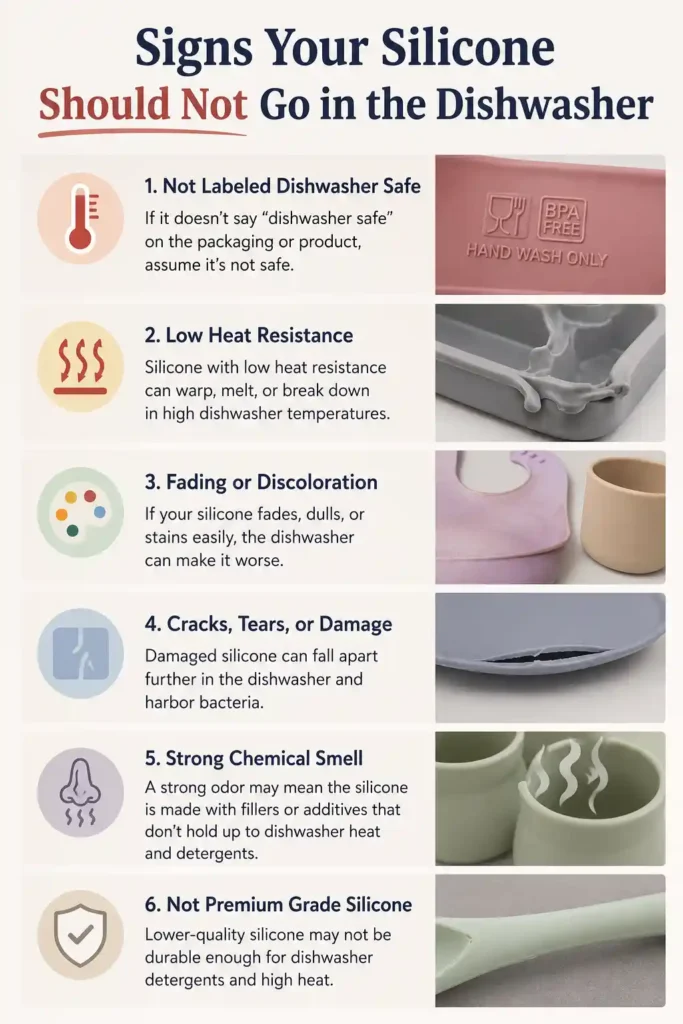
Signs Your Silicone Should Not Go in the Dishwasher
Not every silicone item gets to live the dishwasher life. Here is what I check before loading anything in.
First, I look for a dishwasher safe label or symbol. It is usually on the bottom of the item. If there is no label, I hand wash it the first few times and see how it holds up.
Second, I check for mixed materials. A silicone spatula with a metal core is usually fine. A silicone tool with a wooden or low grade plastic handle is not. The silicone part survives. The handle does not.
Third, I do the pinch test on any new silicone I buy. If it turns white, I hand wash it only. I would rather spend 20 seconds hand washing a cheap mold than replace it after it falls apart.
<<Get Amazon For This Product>>
Silicone vs Other Materials in the Dishwasher
People ask me all the time how silicone compares to other kitchen materials when it comes to dishwasher safety. I have used all of these in my kitchen so here is my honest take.
| Material | Dishwasher Safe | Risk Factor |
| Food grade silicone | Yes | Very low for quality items |
| Plastic (BPA free) | Sometimes | Can warp or leach chemicals over time |
| Wood | No | Warps, cracks, and absorbs bacteria |
| Cast iron | No | Loses seasoning and rusts |
| Stainless steel | Yes | Almost always safe |
| Non stick pans | Rarely | Coating breaks down with harsh detergents |
Silicone sits at the top of this list for me. It is one of the few materials where the dishwasher genuinely does not cause problems when you buy quality items.
What I Wish I Knew Before I Started
The biggest mistake I made early on was treating all silicone the same. I assumed that the word silicone on a label meant the item was identical to every other silicone product I owned. It is not. The quality gap between good and bad silicone is huge, and the dishwasher just makes that gap more obvious over time.
I also wish someone had told me about the pinch test sooner. It takes two seconds and saves you from washing something 30 times before you realize it was never going to hold up.
One more thing. Silicone can hold static after a dishwasher cycle. It picks up lint and dust easily right after washing. I just give it a quick rinse under warm water if I notice that happening. It goes away right away.
My Final Verdict on Silicone and the Dishwasher
After six months of testing and a drawer full of silicone items in various states of wear, I feel confident saying this. Quality food grade silicone is absolutely dishwasher safe. It handles heat, water pressure, and detergent better than almost anything else in your kitchen. The dishwasher is not the enemy here. Cheap materials and mixed handle types are the real risks.
Buy good silicone, do the pinch test, put thin or delicate pieces on the top rack, and you will not have any problems. Your silicone will outlast most of the other things in your kitchen drawer, dishwasher cycle after dishwasher cycle.
FAQ: Is Silicone Dishwasher Safe?
Is silicone dishwasher safe for all kitchen tools?
Most food grade silicone tools are dishwasher safe. That includes spatulas, baking mats, and silicone lids. The key is making sure the whole tool is silicone, not just the tip or head.
How do I know if my silicone tool has cheap fillers?
Do the pinch test. Pinch and twist the silicone firmly. If it turns white in the middle, it has fillers and will break down faster in the dishwasher. Pure food grade silicone stays the same color no matter how hard you squeeze.
Does dishwasher heat damage silicone tools over time?
Not with quality silicone. Food grade silicone handles heat up to 450 degrees Fahrenheit. Your dishwasher tops out around 170 degrees. The heat alone will not hurt it. Cheap filler silicone is a different story.
Should silicone tools go on the top rack or bottom rack?
Thick tools like baking mats and solid spatulas do fine on the bottom rack. Thin molds and flexible lids hold up better on the top rack. The bottom rack runs hotter and hits harder with water pressure.
Can silicone tools pick up odors after washing in the dishwasher?
Low quality or very thin silicone can hold onto strong smells like garlic or onion. Good quality silicone rarely does. If you notice an odor, soak the tool in baking soda and water for 30 minutes before the next wash.