
I make smoothies every single morning. It is part of my routine. Wake up, grab some fruit, toss it in the Ninja, and blend away. But cleaning that thing? That used to stress me out. One day, after a particularly thick mango smoothie, I just tossed the whole pitcher into the dishwasher. Bottom rack, hot cycle, the works. Big mistake.
The next morning, I pulled out a warped pitcher that no longer fit on the base. It rocked side to side like a broken chair. I had to buy a replacement, and that stung. So I did what I should have done from the start. I read the manual, did my research, and tested things properly. Now I want to share everything I learned so you do not make the same costly mistake I did.
Table of Contents
So Is the Ninja Blender Dishwasher Safe?
The short answer is yes, but only for certain parts. Not all of the blender goes in the dishwasher. Let me break this down so it is crystal clear.
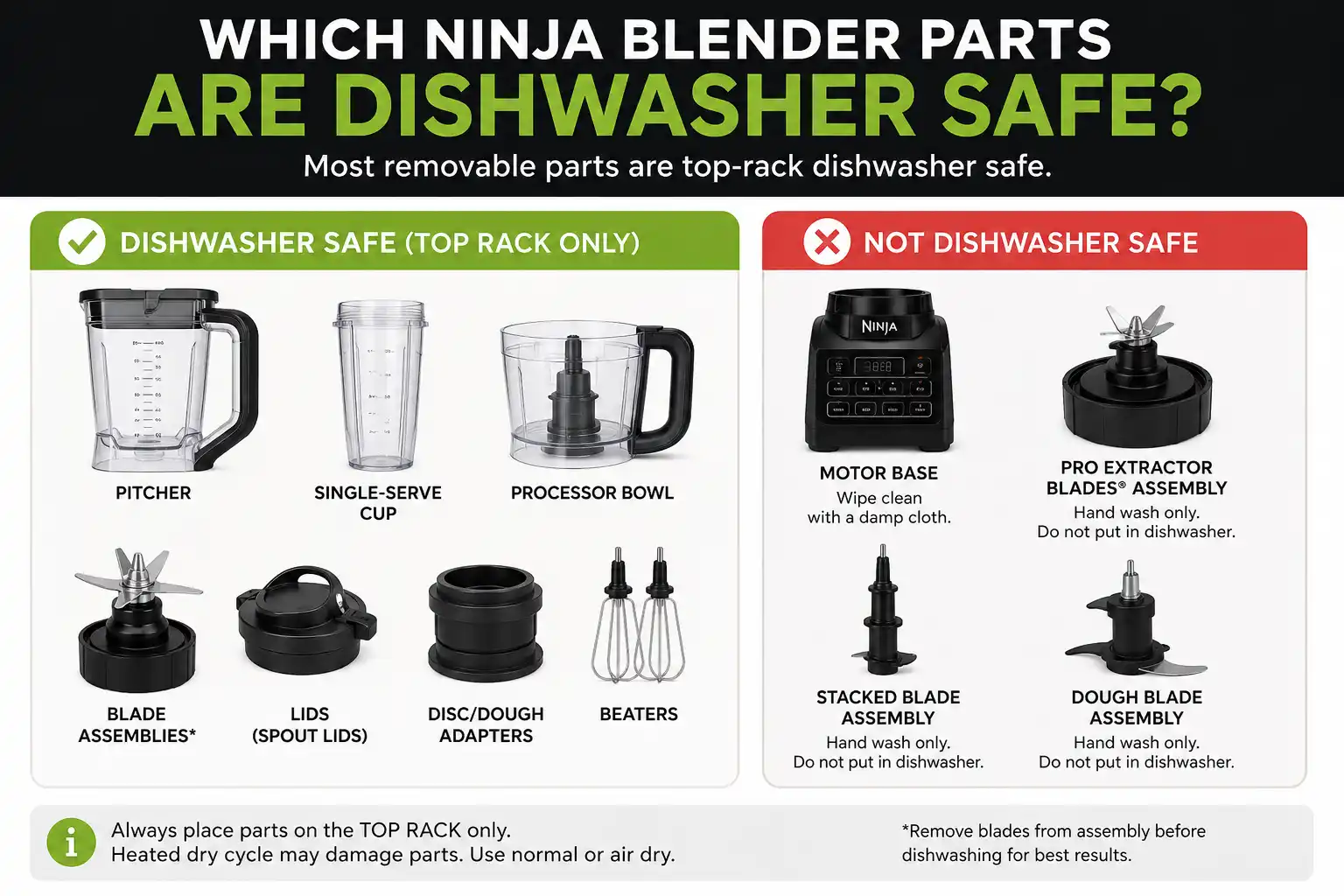
Most of the removable parts of a Ninja blender are dishwasher safe. That includes the pitcher, the lid, the blade assembly, the gaskets, and the single serve cups. But here is the key rule: top rack only. Always top rack. The bottom rack sits too close to the heating element. That heat warps plastic fast. I know this from personal experience, and it is not a fun lesson to learn.
The motor base is a completely different story. Never, and I mean never, put the motor base near water. It houses all the electrical parts. Water gets in, and the whole blender is done. You just wipe that part down with a damp cloth and move on.
Which Ninja Blender Parts Are Dishwasher Safe?
Here is a clear table to make this easy for you. I put this together based on my own testing and what Ninja officially states.
<<Get Amazon For This Product>>
| Blender Part | Dishwasher Safe? | Recommended Rack |
| Pitcher or Carafe | Yes | Top Rack |
| Lid and Lid Plug | Yes | Top Rack |
| Blade Assembly | Yes (with care) | Top Rack |
| Single Serve Cups | Yes | Top Rack |
| Gaskets and Seals | Yes | Top Rack |
| Motor Base | No | Never |
| Control Panel | No | Never |
I keep this table in my fridge now. It saves me from guessing every time I clean up.
The Bottom Rack Mistake That Cost Me Money
I want to talk more about what happened when I used the bottom rack, because I think it will help you avoid the same thing. It was a Sunday morning. I made a big batch of frozen berry smoothies for the whole family. The pitcher was sticky and thick with residue. I was tired and lazy, so I threw it in the bottom rack and ran a heavy cycle with heated drying.
The next morning, I pulled out a pitcher with a visible warp on one side near the handle. The lid would not close flush anymore. The locking tabs did not sit right on the base. I tried to use it anyway, and it was unstable during blending. I had to order a new pitcher. Replacement pitchers for most Ninja models cost anywhere from $30 to $65 depending on the size. Not a fun expense for a mistake that takes two seconds to avoid.
The bottom rack gets too hot. The heat from the drying element is intense down there. Plastic like Tritan, which Ninja uses in most pitchers, can handle moderate heat just fine. But sustained high heat from a dishwasher drying cycle is a different level. The plastic softens slightly and deforms. Once it warps, there is no going back.
What About the Blade Assembly?
This one surprised me. The blade assembly is technically dishwasher safe on the top rack. But I hand wash mine now. Here is why. Dishwasher detergent is harsh. Over time, it dulls the blade edges. You will not notice it after one or two washes, but after months of regular dishwasher use, blending gets less efficient. Tough ice does not crush as cleanly. Fibrous greens like kale do not break down as smoothly.
I also think about safety. Wet blades sitting in a dishwasher rack are sharp and hard to see. I have nicked my fingers reaching into a crowded rack before. Now I wash the blade assembly by hand with a long handled dish brush. It takes 30 seconds and keeps the blades sharper for longer.
How to Properly Clean Ninja Blender Parts in the Dishwasher?
If you want to use the dishwasher, here is the method I now follow every time. It keeps everything clean and avoids damage.
Step One: Rinse First
Before loading anything into the dishwasher, rinse all parts under warm running water. This removes big chunks of food. If you skip this step, food particles can bake onto the plastic during the cycle. Tomato based blends are the worst for this. They stain permanently if you let them sit.
Step Two: Disassemble Everything
Take apart all the pieces. Remove the blade assembly from the pitcher. Remove the lid plug from the lid. Put small pieces like gaskets in a mesh bag or small item basket inside the dishwasher so they do not fall through the rack and land on the heating element.
Step Three: Load the Top Rack Correctly
Place the pitcher face down between the tines. This lets water drain out instead of pooling inside. Put the lid in a flat, open position so water can reach all the grooves. Keep the blade assembly away from other sharp items like knives to avoid scratches.
Step Four: Use a Gentle Cycle
Do not run a heavy or sanitized cycle. A normal or light wash cycle is enough. High heat and high pressure can stress the plastic over time. I use a fragrance free, phosphate free detergent. Citrus based detergents can leave a faint flavor in the plastic that you later taste in your smoothie. That happened to me once with an orange scented pod. My banana smoothie tasted oddly citrusy for a week.
Step Five: Skip the Heated Dry
This is the big one. Turn off the heated dry setting. Let the parts air dry instead. Heated drying is what causes most warping issues in plastic blender components. I just crack open the dishwasher door after the wash cycle ends and let everything air out for an hour.
Parts You Should Always Hand Wash
Some parts are better off staying out of the dishwasher entirely. I hand wash these every time without question.
<<Get Amazon For This Product>>
| Part | Reason to Hand Wash |
| Blade Assembly | Stays sharper longer, safer handling |
| Gaskets and Rubber Seals | Dishwasher heat degrades rubber faster |
| Small Lid Plugs | Can fall through racks and melt |
| Any Part with Cracks or Wear | Water and heat can worsen damage |
For hand washing, I use warm soapy water and a brush with a long handle. I never submerge the blade assembly for a long soak because water can work its way into the blade hub and cause rust over time.
The Self Clean Method Is Actually Brilliant
After I ruined my first pitcher, I discovered Ninja’s self clean approach. It changed everything. You fill the pitcher halfway with warm water, add a small drop of dish soap, put the lid on, and run it at high speed for 30 to 60 seconds. Then you rinse it out. Done.
For a quick daily clean after a basic fruit smoothie, this method is unbeatable. It takes less than a minute, it is gentle on all parts, and it prevents any food from drying and sticking. I use this method after every single morning smoothie now. I only run the dishwasher for a deeper clean maybe once or twice a week.
The self clean method is especially useful right after thick blends like hummus, nut butter, or protein shakes. Those things stick fast once they dry. If you blend and immediately self clean, the pitcher stays in great shape.
Does the Ninja Blender Model Matter for Dishwasher Safety?
Yes, it does matter. Most popular Ninja blender models have dishwasher safe removable parts. This includes models like the Ninja BN701 Professional Plus, the Ninja SS101 Foodi Smoothie Maker, and the Ninja CREAMi series. All of these have top rack dishwasher safe cups, pitchers, lids, and blade assemblies.
However, cleaning specs can vary slightly between models. Some older or more basic models may have different instructions. The safest thing you can do is check your specific model’s user manual. It will clearly state which parts are dishwasher safe and which are not. If you lost your manual, you can find it on the Ninja Kitchen website by entering your model number.
My Honest Take After Using the Ninja Blender for Over a Year
The Ninja blender is a great machine. It blends fast, it handles ice without complaint, and it holds up well when you treat it right. Is the Ninja blender dishwasher safe? For most removable parts, yes. But you have to follow the rules.
Top rack only. Gentle cycle. No heated drying. Never the motor base. These four rules will save you money and keep your blender running smoothly for years. I wish someone had told me these things before I destroyed my first pitcher. Now I am telling you.
Treat your Ninja well, and it will keep making your morning smoothies without drama. Ignore the rules, and you will be shopping for replacement parts sooner than you expect. I have been on both sides of that experience, and trust me, the top rack is very much worth it.
FAQ: Is the Ninja Blender Dishwasher Safe?
Is the Ninja blender dishwasher safe for all parts?
No, not all parts are dishwasher safe. The pitcher, lid, and blade assembly can go in on the top rack. The motor base must never touch water. Wipe it down with a damp cloth only.
Can the Ninja blender blade assembly go in the dishwasher?
Yes, technically it can be on the top rack. But hand washing keeps the blades sharper far longer. Harsh detergent dulls the cutting edges over time, and that means weaker blends down the road.
Why did my Ninja blender pitcher warp in the dishwasher?
It likely went on the bottom rack or ran through a heated dry cycle. Both expose plastic to intense heat. Tritan plastic softens under that sustained heat and deforms permanently.
What is the best way to clean a Ninja blender without the dishwasher?
Use the self clean method. Fill the pitcher halfway with warm water, add one drop of dish soap, and run it at high speed for 30 to 60 seconds. It cleans fast and protects all the parts.
Does the Ninja blender model affect dishwasher safety?
Yes, cleaning rules can vary by model. Always check your specific model’s user manual before washing. You can find it free on the Ninja Kitchen website by entering your model number.