
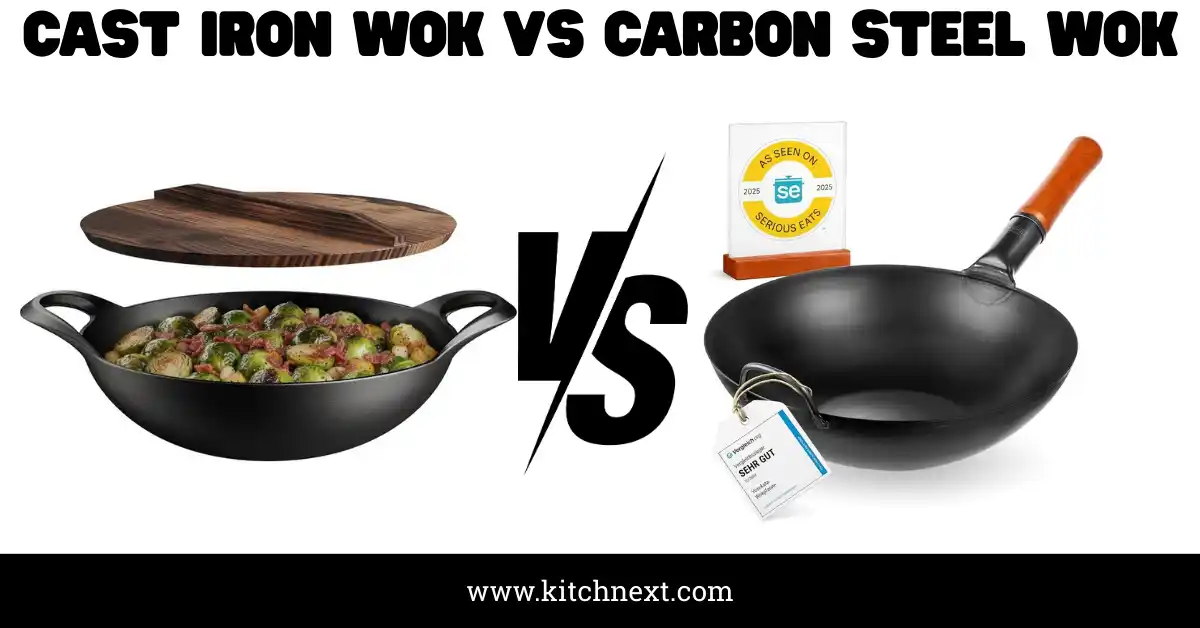
When you’re ready to upgrade your cooking gear, choosing between a cast iron wok and a carbon steel wok can feel confusing. Both promise great heat and flavor, but which one truly fits your kitchen and style?
This guide will help you see the clear differences so you can pick the perfect wok for your needs. By the end, you’ll know exactly which wok will make your meals tastier and cooking easier. Keep reading to find out which one deserves a spot on your stove.
Table of Contents
Cast Iron Wok Vs Carbon Steel Wok: Comparison Table
| Feature | Cast Iron Wok | Carbon Steel Wok |
|---|---|---|
| Heat behavior | Slower to heat, excellent heat retention | Heats fast, quick temperature response |
| Best for | Searing, shallow/deep frying, steady-heat cooking | Stir-fry, fried rice, noodles, fast high-heat cooking |
| “Wok hei” potential | Lower (less responsive) | Higher (closer to traditional wok cooking) |
| Weight/handling | Very heavy hard to toss | Lighter easier to toss and maneuver |
| Stovetop compatibility | Great on gas/electric/induction; also oven/open fire | Great on gas; works on electric/induction if base stays flat |
| Seasoning & rust | Needs maintenance; rust if neglected | Needs maintenance; rust if neglected |
| Nonstick performance | Builds good nonstick over time; can be very slick | Builds excellent nonstick over time; often better for eggs when well-seasoned |
| Durability | Very tough but can crack if dropped | Tough; can warp if overheated/rapid cooled |
| Lid/oven use (typical) | Often oven-safe if lid is metal; wooden lid not oven-safe | Wooden handle may limit oven/open-fire use (depends on model) |
| Ideal buyer | Wants a heavy-duty, steady-heat wok/pan hybrid | Wants authentic stir-fry performance and traditional wok technique |
Material Differences
The material of a wok affects how it cooks and lasts. Cast iron and carbon steel are popular choices. Both have unique features that suit different cooking styles.
Understanding these material differences helps pick the right wok for your kitchen. Let’s explore what sets cast iron and carbon steel apart.
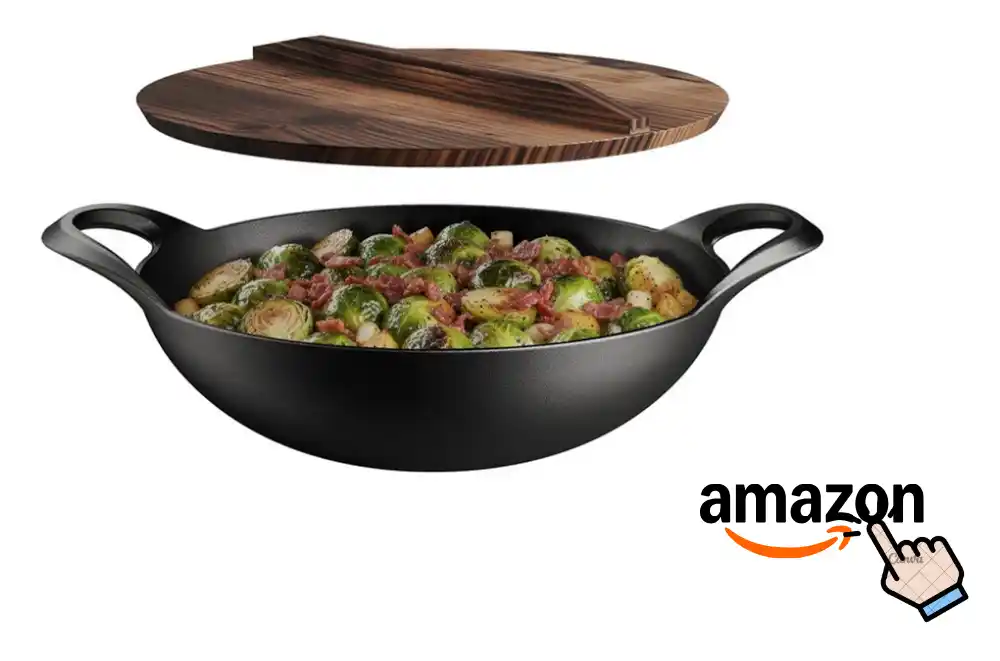
Cast Iron: Heavy And Heat Retentive
Cast iron is thick and heavy. It holds heat well and stays hot for a long time. This makes it great for slow cooking and frying.
The heavy weight helps food cook evenly. Cast iron woks take longer to heat up. But they keep heat steady once hot.
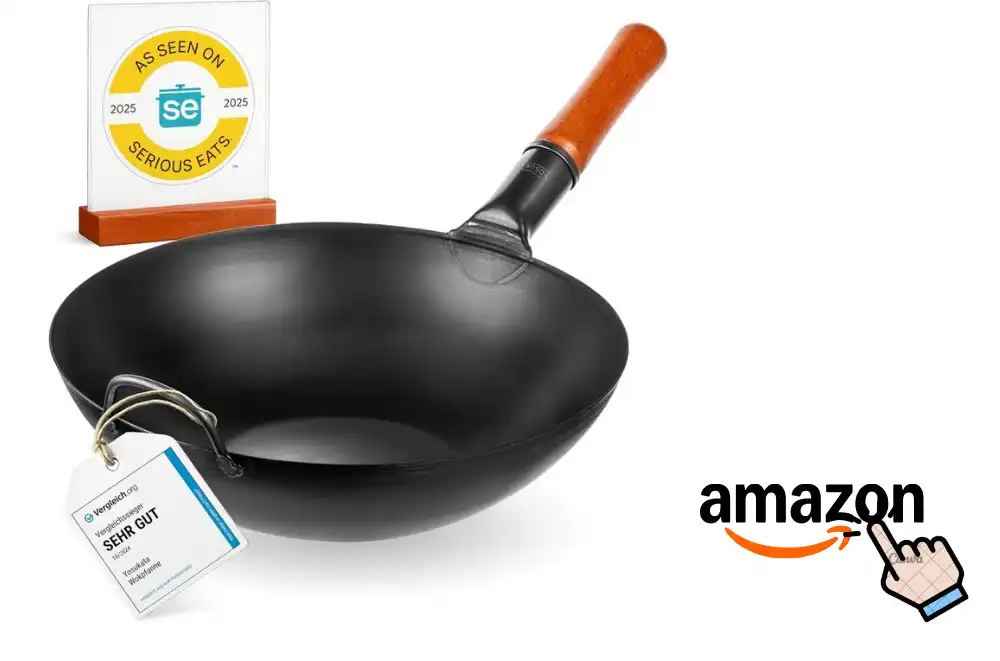
Carbon Steel: Lightweight And Quick Heating
Carbon steel is lighter than cast iron. It heats up fast and cools down quickly. This suits fast cooking methods like stir-frying.
The thin metal lets you control heat easily. Carbon steel woks respond quickly to temperature changes.
Durability And Maintenance
Cast iron woks can last for decades if cared for well. They may rust if not dried properly. Seasoning helps protect the surface.
Carbon steel also needs seasoning to prevent rust. It is less brittle than cast iron. Carbon steel woks handle rough use better.
Heat Retention And Distribution
Heat retention and distribution are key for cooking with woks. These factors affect how evenly food cooks. They also impact the wok’s performance over time. Understanding the differences helps choose the right wok for your kitchen.
Heat Retention In Cast Iron Woks
Cast iron woks hold heat very well. They stay hot for a long time after heating. This quality helps in cooking dishes that need steady heat. Thick walls of cast iron keep the temperature consistent.
Slow heat-up time is a downside. It takes longer to reach cooking temperature. But once hot, it keeps food warm during cooking breaks. This makes cast iron great for slow-cooked meals.
Heat Retention In Carbon Steel Woks
Carbon steel woks heat up quickly. They do not hold heat as long as cast iron. This quick response allows fast temperature changes while cooking. Ideal for stir-frying or quick searing.
The lighter weight helps heat spread faster. Carbon steel cools down quickly when removed from heat. This feature suits recipes needing precise heat control.
Heat Distribution In Cast Iron Woks
Cast iron woks distribute heat evenly across the surface. Thick material spreads heat slowly but uniformly. This prevents hot spots that can burn food. Even heat makes cooking easier and more predictable.
Slow heat flow means it takes time to adjust temperature. This can be a challenge for fast cooking methods like stir-fry.
Heat Distribution In Carbon Steel Woks
Carbon steel woks heat up evenly but faster than cast iron. Thin walls allow quick heat movement. This creates hot spots, requiring more attention during cooking.
Proper technique helps avoid burning. Flipping and stirring food often balances heat. Carbon steel suits high-heat, fast cooking styles well.
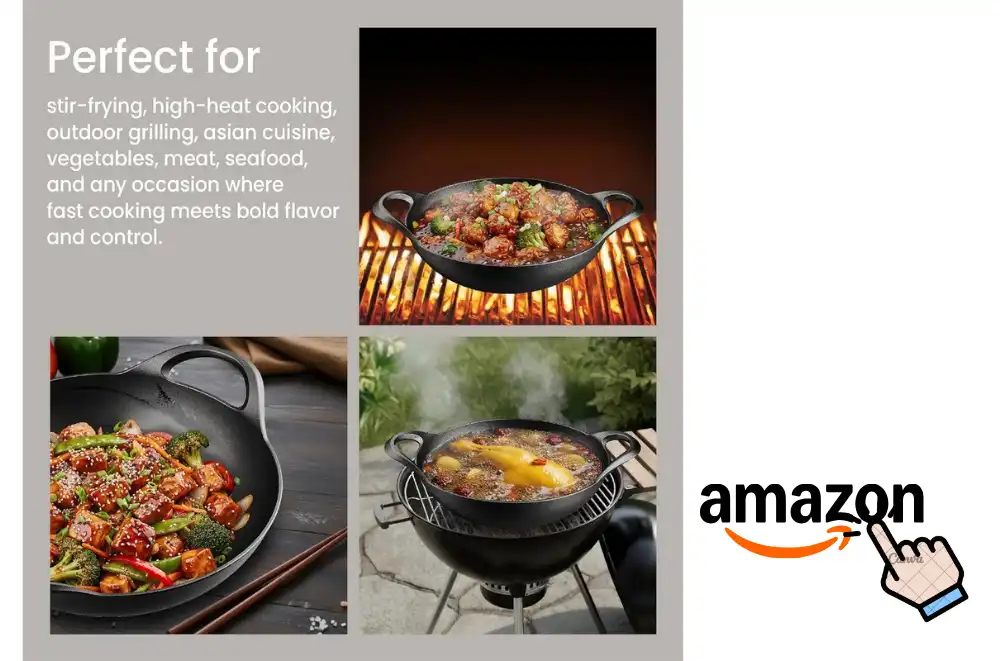
Weight And Handling
Weight and handling are key factors when choosing between a cast iron wok and a carbon steel wok. These qualities affect how easy the wok is to lift, toss, and cook with. A wok that feels too heavy can tire your arm quickly. One that is too light may not heat evenly or feel sturdy enough.
Understanding the differences helps you pick the right wok for your cooking style. Both materials have unique weight and handling traits. Knowing these can improve your cooking comfort and results.
Weight Of Cast Iron Wok
Cast iron woks are heavy. They usually weigh around 6 to 8 pounds or more. This weight helps the wok stay stable on the stove. It also holds heat well. But the heaviness can make tossing food harder. Lifting and cleaning a cast iron wok can feel tiring. Beginners might find it challenging to use for long cooking sessions.
Weight Of Carbon Steel Wok
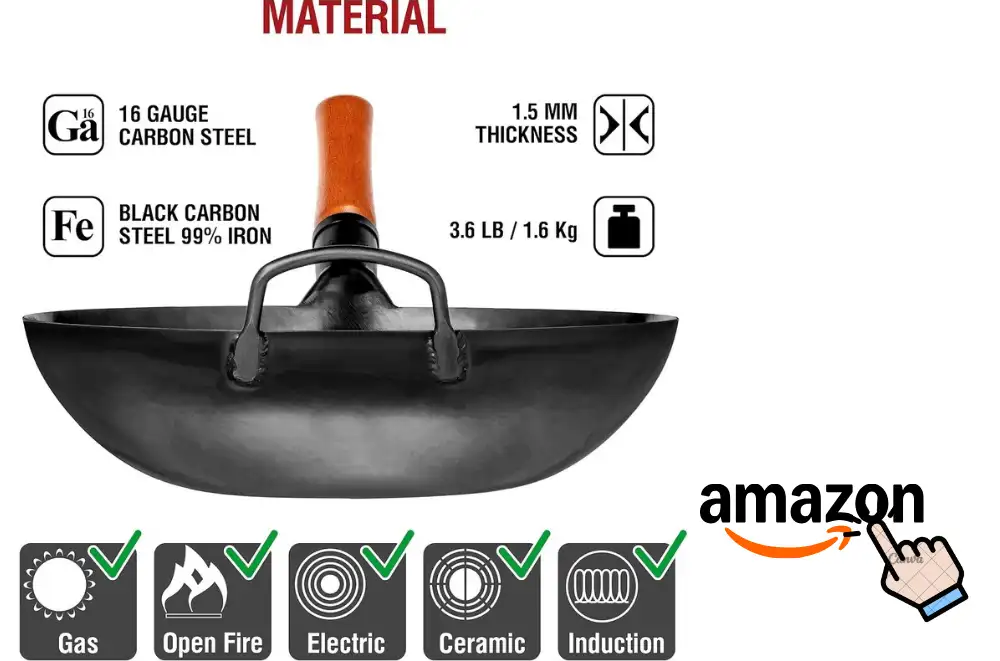
Carbon steel woks are much lighter than cast iron. They often weigh 2 to 4 pounds. This lighter weight makes them easier to lift and move. Tossing vegetables or stir-frying is smoother. The wok heats up quickly but may lose heat faster too. Many cooks prefer carbon steel for its balance of weight and heat control.
Handling And Cooking Comfort
Handling a cast iron wok requires strength. Its thick walls and weight mean slower heat changes. It takes time to heat up but stays hot longer. This suits slow cooking. Carbon steel woks respond quickly to heat changes. Their thin walls heat fast and cool fast. This quick response allows precise control during stir-frying. Carbon steel also often has a long handle, making it easier to hold and toss food.
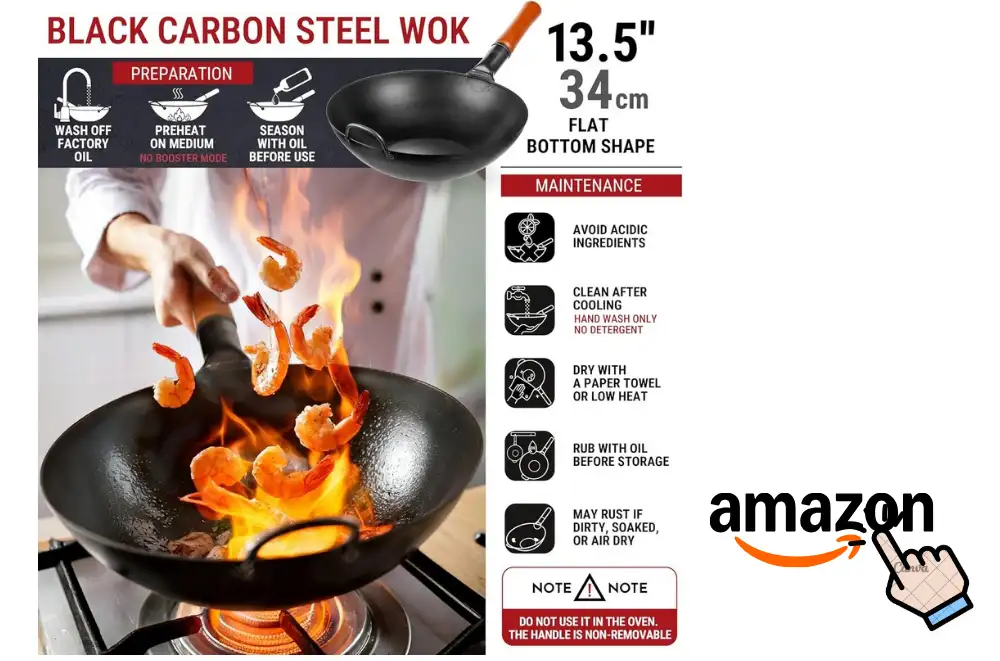
Seasoning And Maintenance
Seasoning and maintenance are key to keeping your wok in good shape. Both cast iron and carbon steel woks need proper care to last long and cook well.
Seasoning creates a natural non-stick surface on the wok. It also stops rust and improves flavor over time. Maintenance keeps the wok clean and ready for the next use.
Seasoning A Cast Iron Wok
Start by washing the wok with hot water. Avoid soap because it removes the protective layer. Dry it completely to stop rusting.
Apply a thin layer of oil inside and outside the wok. Use an oil with a high smoke point like vegetable oil. Heat the wok on the stove until the oil smokes. Let it cool, then wipe off extra oil.
Repeat this process a few times to build a strong seasoning layer. This layer will darken with use and improve cooking.
Seasoning A Carbon Steel Wok
Wash the wok with hot water and dry it well. Heat the wok on medium heat to remove moisture. Apply a thin coat of oil inside and heat until smoking.
Turn off the heat and let it cool. Wipe away extra oil. Repeat to create a smooth, non-stick surface.
Carbon steel woks develop seasoning faster than cast iron. Regular use helps maintain the coating.
Cleaning And Maintenance Tips
Clean the wok with hot water and a soft sponge. Avoid soap to keep the seasoning layer intact. Use a bamboo brush or soft cloth for stuck food.
Dry the wok thoroughly after washing. Heat it on the stove to remove any water. Apply a thin oil layer to prevent rust.
Store the wok in a dry place. Hanging the wok helps air circulation and prevents moisture buildup.
Durability And Longevity
Durability and longevity are key factors when choosing a wok. A wok must handle high heat and frequent use without damage. Both cast iron and carbon steel woks offer strong durability. Yet, each has unique traits that affect how long they last.
Durability Of Cast Iron Woks
Cast iron woks are very tough. They resist dents and scratches well. Their heavy build adds to their strength. These woks can last many years, even decades. They do not warp easily under heat. Careful seasoning helps prevent rust. Avoid dropping or sudden temperature changes to keep them safe.
Durability Of Carbon Steel Woks
Carbon steel woks are lighter but still strong. They heat quickly and evenly. These woks can bend if dropped. They may scratch more easily than cast iron. Proper care and seasoning prevent rust and damage. With good maintenance, carbon steel woks last a long time.
Longevity Factors For Both Woks
Both woks improve with use and seasoning. Regular cleaning and drying stop rust. Avoid soap or harsh scrubbers on the surface. Store in a dry place. Frequent use builds a natural non-stick layer. This layer protects the metal and extends life. With care, both wok types serve well for many years.
Cooking Performance
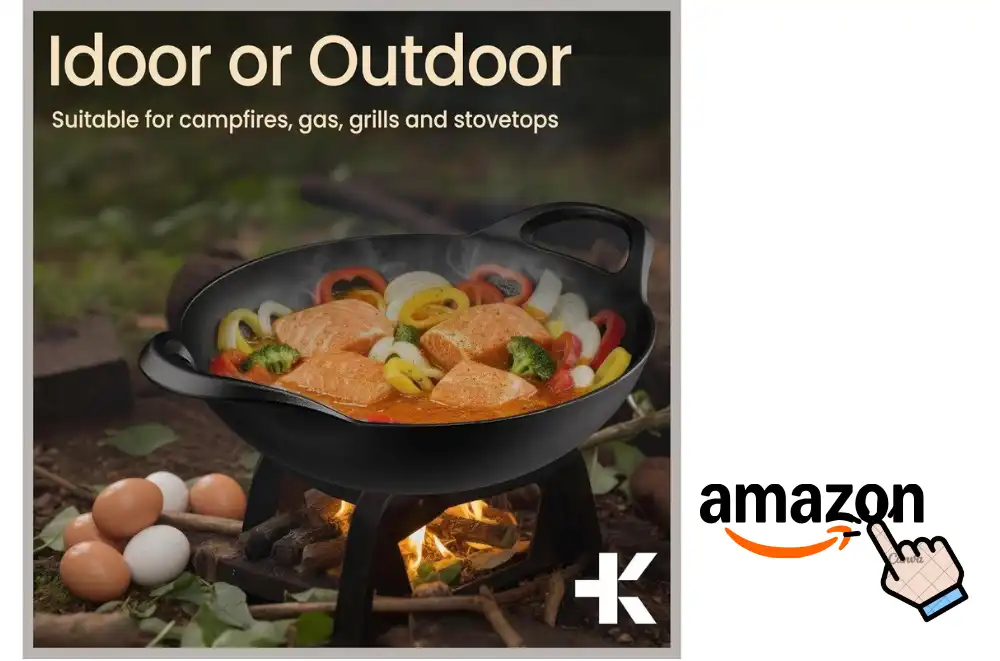
Cooking performance is key when choosing between a cast iron wok and a carbon steel wok. Each material heats differently and affects how food cooks. Understanding these differences helps pick the right wok for your kitchen.
Both woks offer great heat but in unique ways. This section breaks down how each wok performs during cooking tasks like stir-frying, searing, and slow cooking.
Cast iron woks hold heat very well. They stay hot for a long time, making them ideal for slow cooking. Heat spreads evenly but takes longer to reach high temperatures.
Carbon steel woks heat up quickly and cool down fast. They distribute heat evenly across the surface. This feature suits fast cooking methods like stir-frying.
Response To Temperature Changes
Cast iron woks react slowly to temperature changes. It is harder to adjust heat quickly during cooking. This can affect delicate dishes that need precise heat control.
Carbon steel woks respond rapidly to heat changes. They allow quick adjustments for better cooking control. This helps prevent food from burning or overcooking.
Non-stick Properties Over Time
Cast iron woks develop a strong non-stick layer after repeated use. The seasoning improves with time and careful maintenance. It helps food release easily and adds flavor.
Carbon steel woks also build a natural non-stick surface. They season faster than cast iron. Regular use and oiling keep the surface smooth and sticky-free.
Weight And Handling During Cooking
Cast iron woks are heavy and sturdy. They may be hard to lift and toss food quickly. This weight can tire the cook during long sessions.
Carbon steel woks are lighter and easier to handle. Their weight helps with fast stirring and tossing. They are better suited for quick, high-heat cooking styles.
Price And Value
Price and value are key factors in choosing between a cast iron wok and a carbon steel wok. Both types offer unique benefits, but their costs and long-term worth vary. Understanding these differences helps you pick the right wok for your kitchen and budget.
Cost Comparison
Cast iron woks are usually more expensive than carbon steel woks. This is because cast iron takes longer to make and uses more material. Carbon steel woks often come at a lower price but still offer good quality. If you want a budget-friendly option, carbon steel is a smart choice.
Cast iron woks last a very long time if cared for properly. They resist warping and damage better than carbon steel. Carbon steel woks are durable but may wear out faster with heavy use. Both can last years, but cast iron holds value over time.
Maintenance Costs
Cast iron woks need special care to avoid rust. They require seasoning and careful cleaning. Carbon steel woks also need seasoning but are easier to maintain. Over time, carbon steel may cost less in upkeep than cast iron.
Cooking Efficiency
Cast iron woks heat slowly but keep heat longer. This makes them great for slow cooking and searing. Carbon steel woks heat quickly and cool down fast. This helps with stir-frying and quick cooking. Cooking efficiency adds to the overall value of each wok.
Choosing The Right Wok
Choosing the right wok makes cooking easier and more fun. Both cast iron and carbon steel woks have strong points. Knowing their differences helps pick the best one for your kitchen.
Think about your cooking style and how much care you want to give your wok. This guide shows key factors to consider before buying.
Heat Retention And Cooking Speed
Cast iron woks hold heat very well. They stay hot longer, which suits slow cooking. Carbon steel heats up fast and cools down quickly. This is great for quick stir-frying.
Cast iron woks are heavy and hard to move. Carbon steel woks are lighter and easier to handle. Lightweight woks help with tossing food during cooking.
Cast iron needs special care to keep it from rusting. Carbon steel also needs seasoning but cleans easier. Both woks improve with regular use and care.
Price And Availability
Cast iron woks usually cost more. Carbon steel woks are affordable and widely available. Consider your budget before choosing your wok.
Cooking Surface And Flavor
Cast iron provides a smooth surface that cooks evenly. Carbon steel develops a natural non-stick layer over time. This layer adds flavor to your dishes.
FAQ: Cast Iron Wok Vs Carbon Steel Wok
What Are The Key Differences Between Cast Iron And Carbon Steel Woks?
Cast iron woks are heavier and heat evenly but take longer to heat up. Carbon steel woks are lighter, heat quickly, and respond faster to temperature changes.
Which Wok Material Is Best For High-heat Cooking?
Carbon steel woks are better for high-heat cooking because they heat up fast and cool down quickly. Cast iron woks hold heat longer but are slower to adjust.
How Do Cast Iron And Carbon Steel Woks Differ In Maintenance?
Cast iron woks need careful seasoning and drying to avoid rust. Carbon steel woks also require seasoning but are easier to clean and maintain.
Are Carbon Steel Woks More Durable Than Cast Iron Woks?
Both materials are durable, but cast iron woks are less likely to warp. Carbon steel woks are thinner and can bend if dropped.
Which Wok Is Better For Everyday Home Cooking?
Carbon steel woks suit everyday cooking due to their light weight and quick heating. Cast iron woks are better for slow cooking and retaining heat.
Conclusion
Choosing between a cast iron wok and a carbon steel wok depends on your needs. Cast iron holds heat well but weighs more. Carbon steel heats quickly and is lighter. Both woks require care to keep them from rusting. Think about how you cook and your comfort with weight.
Each wok offers great cooking results when used right. The best wok is the one that fits your kitchen style and cooking habits.