
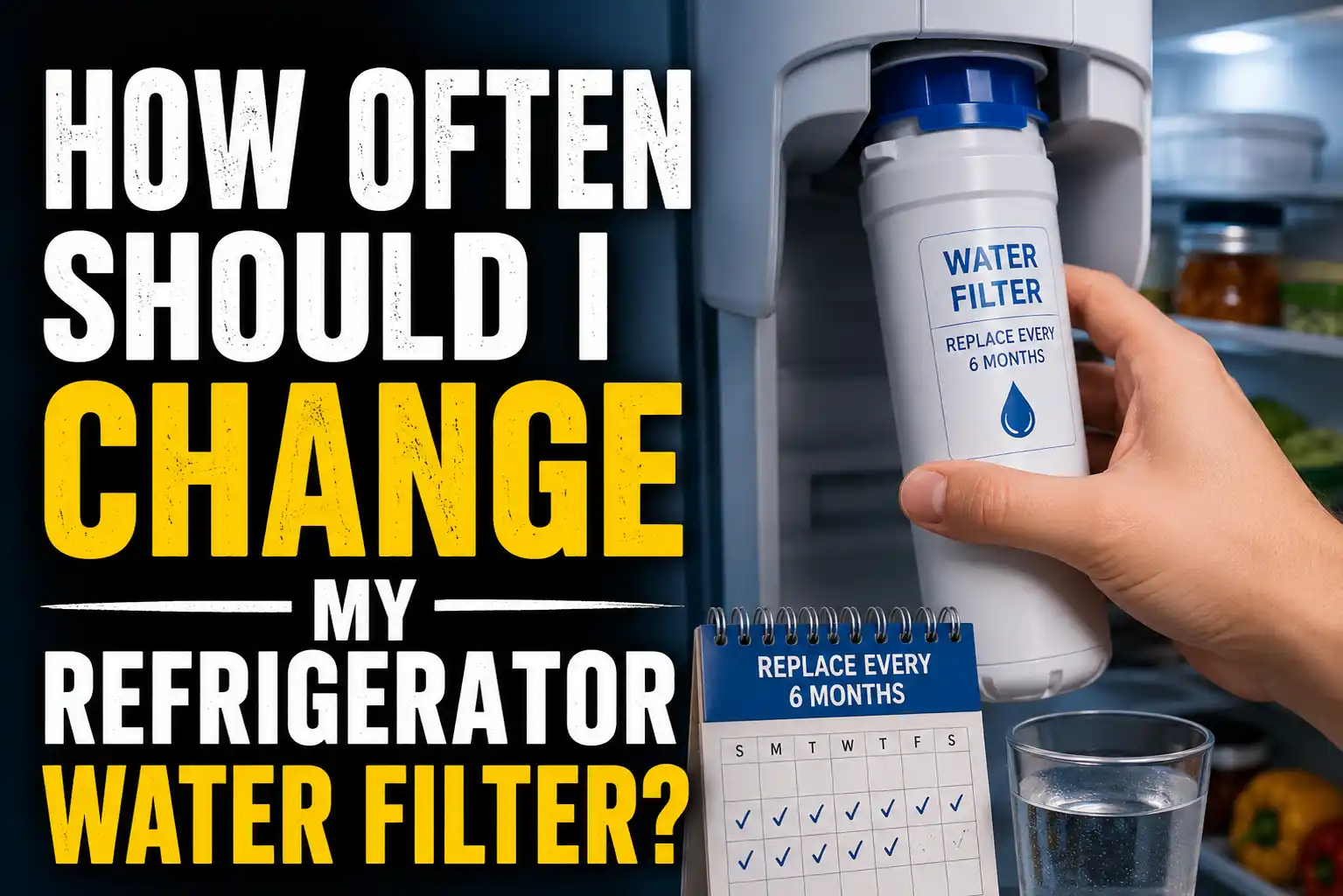
I still remember the day my water tasted like a dusty basement. I filled a glass at the fridge dispenser, took one sip, and made a face like I had bitten a lemon. My daughter asked why the water tasted weird. That single glass sent me on a mission to actually understand my refrigerator water filter instead of ignoring it like I had for over a year.
That day taught me more about filters than any manual ever could. I tested a few brands, tracked my own habits, and even asked an appliance repair friend for his honest opinion. Here is everything I learned about how often you should really change a refrigerator water filter, based on real experience and not just a sticker on the box.
Table of Contents
My First Real Wake Up Call With a Dirty Filter
It happened on a hot July afternoon in my kitchen. I had just gotten home from a long grocery run and wanted a cold glass of water. Instead I got something that smelled faintly like a wet gym sock. I checked the little filter light on the fridge panel and realized it had been glowing red for weeks, and I simply never noticed it.
When I finally pulled out the manual, I found the filter had not been changed in fourteen months. The recommended window for my model was six months. I felt a little embarrassed, honestly. But it also made me curious about what actually happens inside a filter as it ages, and why timing matters so much.
How Often Should You Really Change a Refrigerator Water Filter?
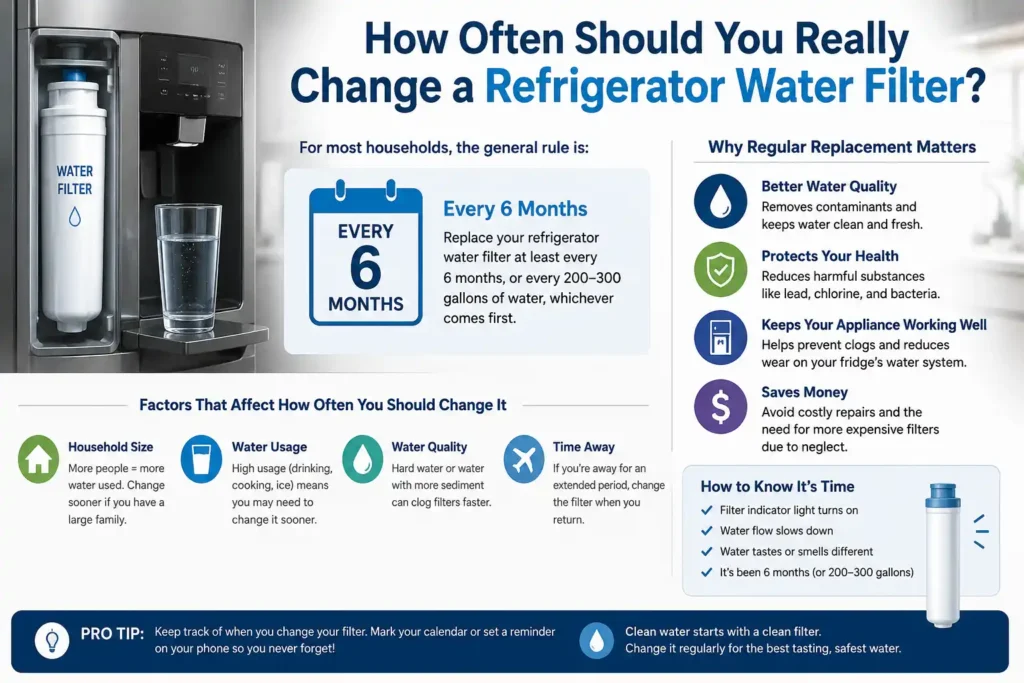
Most manufacturers suggest changing your filter every six months or after about two hundred to three hundred gallons of water pass through it. That number is not random. It is based on how long the filter media stays effective at trapping chlorine, sediment, and other particles before it starts to lose its grip.
<<Get Amazon For This Product>>
I compared the guidelines across a few popular refrigerator brands to see if six months was really the universal rule. Here is what I found when I checked each manufacturer directly.
| Brand | Recommended Change Interval | Approximate Gallons |
| Whirlpool | Every 6 months | 200 gallons |
| GE | Every 6 months | 300 gallons |
| Samsung | Every 6 months | 200 gallons |
| LG | Every 6 months | 200 gallons |
| Frigidaire | Every 6 months | 200 gallons |
The pattern is clear. Six months is the industry standard starting point. But your actual number can shift quite a bit depending on how much water your household uses and what kind of water comes out of your tap in the first place.
Signs Your Refrigerator Water Filter Needs Changing
I no longer rely only on the calendar to tell me when it is time. My senses usually catch the problem first, and yours probably will too if you pay attention. A few clear warning signs told me something was wrong long before I checked the manual.
- Water tastes flat, metallic, or slightly off
- Ice cubes look cloudy or smell strange when they melt
- Water flow from the dispenser slows down noticeably
- The filter indicator light turns orange or red
- It has simply been more than six months since the last change
Once I started paying attention to these clues, I never got caught off guard again. A slow trickle from the dispenser was actually my earliest warning the second time around, even before the light changed color.
What Happens If You Skip Filter Changes Too Long
Skipping a filter change does not just affect taste. Over time, trapped particles and organic material inside an old filter can become a breeding ground for bacteria. Water sitting in a saturated filter for weeks at a time gives microbes exactly the environment they need to multiply.
I learned this the hard way when I sent a used filter cartridge to a local water testing lab out of curiosity. The results showed higher bacteria counts than I expected, along with reduced chlorine removal efficiency. That test alone convinced me that a forgotten filter is not just inconvenient. It can genuinely lower the quality of water your family drinks every single day.
Factors That Affect How Often You Should Change Your Filter
Six months works as a general guideline, but it is not one size fits all. My own filter needs turned out to be different from my parents, mostly because our water sources and household habits are not the same. A few key factors decide how quickly your filter wears out.
Water hardness plays a big role, since minerals build up faster in hard water areas. Household size matters too, because more people means more water passing through the filter each day. Whether you use well water or city water changes things significantly, and heavy ice makers speed up filter wear more than most people expect.
| Household Situation | Suggested Change Frequency |
| Single person, city water | Every 8 months |
| Family of four, city water | Every 6 months |
| Large family, well water | Every 3 to 4 months |
| Heavy ice maker use | Every 4 months |
Looking at this table honestly changed how I think about my own routine. My family of four uses the ice maker constantly, so I now change my filter closer to every four months instead of stretching it to six.
My Simple System For Remembering Filter Changes
After my embarrassing fourteen month mistake, I built a system so it would never happen again. I set a recurring reminder on my phone for the same day every few months, right around when I pay a recurring bill so it sticks in my memory. I also keep a spare filter in the pantry so there is zero excuse to delay once the reminder pops up.
Some people prefer a subscription service that mails a new filter automatically. I tried that for about a year, and it worked well for consistency, though it cost a bit more than buying filters myself when I needed them. Either method beats relying on memory alone, which is clearly where I failed the first time around.
Genuine Filters Versus Generic Filters What I Learned
Once I started replacing filters more often, the cost added up, so I tested a couple of generic off brand filters to see if they held up. Honestly, some worked reasonably well and saved real money. Others fit poorly and leaked slightly at the connection point, which was frustrating and a bit messy.
The one thing I always check now is NSF certification on the packaging, since that label means the filter has actually been tested against real contaminant removal standards. Genuine manufacturer filters tend to fit better and come with that certification more consistently. Generic filters can still be a smart choice, but only if you confirm the certification and read reviews from other buyers first.
Final Thoughts
Changing a refrigerator water filter is one of those small maintenance tasks that is easy to forget until your water tastes wrong. My own mistake cost me over a year of drinking water that was working far less efficiently than it should have been. A simple reminder and a spare filter in the pantry now keep me on track without much effort at all.
If you cannot remember the last time you changed yours, that is probably a sign worth acting on today. Check your indicator light, taste your water honestly, and compare your habits to the table above. Your future glass of water will thank you.
FAQ
How do I know what type of filter my fridge needs?
Check your fridge model number in the manual or a sticker inside the fridge door. Most brands list the exact filter model clearly, so a quick search prevents buying the wrong size.
Can I use tap water without a filter at all?
Yes, most fridges will still dispense water without a filter installed. You will lose the chlorine and sediment reduction benefits, so taste and clarity may suffer.
Does the filter also clean the ice maker water?
Yes, the same filter usually supplies both the dispenser and the ice maker. A dirty filter often shows up first as cloudy or odd smelling ice cubes.
What happens if I use my fridge without any filter installed?
Many fridges need a bypass plug if you skip the filter, or water flow may stop completely. Check your manual before removing a filter permanently.
How much do refrigerator water filters usually cost?
Genuine filters typically run between thirty and sixty dollars each. Generic certified alternatives can cost noticeably less while still meeting safety standards.