
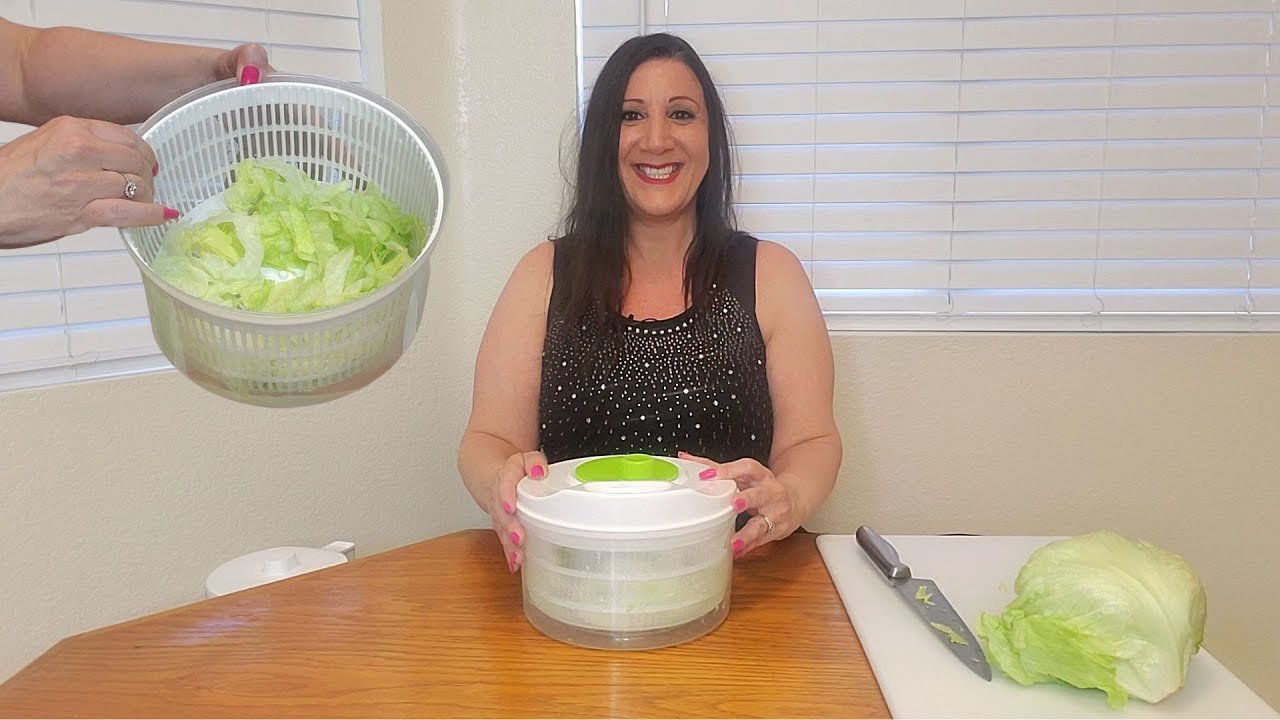
In a U.S. kitchen, a salad spinner is a simple way to rinse leafy greens and remove excess water before serving or storing them. Put clean leaves in the basket, rinse them under cool running water, secure the lid, and spin until the leaves are mostly dry. Empty the water from the outer bowl and repeat if needed.

What a salad spinner does
A salad spinner washes and dries greens in two steps. Its perforated inner basket holds the leaves, while the solid outer bowl catches water. When you turn the handle, press the pump, or pull the cord, the basket spins and pushes water through its holes.
Dry leaves help salad dressing cling instead of pooling at the bottom of the bowl. Removing excess water can also help greens stay crisp, though a spinner does not sanitize produce or make it safe to store for any length of time.
How to use a salad spinner
For the best results, wash your hands and make sure the spinner is clean before you begin. Check the maker’s instructions if the lid has a lock, a special assembly step, or a fill line.
- Take the spinner apart. Set the outer bowl on a steady surface. Place the basket inside it.
- Prepare the greens. Remove damaged leaves, tough stems, and any dirt you can see. separate whole leaves so water can reach their surfaces.
- Rinse the greens. Put the leaves in the basket and rinse them under cool running water. Move them gently with clean hands to wash between layers. The FDA advises rinsing produce under running water and not using soap or detergent.
- Drain the basket. Lift the basket and let excess water drip into the bowl. Pour out the water in the outer bowl if it is full.
- Add the lid and spin. Set the lid on securely. Use the handle, pump, or pull cord as directed for your model. Spin in short rounds, then stop and check the leaves.
- Empty the collected water. Remove the lid and basket as needed, then pour the water out of the outer bowl.
- Spin again if necessary. Repeat until the leaves are mostly dry. If the greens were sandy or muddy, rinse them again with fresh running water before the final spin.
The leaves are ready when you see little or no water dripping from them and the basket has collected much less water. A few droplets are normal; delicate greens can bruise if you spin them too hard or for too long.
How much should you put in the basket?
Do not pack the basket tightly. Leaves need room to move as the basket spins. For a large head of lettuce or a big bag of greens, work in batches. This takes a little longer but usually dries the leaves more evenly.

Source: Bing
How to handle different kinds of greens
The same basic method works for lettuce, spinach, arugula, kale, and herbs. The main difference is how gently you handle them and how much room they need.
- Whole lettuce leaves: Separate the leaves and rinse both sides. Spin in batches if the basket is crowded.
- Baby spinach and tender greens: Use a light rinse and short spins. Handle them gently to limit bruising.
- Kale and other sturdy greens: Remove tough stems if your recipe calls for it. Rinse well around folds and textured areas, then spin in batches.
- Fresh herbs: Remove any damaged sprigs and rinse gently. Use a small batch so the leaves do not get crushed.
If greens have visible grit, do not rely on spinning alone to clean them. Rinse them again under running water, then spin. A spinner removes water; it cannot remove dirt that remains stuck to a leaf.

Source: Bing
Common problems and what to do
If your greens are still wet, the basket may be overloaded, the leaves may be clumped together, or the outer bowl may be holding too much water. Spin a smaller batch, loosen the leaves, and empty the bowl before spinning again.
| Problem | Likely cause | What to try |
|---|---|---|
| Leaves are still dripping | Basket is too full or leaves are clumped | Spin a smaller batch and separate the leaves |
| Water sloshes onto the counter | Outer bowl is full or lid is not secure | Empty the bowl and check the lid |
| The basket will not spin | Lid or basket may be misaligned, or the mechanism may be locked | Stop, check the assembly, and follow the model’s instructions |
| Leaves look bruised | Greens are delicate, crowded, or spun too forcefully | Use a smaller batch and shorter, gentler spins |
| Grit remains on the leaves | Rinsing did not reach all surfaces | Separate the leaves and rinse again under running water |
Do not force a stuck handle, pump, or cord. Stop and check for leaves caught between parts or a misaligned lid. If the mechanism still will not turn, consult the product instructions rather than pulling harder.

Source: Bing
Cleaning and storing a salad spinner
Wash the spinner after each use so bits of leaf and soil do not remain in the bowl, basket, or lid. Take it apart and wash the parts with dish soap and warm water, unless the product instructions give different care directions. Rinse and dry each part before putting the spinner away.
Dishwasher safety varies by model. Check the label or manual before placing any part in a dishwasher, and follow any guidance about the rack or heat setting. Some lids contain gears or other parts that may need hand washing.
If you plan to store washed greens, dry them well first and refrigerate them in a clean, covered container. Keep the refrigerator at 40°F or below, as advised by FoodSafety.gov. A spinner does not replace safe refrigeration or clean food-handling practices.

Source: Bing
Salad spinner FAQs
Do I need to wash prewashed bagged greens?
Follow the package directions. Greens labeled ready to eat, washed, or triple washed generally do not need another rinse unless the label says otherwise. Rewashing can expose them to germs from your hands, sink, or equipment.
Should I wash greens before or after cutting them?
Remove damaged leaves and rinse whole leaves before cutting when practical. If you cut greens first, rinse them under running water and use clean hands and tools. Keep washed produce away from raw meat, poultry, seafood, and their juices.
Can I use a salad spinner to dry berries?
Some spinners can dry sturdy berries, but delicate fruit may bruise or break apart. Check the maker’s instructions and use a clean basket. For soft berries, a gentle rinse and careful drying on a clean towel may work better.
Can I put a salad spinner in the dishwasher?
Only if the manufacturer says the parts are dishwasher-safe. Check the instructions for the lid and its spinning mechanism in particular; care rules can differ between models.
How long do washed greens last in the refrigerator?
There is no single storage time that applies to every type of green, condition, and package. Dry the leaves, refrigerate them promptly in a clean covered container, and follow the package date and storage directions when available. Discard greens that look spoiled or smell off.
Conclusion
To use a salad spinner, rinse loose leaves under cool running water, spin them in an uncrowded basket, and empty the collected water as needed. Handle tender greens gently, wash the spinner after use, and refrigerate greens promptly if you are saving them.