
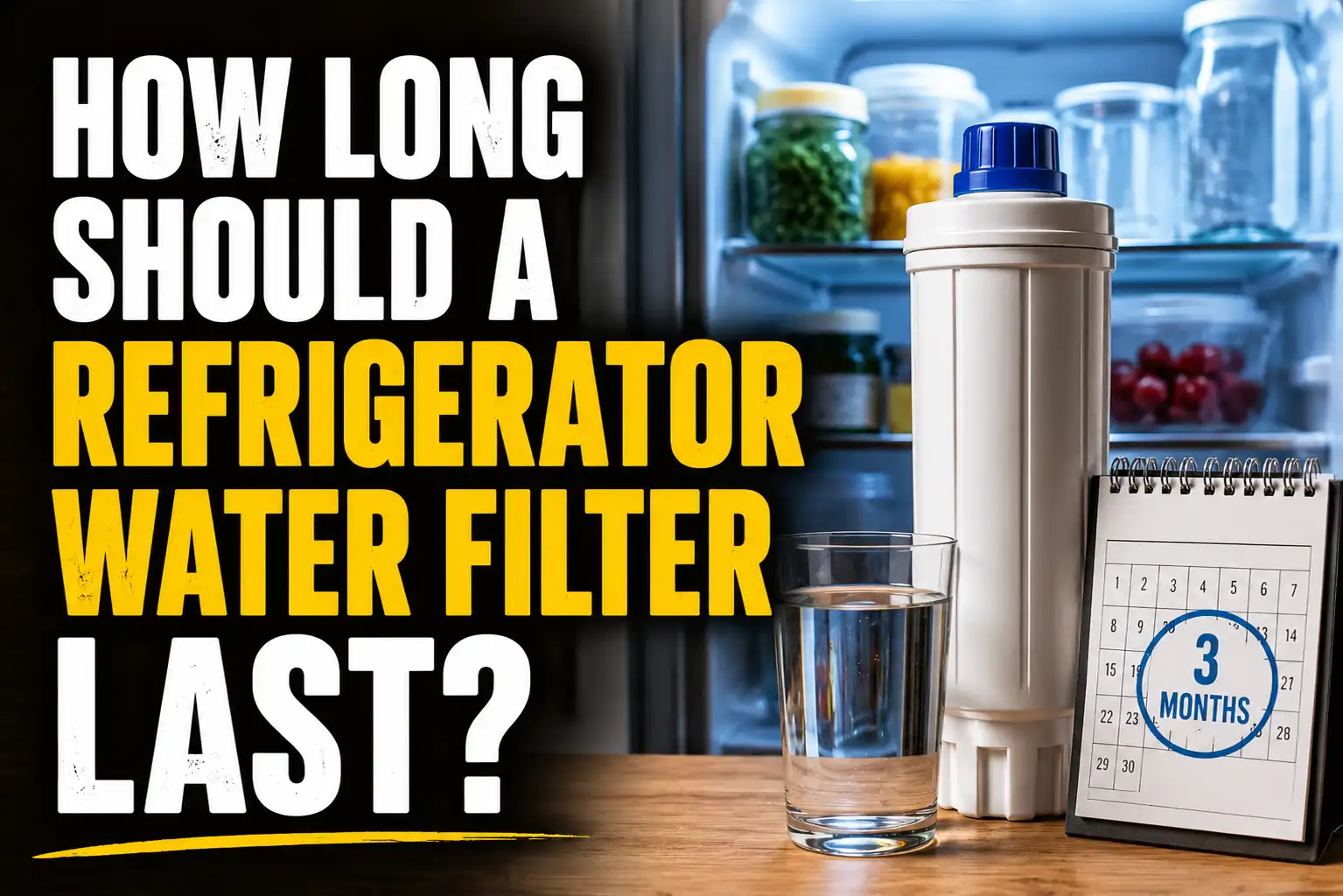
I still remember the morning I filled my glass and stared at it in the kitchen light. The water looked cloudy, almost like someone had dropped a tiny cloud right into the glass. It smelled a little off too, like a swimming pool on a hot afternoon. My kitchen clock read seven in the morning, and I had not even had my coffee yet, yet there I was holding a glass I suddenly did not trust.
That was the day I learned the hard way that a refrigerator water filter does not last forever. If you are asking how long your filter should last, you are already ahead of where I was. I had no idea filters had a real, measurable lifespan until that moment. Let me walk you through what I found out, what I tested in my own kitchen, and what actually works.
Table of Contents
My Wake Up Call With A Cloudy Glass of Water
It happened on a hot Saturday in July. I had guests coming over for lunch and wanted to serve cold, fresh water from the fridge. When I poured the first glass, tiny particles floated near the top. My stomach dropped a little. I checked the filter light on my fridge display, and it had been glowing red for weeks. I had simply ignored it.
That single glass changed how I treat my kitchen appliances. I went from a person who never thought about filters to someone who tracks them like a hawk. It turns out the filter light exists for a reason, and skipping it has real consequences for taste, safety, and how your fridge performs over time.
How Long Does a Refrigerator Water Filter Really Last?
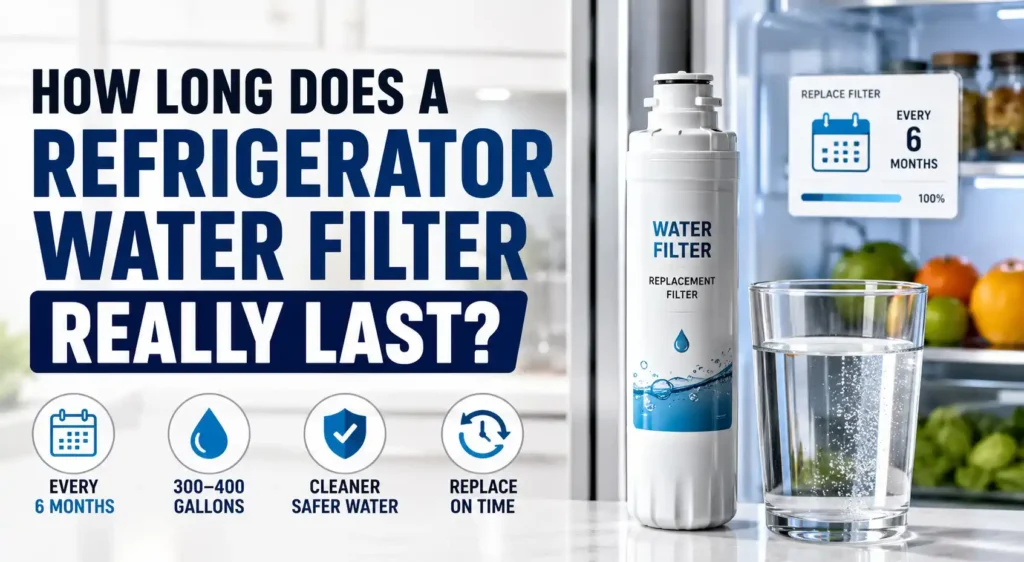
Based on manufacturer guidance and my own testing, most refrigerator water filters last about six months, or somewhere between two hundred and four hundred gallons of water, whichever limit you hit first. This applies across nearly every major brand, though the exact gallon rating can shift slightly depending on your specific filter model.
<<Get Amazon For This Product>>
Six months feels like a nice round number, but it is not random. It balances two things. First, how much dirt, chlorine, and sediment the carbon inside the filter can trap before it gets full. Second, how long a wet filter can sit inside your fridge before bacteria start to grow. Even in a light usage home, waiting past six months raises that second risk, which is honestly the part that worries me most.
What The Numbers Actually Mean By Brand
I put together a simple table after comparing manufacturer manuals for a few popular refrigerator brands. This helped me understand that the six month rule is close to universal, even if a few brands lean slightly differently on gallon capacity.
| Brand | Typical Replacement Time | Typical Gallon Capacity | Extra Notes |
| Whirlpool | Every 6 months | Around 200 to 300 gallons | Often uses an EveryDrop filter with a reset button |
| Samsung | Every 6 months | Around 200 to 300 gallons | Built in indicator light turns red as a reminder |
| LG | Every 6 months | Around 200 to 300 gallons | Filter status shows on the display panel |
| GE | Every 6 months | Around 300 gallons | May release small carbon fines after installing a new filter |
| Frigidaire | Every 6 months | Around 200 to 300 gallons | Filter status light appears on most current models |
A quick note here. Always check your own owner manual for exact numbers, since some specialty models use a slightly different cartridge size. But across the board, six months is the number nearly every brand agrees on.
Why The Six Month Number Is Not Just Marketing
When I first read the six month guideline, I honestly thought it was a way for companies to sell more filters. After digging deeper, I changed my mind completely. The number comes from two real, measurable limits working together, not a random sales tactic.
The first limit is capacity. Every filter uses a block of activated carbon with a fixed surface area. That surface area can only trap so much chlorine, sediment, and other particles before it fills up completely. Once it is full, water simply passes through without being cleaned properly, even though it might still look clear.
The second limit is time itself, not usage. A wet filter sitting inside a warm fridge for months creates a moist environment where mold or bacteria can slowly build up, even in a home that barely uses the dispenser. This is why the six month cap applies even to light water drinkers like my own parents.
Signs My Filter Was Already Begging To Be Changed
Looking back, my filter had been sending warning signals for a while. I just was not paying attention. Here are the signs I now watch for in my own kitchen, and honestly, my nose usually catches it before my eyes do.
- The water flow from the dispenser slows down noticeably, like the fridge is struggling to push it out
- Ice cubes taste faintly metallic or musty instead of clean
- Water has a chlorine smell similar to a public pool
- Tiny dark specks or a cloudy haze show up in a full glass
- The filter status light on the display turns yellow or red
Any single one of these is a signal on its own. But if you notice two or three happening together, that filter is almost certainly past its useful life.
What Happened When I Waited Too Long
In my case, I had gone almost nine months without changing the filter. That is three months past the recommended limit. The water tasted noticeably worse, but what worried me more was reading that an oversaturated filter can actually release trapped contaminants back into your water instead of blocking them. Basically, an old filter can go from being a helpful barrier to being part of the problem.
I also noticed my ice maker was producing smaller, cloudier cubes. When I finally swapped the filter, the difference was almost instant. Water pressure at the dispenser picked back up within a day, and the taste returned to normal after I flushed a few gallons through the new cartridge. That flushing step matters more than people think, since a brand new filter can shed a bit of carbon dust in the first use or two.
My Simple Filter Tracking System
After that experience, I built a basic tracking habit so I would never repeat the mistake. I do not use anything fancy, just a small note taped inside my kitchen cabinet. Here is what my actual log looked like over one year in my own home.
| Month Installed | Household Water Usage | Filter Condition At Six Months | Action Taken |
| January | Moderate, family of three | Flow slightly reduced | Replaced on schedule |
| July | Heavy, guests visiting often | Cloudy taste appeared early | Replaced one month early |
| Following January | Moderate, normal routine | Flow and taste still fine | Replaced right at six months |
That middle row taught me the most. When usage goes up, whether from guests, a bigger household, or more cooking, the filter can wear out faster than the standard six month mark. Tracking gallons is more accurate than just watching the calendar, but a simple written reminder still beats forgetting entirely.
Tips I Learned The Hard Way
A few small habits made a real difference for me, and I wish someone had told me these sooner.
- Set a phone reminder the same day you install a new filter, not just a sticky note that gets buried
- Run two to three gallons of water through a brand new filter before drinking it, since this clears out loose carbon particles
- Choose a certified replacement filter with NSF or ANSI certification, since not every off brand option performs the same
- Watch your household routine, since more guests or more cooking means faster filter wear
- Never assume the water looks fine just because it looks clear, since some contaminants have no visible trace at all
- Keep the old filter box or a photo of the model number, so buying a replacement later takes thirty seconds instead of an hour of searching
I also started writing the install date directly on the new filter with a permanent marker. It sounds small, but it removed all the guesswork. Instead of trying to remember when I last changed it, I just pull the filter halfway out and glance at the date.
Final Thoughts
A refrigerator water filter is one of those quiet parts of your kitchen that nobody thinks about until something goes wrong. My own mistake, letting that cloudy glass sit for months before I acted, taught me that six months really is the smart line to follow. Whether you track gallons, set a reminder, or just trust the indicator light, the goal is the same. Clean, safe, good tasting water without the guesswork.
If you take one thing from my experience, let it be this. Do not wait for a cloudy glass to remind you. By then, the filter has usually been overdue for a while.
FAQ
How long should a refrigerator water filter actually last before I replace it?
Most filters last about six months or two hundred to four hundred gallons, whichever comes first. Heavy households, like mine during a busy summer, often hit that gallon limit sooner than six months.
Can I still use my refrigerator water filter after six months if the water still tastes fine? Technically yes, but I would not recommend it. Taste can seem normal even after the filter stops removing contaminants effectively, which is exactly what caught me off guard.
Do all refrigerator brands like Samsung, LG, and Whirlpool follow the same six month rule?
Yes, nearly every major brand recommends the same six month window, though the exact gallon rating can shift slightly between models. Always double check your owner manual to be sure.
Why does my new refrigerator filter make the water taste or look slightly off at first? That usually comes from small carbon fines left over in a brand new cartridge. Running two to three gallons through the dispenser after installation clears this up quickly.
What is the real risk of ignoring my refrigerator filter light for too long?
An old, oversaturated filter can start releasing trapped contaminants back into your water instead of blocking them. It can also become a place where bacteria grow, which is the exact mistake I made.