
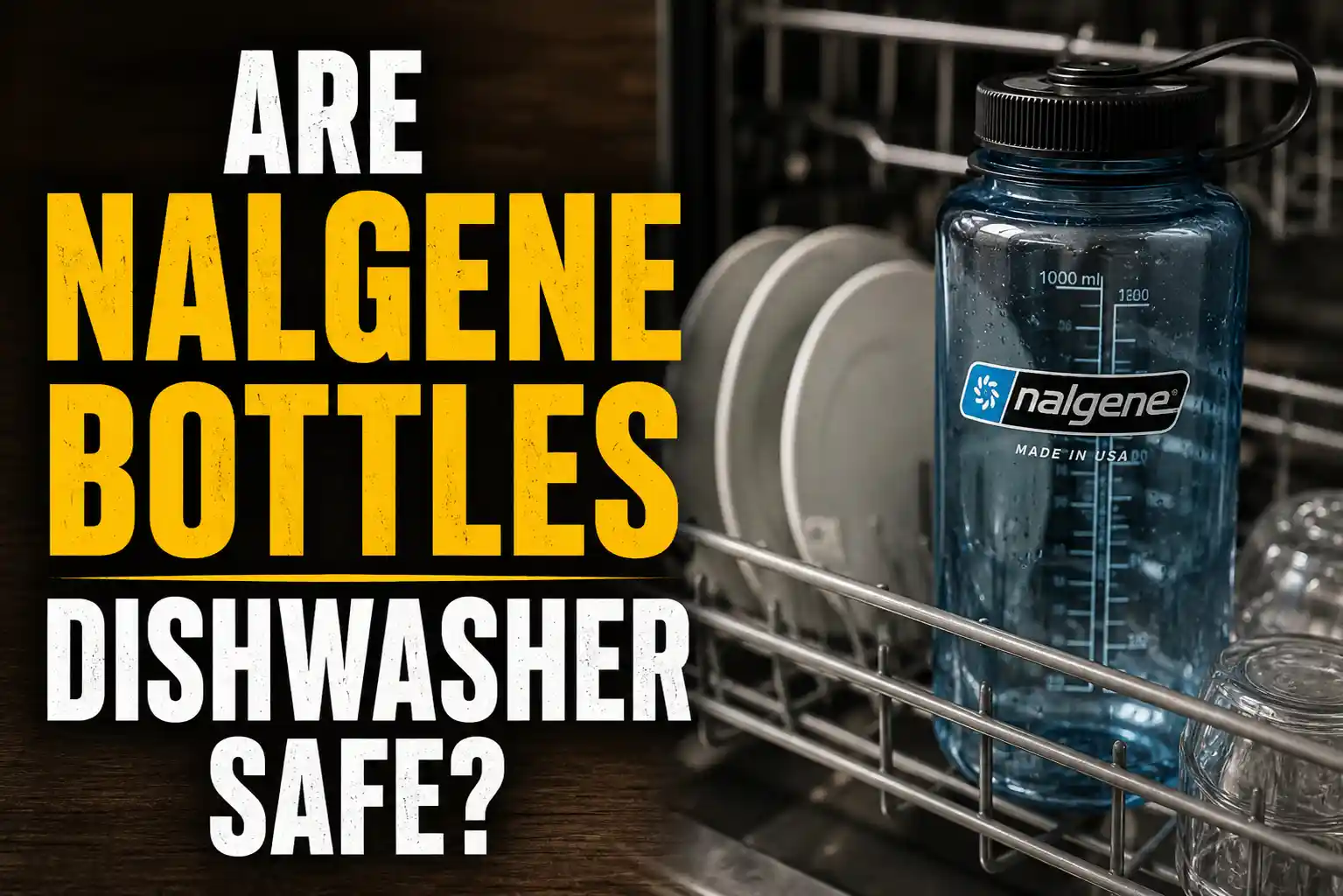
I have owned a Nalgene bottle for years. I take it hiking, to the gym, and on long road trips. For the longest time, I washed it by hand every single night. It felt like a safe thing to do.
Then one evening after a muddy trail run, I was exhausted. I just tossed it in the dishwasher without thinking twice. The next morning, I pulled it out and stared at it. It looked completely fine. No warping. No weird smell. No cloudy plastic. That one lazy moment sent me down a rabbit hole of research, and honestly, I am glad it did.
So, are Nalgene bottles dishwasher safe? The short answer is yes, most of them are. But there is a bit more to the story, and I want to share everything I learned so you do not have to guess.
Table of Contents
What My Nalgene Is Actually Made Of?
Before I talk about dishwasher safety, it helps to know what your bottle is made from. Most Nalgene bottles sold today are made from a plastic called Tritan. Nalgene switched to Tritan back in 2008 after older polycarbonate bottles got a lot of heat over BPA concerns.
Tritan is a copolyester plastic. It is tough, clear, and it does not contain BPA, BPS, or BPF. It was designed to handle heat better than older plastics. That is a big reason why Nalgene can say their bottles are dishwasher safe without any asterisks or fine print.
When I first read that, I felt a little silly for hand washing mine for so long. But I also felt relieved, because I was not doing any damage with that single dishwasher run.
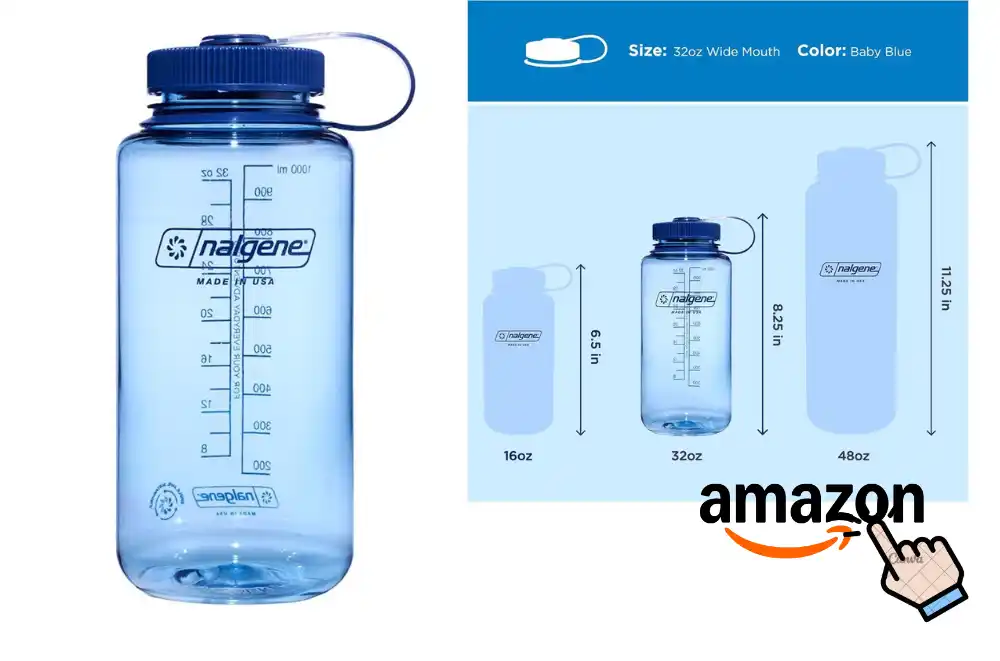
<<Get Amazon For This Product>>
Are Nalgene Bottles Dishwasher Safe? Yes, and Here Is the Proof
Nalgene actually states on their own website that their Tritan bottles are dishwasher safe. That is not a vague claim. That is a direct product promise from the brand itself.
I checked a few bottles in my own collection after doing this research. My wide mouth 32 oz Nalgene has gone through the dishwasher easily two dozen times since that first accidental run. The bottle still looks the same as it did on day one. The lid screws on perfectly. There is no warping, no discoloration, and no weird taste in the water afterward.
| Nalgene Bottle Type | Dishwasher Safe? | Recommended Rack |
| Tritan Wide Mouth | Yes | Top rack preferred |
| Tritan Narrow Mouth | Yes | Top rack preferred |
| Stainless Steel | Yes | Top rack preferred |
| Older Polycarbonate (pre 2008) | Not recommended | Hand wash only |
| HDPE (High Density Polyethylene) | Yes | Top rack preferred |
The table above sums up what I found across different Nalgene materials. If you bought your bottle in the last ten years, you almost certainly have a Tritan model, and you are in the clear.
What Happens If You Put It on the Bottom Rack
Okay, here is where I made my second mistake. After confirming that my Nalgene was dishwasher safe, I got a little too confident. I started throwing it on the bottom rack because it was easier to fit.
After a few cycles, I noticed the bottom of the bottle had a very slight warp. It was not dramatic. The bottle still stood fine and sealed well. But I could see a tiny difference when I set it on a flat surface.
The bottom rack sits close to the heating element in most dishwashers. That element blasts serious heat during the drying cycle. Even heat resistant plastics can soften a little under that kind of direct exposure. The top rack is further away, and the temperature difference actually matters.
I moved my Nalgene back to the top rack and have not had any issues since. It is a small thing, but worth knowing.
The Lid and Loop: Do They Go In Too?
This is something I wondered about for a while. The lid on a Nalgene bottle has a few different parts. There is the outer cap, the inner seal ring, and the loop or bail arm depending on which style you have.
I have washed all of these in the dishwasher on the top rack. They have held up well. The silicone gasket inside the lid is generally heat tolerant and dishwasher friendly. I would still recommend pulling the gasket out occasionally and rinsing it by hand, just to make sure no gunk builds up in the groove underneath.
One thing I do is place the lid in the utensil basket instead of just tossing it loose on the top rack. Small lids can flip around and end up at the bottom of the dishwasher, which puts them near the heating element again. The utensil basket holds everything steady.
Skip the Heated Dry Cycle When You Can
Most modern dishwashers give you the option to skip heated drying. I started using this option after I read about how much stress repeated heat exposure can put on plastics over time.
The heated dry cycle is the part of the wash that generates the most concentrated heat. The wash itself uses hot water, but it moves around and does not sit in one spot. The dry cycle is different. It basically bakes everything in place for a prolonged period.
Air drying is gentler. I just crack the dishwasher door open after the wash cycle finishes and let everything air dry on its own. My Nalgene comes out just as dry, and I feel better knowing I am not stressing the material unnecessarily.
Cleaning Stubborn Odors That Dishwashing Does Not Fix
Here is something honest: the dishwasher does a great job with routine cleaning, but sometimes a Nalgene bottle develops a smell that the machine does not fully remove. I have had this happen after using the bottle for protein shakes or leaving it closed with water inside for too long in a hot car.
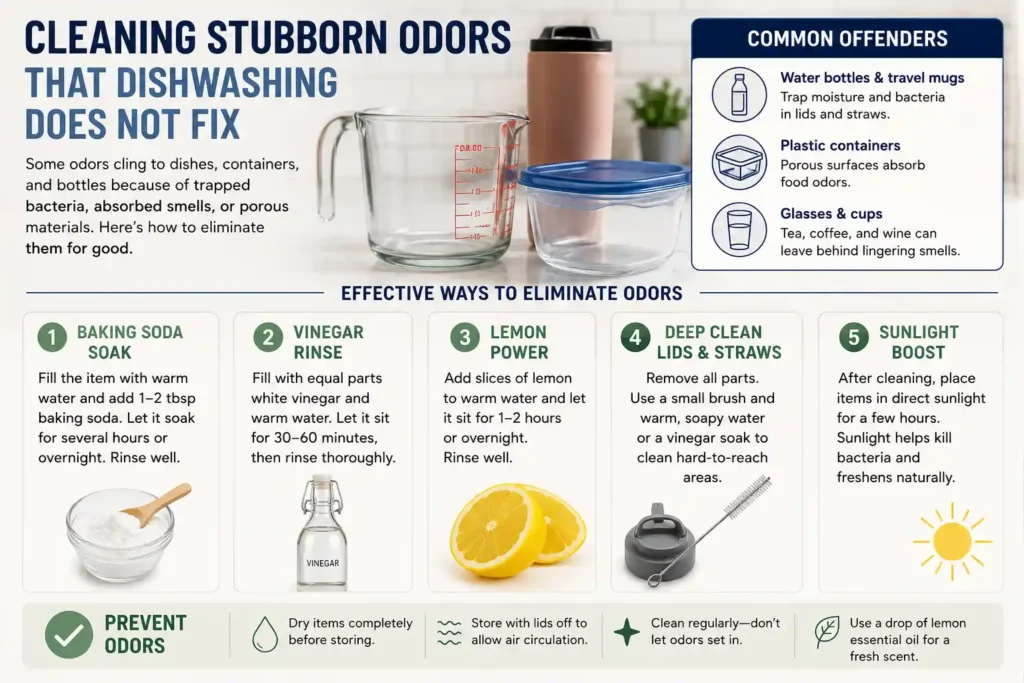
When that happens, I use a simple baking soda soak. I put about two tablespoons of baking soda inside the bottle, fill it with warm water, and let it sit overnight. The next morning I rinse it out well, then run it through the dishwasher. That combination handles almost any odor.
White vinegar works too. Fill the bottle halfway with equal parts water and white vinegar, let it sit for a few hours, then rinse and dishwash. The vinegar smell fades quickly once the bottle dries.
| Cleaning Problem | Best Solution | Follow Up |
| Routine dirt and grime | Dishwasher top rack | Air dry |
| Lingering odors | Baking soda soak overnight | Dishwasher rinse |
| Stubborn stains or film | White vinegar soak 2 to 4 hours | Dishwasher rinse |
| Mold or visible residue | Bottle brush plus dish soap | Dishwasher rinse |
A bottle brush is also worth having. Even though the Nalgene wide mouth opening is large enough that the dishwasher jets can usually reach inside, a quick hand scrub before you load it helps loosen anything stuck to the walls.
What About Older Nalgene Bottles
If you have a Nalgene from before 2008, it might be made from polycarbonate plastic. These older bottles contained BPA, and the dishwasher heat can break down that plastic over time, which is not great.
I found one of these in the back of my parents’ camping gear closet recently. It had that classic cloudy look that older polycarbonate gets after years of use. I would not put that one in the dishwasher. I would honestly retire it altogether and pick up a new Tritan or stainless steel version.
The newer Nalgene stainless steel bottles are also fully dishwasher safe. I have one of those too. It does not warp and it never smells. The only reason I still default to hand washing that one occasionally is habit, not necessity.
My Final Honest Take
So here is what I would tell a friend who just bought a Nalgene and asked me this exact question: yes, your bottle is almost certainly dishwasher safe, and yes, you should use that setting freely.
Just keep it on the top rack. Skip the heated dry if your machine lets you. Pull the lid gasket out every couple of weeks and check underneath it. And if you ever notice a smell that the dishwasher is not solving, reach for the baking soda before you panic.
The Nalgene bottle is built to last for years. Treating it well in the dishwasher means it stays that way. I stopped hand washing mine out of unnecessary caution, and my daily routine got a little easier because of it. Yours can too.
FAQ: Are Nalgene Bottles Dishwasher Safe?
Can you put a Nalgene bottle in the dishwasher safely?
Yes. Most Nalgene bottles made after 2008 use Tritan plastic, which is built to handle dishwasher heat. Place it on the top rack every time and you will not see any warping or damage.
Does the dishwasher damage the Nalgene lid or gasket over time?
Not if you wash it right. Put the lid in the utensil basket so it stays away from the bottom heating element. Pull the silicone gasket out every few weeks and rinse it by hand to keep the groove clean.
Why does my Nalgene bottle still smell after running it through the dishwasher?
Protein shakes and stale water leave odors the dishwasher alone cannot always beat. Soak the bottle overnight with two tablespoons of baking soda and warm water, then run a normal dishwasher cycle to finish the job.
Are older Nalgene polycarbonate bottles dishwasher safe?
No. Nalgene bottles made before 2008 contain BPA and are not safe for the dishwasher. Repeated heat exposure breaks down the plastic. If yours looks cloudy or scratched, it is time to replace it with a Tritan or stainless steel model.
Does the heated dry cycle hurt a Nalgene bottle?
It can, over many washes. The heated dry blasts concentrated heat in one spot for a long time. Turn it off and crack the dishwasher door open instead. Your Nalgene will air dry fine and the plastic stays in better shape long term.