

I used to make terrible coffee every single morning. I did not know it at the time. I thought I just did not like coffee that much. Then one Saturday, my neighbor handed me a cup she brewed at home, and I nearly cried. It was so smooth. So rich. I asked her what she did differently, and she said two words: proper ratios.
That changed everything for me. I went down a rabbit hole, tested dozens of combinations, and now I brew a cup I actually look forward to. If you have ever wondered how much coffee grinds per cup you really need, I am going to share exactly what I learned.
Table of Contents
Why Getting the Coffee to Water Ratio Right Matters So Much
Here is the thing nobody tells you when you first start brewing coffee at home. The grind amount and the water amount have to work together. If one is off, the whole cup suffers.
Too little coffee and you get something watery and flat. Too much and it tastes bitter and overwhelming. I spent months somewhere in that unhappy middle before I found the sweet spot.
The Specialty Coffee Association recommends a ratio of 1:15 to 1:18. That means one part coffee to fifteen or eighteen parts water. In practical terms, this means about 10 to 12 grams of ground coffee for every 6 ounces of water. Once I started measuring this way, my mornings got a lot better.
How Much Coffee Grinds Per Cup for Common Brewing Methods
This is where things get personal. Different brew methods pull flavor differently from the grounds. What works in a French press will not work in a drip machine. I learned this the hard way after ruining a whole bag of expensive Ethiopian beans in a moka pot.
Here is a simple table I built from my own testing and research to help you get started fast.
| Brew Method | Coffee Grounds | Water | Ratio |
|---|---|---|---|
| Drip Coffee Maker | 10 to 12 grams (2 tablespoons) | 6 oz (180 ml) | 1:16 |
| French Press | 14 to 15 grams | 8 oz (240 ml) | 1:15 |
| Pour Over | 12 to 13 grams | 8 oz (240 ml) | 1:16 |
| Espresso | 7 to 9 grams | 1 to 1.5 oz (30 to 44 ml) | 1:2 |
| Cold Brew | 40 grams | 8 oz (240 ml) | 1:5 |
| Moka Pot | 14 to 18 grams | Fill to valve | Depends on pot size |
I keep a printed version of this on my kitchen cabinet. It sounds silly, but it stops me from guessing at 6 AM when my brain is still catching up.
What Does One Cup of Coffee Actually Mean?
This tripped me up for the longest time. When your drip coffee maker says it holds 12 cups, those are not 8 ounce cups. Most coffee makers define one cup as 5 or 6 ounces. So a 12 cup machine actually holds about 60 to 72 ounces of water total.
I figured this out when I could never replicate the taste I got using my pour over with my drip machine. The numbers just did not add up until I measured the actual output from each setting.
So when you ask how much coffee grinds per cup, the first question back should be: how big is your cup? A standard mug you use at home is probably 8 to 12 ounces. A travel mug might be 16 ounces. That changes how much coffee you need by a full tablespoon or more.
Measuring in Tablespoons vs Grams: Which One Should You Use?
Most people use tablespoons because that is what they have in the kitchen drawer. I did too. But I switched to a small digital kitchen scale and never went back. Here is why.
A tablespoon of fine ground coffee weighs more than a tablespoon of coarse ground coffee. The grind size changes the density. So a tablespoon is not always the same amount of coffee by weight. When I was using pre ground coffee and then switched to grinding fresh, my tablespoon measurements stopped being accurate.
If you want consistent results every time, use grams. A budget kitchen scale costs under 15 dollars and is one of the best things I ever bought for my kitchen. Even a rough rule like 10 grams per 6 ounce cup gives you a great place to start.
That said, if you only have tablespoons, here is a rough guide. Use 1 heaping tablespoon for a 6 ounce cup. Use 2 tablespoons for a standard 8 to 10 ounce mug. Adjust from there based on how strong you like it.
How Grind Size Affects How Much You Should Use
This one surprised me. The grind size changes how fast water pulls flavor from the coffee. A finer grind extracts faster. A coarser grind extracts slower.
For espresso, you use a very fine grind and a very small amount of water pushed through under pressure. That is why the ratio looks so different. For cold brew, you use a coarse grind and let it sit for 12 to 24 hours. That long steep time means you need much more coffee to get the same strength.
When I started grinding my own beans at home, I noticed that a medium grind for drip brewing worked best with my usual ratio. But when I accidentally set my grinder too fine one morning, the same amount of coffee made a cup that was almost undrinkably strong. I had to either use less coffee or more water to compensate.
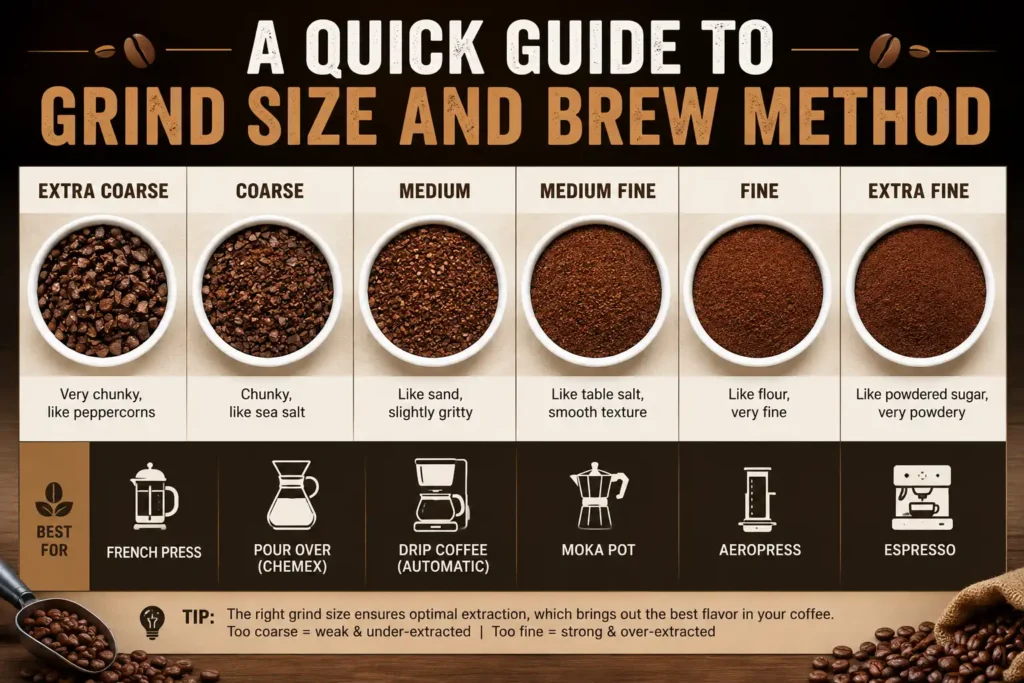
A Quick Guide to Grind Size and Brew Method
Here is another small table I wish I had when I started out.
| Grind Size | Texture Feels Like | Best For |
|---|---|---|
| Extra Fine | Powder | Turkish Coffee |
| Fine | Table Salt | Espresso, Moka Pot |
| Medium Fine | Slightly gritty | Pour Over (V60), Aeropress |
| Medium | Regular Sand | Drip Coffee, Siphon |
| Medium Coarse | Rough Sand | Chemex, Clever Dripper |
| Coarse | Sea Salt | French Press, Cold Brew |
<<Go Amazon For New Coffee Grinder>>
I keep my grinder set to medium for everyday drip brewing. On weekends, when I have more time and patience, I shift to medium fine for a pour over. The ritual of it is half the fun at this point.
Does the Type of Coffee Bean Change the Amount You Use?
Yes, a little. Lighter roasts are denser than dark roasts. Dark roasted beans lose moisture during the roasting process, so they weigh slightly less per bean. This means if you measure by volume (tablespoons), you will get slightly more coffee from a light roast than a dark roast in the same scoop.
The difference is not huge, but if you are dialing in a very precise cup, it matters. A light roast might need a tiny bit less by volume to hit the same extraction strength. By weight, the difference evens out nicely, which is yet another reason I love measuring in grams.
I switched from a dark roast to a medium light Ethiopian single origin last spring. Same tablespoon measurement, but the cup tasted noticeably stronger. I backed off by about a gram per cup and it balanced out perfectly.
How to Adjust the Coffee Grinds Per Cup to Your Own Taste
The ratios I shared are starting points, not rules set in stone. I want you to use them to dial in your personal preference, not to follow them rigidly.
If your coffee tastes weak or watery, add a little more coffee next time. If it tastes bitter or too strong, use a little less or add a touch more water. Small changes go a long way. I am talking about half a gram or a small splash more water.
Keep a simple note on your phone of what you tried and how it tasted. After a week, you will have your personal sweet spot. Mine is 12 grams of medium ground coffee to 7 ounces of water in a pour over. That is it. I have not needed to think about it in over a year.
What Happens When You Get the Amount Wrong
I want to be real with you here. Wrong ratios do not just give you bad flavor. They can cause issues with your brewer too.
Too many grounds in a drip machine can block the filter and overflow. Too little coffee and the water rushes through too fast without enough resistance, especially in pour overs. That leads to underextracted, sour tasting coffee.
In a French press, using too much coffee makes it hard to push the plunger down without grounds escaping into the cup. I have made that mistake more than once. I spent five minutes wrestling with my press at 7 in the morning, finally gave up, and had grainy coffee all week.
Getting the amount right also makes your coffee more cost effective. Proper measuring means you waste less coffee and get better results. I went through far fewer bags once I stopped guessing.
My Final Thought on How Much Coffee Grinds Per Cup
Start with 10 to 12 grams per 6 ounces of water. Adjust from there. Use a scale if you can. Match your grind size to your brew method. And most importantly, pay attention to what you are tasting.
Coffee is personal. What I love might be too strong or too mild for you. But once you understand the ratio behind how much coffee grinds per cup, you stop guessing and start brewing with real confidence.
That cup my neighbor handed me years ago? I can now make one just as good. Sometimes better. And honestly, that alone made the whole journey worth it.
Frequently Asked Questions
How much coffee grinds per cup should I use in a drip coffee maker?
Use 10 to 12 grams of ground coffee for every 6 ounces of water. That is roughly 2 tablespoons. Most drip machines define one cup as 5 to 6 ounces, so adjust for your actual mug size.
Does my coffee grinder affect how much coffee I need per cup?
Yes, it does. A finer grind extracts flavor faster and packs more tightly into a tablespoon. If you switch grind sizes, your dose needs to change too. A digital scale keeps your results consistent no matter what grinder you use.
Is a kitchen scale really a necessary tool for measuring coffee grinds?
It is the most reliable tool you can use. Tablespoons vary by grind size and density, so the same scoop gives different amounts each time. A basic digital scale under 15 dollars takes all the guessing out of it.
What happens to my brewer if I use the wrong amount of coffee grinds?
Too many grounds can clog a drip machine filter or make a French press plunger nearly impossible to press down. Too few grounds let water rush through too fast, which gives you sour, weak coffee. Getting the ratio right also protects the long-term performance of your brewer.
How do I adjust coffee grinds per cup if my brew tastes off?
If it tastes bitter, use a little less coffee or add a small splash more water. If it tastes flat or watery, add about half a gram more coffee next time. Small changes matter far more than big ones when you are dialing in your ratio.