
I think back on that Sunday morning so well. I had just bought a fresh bag of whole coffee beans. The smell was rich and warm. I could not wait to brew my first cup. Then I opened my kitchen drawer and froze. My grinder was gone. I lent it to my sister two weeks ago. I forgot all about it.
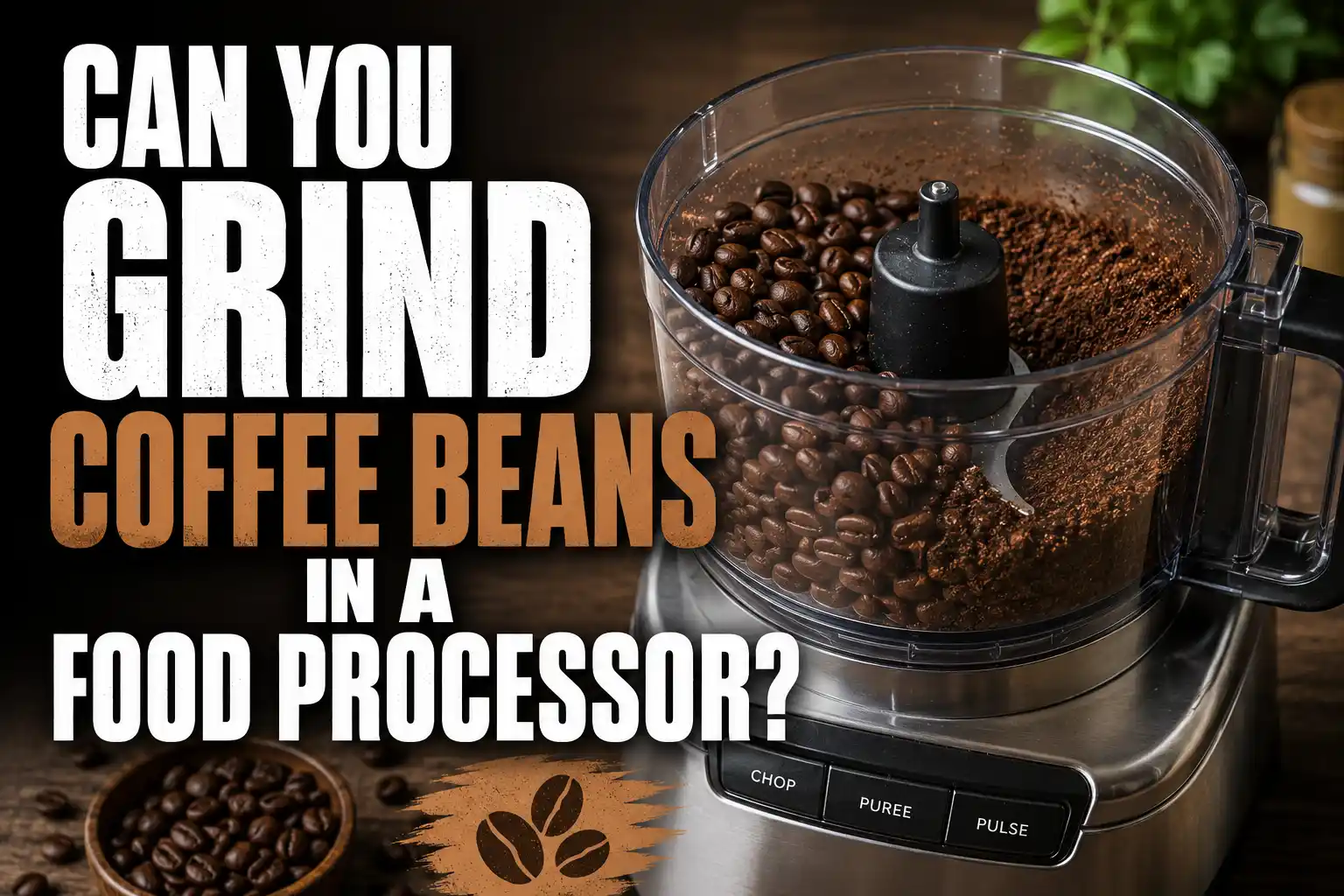
So there I was. A full bag of whole beans. A coffee pot that could not use them. I looked around my kitchen for another way. My eyes landed on the food processor on the counter. I stood there and thought, “Can you grind coffee beans in a food processor?” I had no clue if it would work. But I was tired and I needed coffee badly. So I tried it.
That one morning turned into a full test run. It lasted the whole week. It taught me a lot about grinding coffee. I never thought a mistake could teach me so much.
Table of Contents
My First Attempt and What I Found
I put a small handful of beans into the food processor bowl. I hit the button and let it run. The noise was very loud. The beans bounced around fast. After about 20 seconds, I had what looked like coffee grounds. I turned it off and took a look.
When I opened the lid, I saw the problem right away. Some pieces were still big and chunky. Other parts were super fine, like dust. The grind was all over the place. But I was sleepy and out of options. I used what I had with my French press and hoped for the best.
The coffee came out okay. Not great. Not bad either. A little muddy in taste. A little weak in some sips. But it was hot and real and I could drink it. That was all I needed at that point.
That result made me want to keep testing all week long. I had beans. I had time. I wanted to see what worked best.
Can You Grind Coffee Beans in a Food Processor — The Honest Answer
Yes, you can grind coffee beans in a food processor. It does work. But it is not the same as a real grinder. The grind comes out messy and uneven. That affects how your coffee tastes in a big way.
The main issue is how the blade works. A burr grinder cuts beans into even, same-size pieces. A food processor chops and smashes them at random. You get fine dust and big chunks all in one batch. That mix causes patchy, uneven flavor in your cup.
Some grounds give up flavor too fast. Others give almost none at all. The cup ends up both bitter and weak at the same time. It sounds odd but it is very real. I tasted it more than once that week.
Here is a simple table of what I found from testing each brew method:
| Brew Method | Food Processor Result | My Notes |
| French Press | Good enough | Coarse grind hides flaws well |
| Pour Over | Not great | Muddy taste, uneven flow |
| Drip Machine | Okay | Better with a longer brew time |
| Espresso | Very poor | Needs a precise, fine grind |
| Cold Brew | Great | Long steep time forgives bad grinds |
French press and cold brew were the clear winners for me. I kept coming back to both all week.
How to Grind Coffee Beans in a Food Processor the Right Way
Once I knew the food processor was my only tool, I got to work. I tried a few ways and slowly found one that works well. Here is what I learned step by step.
Use the Pulse Setting, Not Non-Stop Mode
This was my top lesson from the whole week. Do not hold the button down and let it run for a long time. That creates too much heat from the fast blade. Heat hurts coffee flavor in a real way. It also turns some beans to dust while others stay too big.
Use short pulses instead. I did one-second bursts. I waited for a beat between each one. That gave me much more control over the grind. The grounds came out more even this way. It was a simple fix that made a big change.
Work in Small Batches
Do not fill the bowl all the way to the top. I got the best results with half a cup of beans at a time. When the bowl is too full, the beans on top never reach the blade. They just bounce around up there. You end up with a very uneven result.
Small batches let the blade reach all the beans more evenly. It takes a bit more time if you need a lot of coffee. But the end is far better. It is worth the extra few minutes of effort.
Shake the Bowl Between Pulses
Every few pulses, stop the machine and give the bowl a quick shake. This moves the big chunks down to where the blade can reach them. It also stops fine powder from clumping in one spot at the bottom. This one small step made a big change in my results. Do not skip it.
Aim for 30 to 45 Seconds Total
In my tests, 30 to 45 seconds of total pulse time gave me a medium coarse grind. I went up to 60 seconds when I wanted it finer. After 60 seconds, the heat from the motor started to change the taste. I could tell it was off in the cup.
Clean the Bowl Before You Start
This matters more than most people think. Food processors are used for garlic, onions, herbs, and all sorts of strong foods. Even a clean bowl can still hold faint smells from past use. One morning I forgot to rinse mine before I started. My coffee had a faint garlic smell. It was not fun at all.
Rinse the bowl and the blade with warm water first. Let them dry out fully before you add your coffee beans. It takes 30 seconds and it matters a lot.
Why Grind Size Matters So Much
Here is what I did not fully know before this whole test. Grind size controls how flavor moves from the coffee into the water. Fine grinds release flavor very fast. Coarse grinds release it more slowly over time.
When the grind is all over the place, the cup reflects that mess. Fine parts get bitter and harsh very fast. Coarse parts taste weak and sour because they do not extract enough. You get both problems in the same mug at the same time.
That is why the French press worked best for me. All the grounds soak in the water at once. The long contact time pulls flavor even from the bigger chunks. Cold brew works for the same reason. It soaks for 12 to 24 hours. Even big pieces have enough time to give up their flavor.
Pour over and espresso are very picky about grind size. They do not forgive uneven grinds at all. I found that out after two very sad pour over tries that tasted like muddy water.
Food Processor vs. Blade Grinder vs. Burr Grinder
After my food test week, I wanted to see how it ranked against other tools. I got a cheap blade grinder from my neighbor and ran some side-by-side tests. Here is a clear look at what I found:
| Tool | Grind Consistency | Heat Risk | Cost | Best Use |
| Food Processor | Low | Medium | Already own it | Emergency backup |
| Blade Grinder | Low to Medium | Medium | $15 to $25 | Casual daily use |
| Manual Burr Grinder | High | Very low | $30 to $60 | Quality home brew |
| Electric Burr Grinder | Very high | Low | $60 to $300+ | Serious coffee fans |
The blade grinder was only a little better than the food processor. The main edge it had was size and control. It was far easier to manage with quick short bursts. But the grind was still far from perfect.
A manual burr grinder changed my whole view when I finally tried one. The grind was so even and clean. The coffee tasted far better with the same beans I had been using all week. The difference was real and easy to taste in every sip.
Tips I Wish I Knew from Day One
After a full week of tests, I picked up a few extra tips. These are the ones I wish I had known on day one. They would have saved me some bad cups of coffee.
Freeze your beans for 30 minutes before grinding. Cold beans break into more even pieces. They also heat up less from the blade. This small step can boost your results a lot.
Use a fine mesh strainer after you grind. Sift out the dust from the bigger chunks. Then re-pulse the bigger pieces for a few more seconds. This gives you a more even final result.
Do not use the food processor for the same batch more than twice. After two rounds of pulsing, the heat builds up too much. Let the machine rest and cool down before you try again.
My Honest Take After the Full Week
Can you grind coffee beans in a food processor? Yes, you can. Should it be your daily tool? No, it should not. But as a backup when you are truly stuck, it saves the morning. And that is no small thing.
I was truly shocked by how well it worked for cold brew. I started making a big batch each Sunday. For a few weeks, I used the food processor on purpose just for that one use. The coarse, rough grind worked just fine for the long cold brew process. No real complaints there at all.
For all other brew methods, I missed my grinder every single day. There is just no match for a clean, even grind. It makes the whole process feel calm and right.
If you are in a pinch right now and need coffee, yes, the food processor will get you through. Use the pulse method. Keep your batches small. Brew with a French press if you have one. You will get a good cup and make it to work on time.
And maybe let this moment push you to get a manual burr grinder. I did. I have not looked back since. Even a $35 hand grinder makes a real change in your cup. Your daily coffee is worth that small buy.
The food processor taught me that lesson. And I did not expect to learn so much from a lost grinder and one very long Sunday morning.
Bottom line: A food processor is a real, working option for grinding coffee beans. It is not perfect. But it beats having no coffee at all. Use it smart, pick the right brew method, and your morning cup will still be worth waking up for.
FAQ: Can You Grind Coffee Beans in a Food Processor?
Can a food processor blade actually grind coffee beans well?
It can grind them, but the blade chops at random. You get fine dust and big chunks all in one batch. That messy, uneven grind will change how your coffee tastes.
Does grinding coffee beans damage the food processor blade?
Coffee beans are hard, but a standard food processor blade can handle them. Use short pulses to keep the stress low. Do not run it past 60 seconds or the motor heats up too much.
What grind works best when using a food processor for coffee?
There is no dial, so you control it with time. Pulse for 30 to 45 seconds total to get a medium coarse grind. That works well for French press and cold brew, which forgive an uneven grind the most.
Is a food processor better than a blade grinder for grinding coffee?
A blade grinder has a small edge in size and control. But both tools give you an uneven grind. Use short bursts and small batches with either one for the best result you can get.
How do I stop my food processor from making coffee taste like garlic?
Rinse the bowl and blade with warm water before you grind. Let them dry fully first. Food processors hold strong smells from past use, and even a trace of garlic will show up in your cup.