

I still remember the morning I made a full pot of coffee and it tasted like old socks. Not stale. Not weak. Actual old socks. I had no clue what went wrong. My Cuisinart grinder was only six months old. Then I lifted the lid and saw a thick layer of oily coffee residue coating the burrs. That was my wake up call. I had never cleaned it. Not once.
Since that day, I have learned exactly how to clean a Cuisinart coffee grinder the right way. I am going to walk you through what I do now, step by step. No fluff. No guesswork. Just what actually works.
Table of Contents
Why Cleaning Your Cuisinart Coffee Grinder Really Matters
Here is the thing most people skip over. Old coffee oils go rancid. They stick to your burrs and grinding chamber. Every fresh batch you grind picks up those stale, bitter oils. So even with premium beans, your cup tastes off.
I did a small test at home. I compared coffee from my dirty grinder versus a freshly cleaned one. Same beans. Same brew method. The difference was real and noticeable. The clean grinder gave me a brighter, smoother cup every single time.
Beyond taste, buildup causes wear. Residue makes the motor work harder. Over time, that shortens the life of your grinder. A quick clean once a week costs you five minutes. Replacing the grinder costs you a lot more.
Here is a quick look at how often I clean each part:
| Part | Cleaning Frequency | Method |
| Hopper and lid | After every use | Dry cloth or soft brush |
| Grinding chamber | Once a week | Dry brush and wipe |
| Burrs | Once every 2 weeks | Brush and dry rice method |
| Exterior | As needed | Damp cloth |
| Full deep clean | Once a month | Disassemble and hand wash |
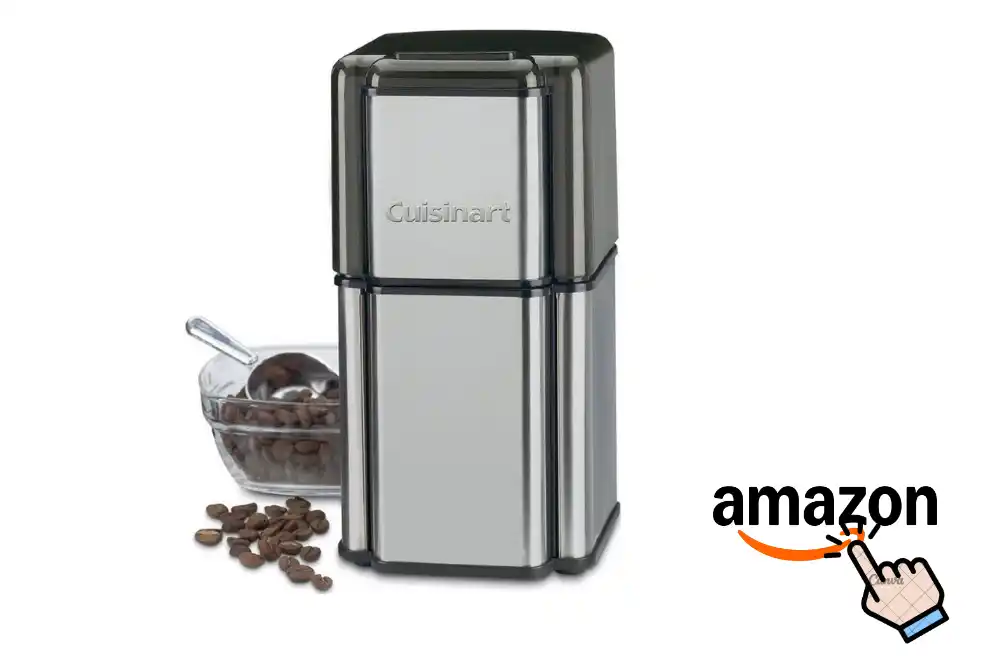
<<Get Amazon For This Product>>
What You Need Before You Start
You do not need fancy tools. I keep a small cleaning kit right next to my grinder on the counter. Having everything ready saves time and means I actually do it instead of putting it off.
Here is what I use:
- A stiff cleaning brush (the one that came with my Cuisinart works well)
- A soft dry cloth or microfiber towel
- A toothpick or wooden skewer for tight spots
- White dry rice (about a quarter cup for the rice method)
- Mild dish soap for removable parts
- A small bowl for soaking
One thing I want to be clear about. Never submerge your Cuisinart grinder in water. Never put the motor base under the tap. I made that mistake once with a different appliance and it was not a good day. Stick to the parts that are meant to come off.
How to Clean Cuisinart Coffee Grinder Step by Step

Step 1: Unplug It First
This sounds obvious but I want to say it anyway. Always unplug your grinder before you do anything. I kept it plugged in on the counter and nearly reached inside while it was still live. Not worth the risk. Unplug it. Set it aside. Then start.
Step 2: Empty the Hopper and Grinding Chamber
Pour out any whole beans from the hopper. Shake out any loose grounds from the grinding chamber. I usually do this over my trash can. Tap the sides gently to loosen anything stuck to the walls.
If you have a model with a ground container, remove that too and dump it out. Give it a quick shake over the sink.
Step 3: Disassemble What You Can
Most Cuisinart burr grinders let you remove the upper burr. Twist it counterclockwise and lift it out. Set it on a cloth so you do not lose any small parts.
Check your manual for your specific model. The DBM8 and DBM11 both have removable upper burrs. The blade grinders are a bit different and I will cover those separately below.
Step 4: Brush Out the Burrs and Chamber
This is the step that makes the biggest difference. Use your cleaning brush to scrub the burrs. Work in small circles. You will see dark oily residue come off right away. Get into the ridges as best you can.
Then brush out the inside of the grinding chamber. The walls collect a surprising amount of fine powder. I spend about two minutes just brushing before I wipe anything down.
Use a dry cloth or paper towel to wipe the loosened debris out. Do not use water here. Water and burrs do not mix well. Moisture causes rust over time and can affect grind consistency.
Step 5: Use the Rice Method for a Deeper Clean
Once a month, I run a quarter cup of plain white dry rice through the grinder. This sounds strange but it works well. The rice acts as a mild abrasive. It pulls oily buildup off the burrs and carries it out as fine powder.
Run the rice through on a medium grind setting. Then dump out the rice flour. Brush out the chamber again. You will be amazed at how much darker that powder is compared to plain rice.
Do not use flavored rice or instant rice. Plain long grain white rice is what you want. I tried brown rice once and it was too hard. Stick with white.
Step 6: Wash the Removable Parts by Hand
The hopper, lid, and ground container are usually safe to hand wash. Use warm water and a small drop of mild dish soap. Rinse well and let them air dry completely before putting them back.
This is important. Do not reassemble while parts are still damp. Moisture trapped inside leads to mold and musty smells. I usually wash these parts in the morning and let them dry until evening before putting the grinder back together.
Step 7: Wipe Down the Exterior
Use a slightly damp cloth to wipe the outside of the grinder. Get the control panel, the sides, and the base. Then follow with a dry cloth right away. Keep water away from any vents or openings.
I also wiped the cord down during this step. Coffee dust gets everywhere and the cord collects it too.
Step 8: Reassemble and Do a Test Grind
Put the upper burr back in. Twist it clockwise until it locks. Replace the hopper and ground container. Plug it back in and run a small amount of old beans through it as a test grind. This clears out any residue left from the rice or the cleaning process.
Toss that first test batch. Do not drink it. Then grind your actual beans and enjoy a noticeably better cup.
How to Clean a Cuisinart Blade Coffee Grinder
Blade grinders need a slightly different approach. There is no burr to remove. The blade sits at the bottom of a fixed bowl.
Here is what I do for mine:
First, unplug it. Always. Then use a dry brush to sweep out loose grounds from the bowl and around the blade. Be careful around the blade edge. I use the back of the brush rather than my fingers.
Use a slightly damp cloth to wipe the inside of the bowl. Then dry it right away with another cloth. Never let water sit near the blade or the seal at the bottom. That is where moisture causes problems.
The lid usually lifts off for easy rinsing. Wash it by hand and dry it completely before replacing.
For stubborn buildup around the blade, a toothpick works well. I trace along the base of the blade carefully to clear packed residue. It takes an extra minute but makes a real difference.
| Grinder Type | Removable Burr | Rice Method | Hand Wash Parts |
| Cuisinart Burr (DBM8, DBM11) | Yes | Yes | Hopper, lid, container |
| Cuisinart Blade (SCG series) | No | Not recommended | Lid only |
| Cuisinart Conical Burr (DBM14) | Yes | Yes | Hopper, lid, container |
My Honest Tips After Years of Trial and Error
I have made every mistake you can make with grinder cleaning. I used water on the burrs once. I skipped cleaning for three months and then wondered why my espresso tasted terrible. I also tried a commercial grinder cleaner tablet and honestly the rice method works just as well for me.
Here are the things I wish I had known earlier:
Never use a wet brush on the burrs. It seems harmless but moisture causes rust in the small gaps between the burr teeth over time.
Do not skip the test grind after cleaning. I served friends coffee once that still tasted like rice because I forgot this step. Not my finest moment.
Keep your cleaning brush only for the grinder. Do not share it with other appliances. Cross contamination of oils and residues is a real issue and affects flavor more than you would think.
Clean the hopper lid every single time you refill it. Oils from your hands transfer to the plastic and then into the beans. It only takes a second to wipe it down.
Store your grinder with the hopper empty if you can. Keeping beans sitting in there for days allows oils to build up faster. I load only what I need for the week.
How Often Should You Really Clean It
Most coffee experts say a light clean once a week and a full deep clean once a month. That matches what works for me. If you grind dark roasts daily, you might need to clean a bit more often. Dark roasts are oilier and leave more residue behind.
If your coffee starts tasting off suddenly, do not buy new beans right away. Clean your grinder first. Nine times out of ten, that is the fix.
A well cleaned Cuisinart grinder can last many years. Mine is going on four years now and still performs like it did when I first bought it. That is almost entirely because I started cleaning it properly after that terrible cup of coffee I mentioned at the start.
Take five minutes this week. Give your grinder a good clean. I promise your morning cup will thank you for it.
FAQ
How often should I clean my Cuisinart coffee grinder?
A light brush out once a week keeps residue from building up fast. Do a full deep clean with disassembly once a month to protect the motor and burrs long term.
Can I use water to clean the Cuisinart burr grinder?
Never wash the burrs or motor base with water. Moisture rusts the burr teeth over time and throws off grind consistency. Only hand wash the removable plastic parts like the hopper, lid, and ground container.
Does the rice method actually work on a Cuisinart grinder?
Yes, it works well on burr models like the DBM8, DBM11, and DBM14. A quarter cup of plain white rice run on a medium setting pulls oily buildup off the burrs fast. Skip this method on blade grinders since the blade can chip dry rice unpredictably.
Why does my Cuisinart grinder smell bad even with fresh beans?
Rancid coffee oils trapped in the grinding chamber are almost always the cause. Oils go stale faster than the beans themselves. A thorough brush clean followed by wiping the chamber walls usually clears the smell within one or two grinds.
Is it safe to put Cuisinart grinder parts in the dishwasher?
Cuisinart does not recommend the dishwasher for most grinder parts. High heat warps plastic hoppers and lids over time. Hand washing with warm water and mild dish soap keeps parts in better shape and extends the life of the grinder.